
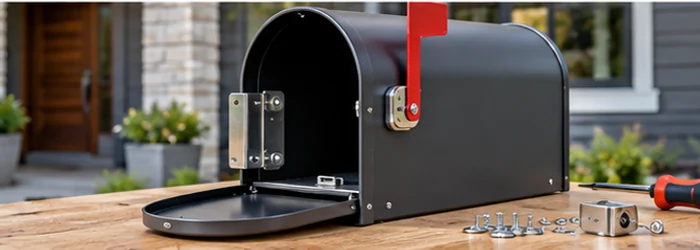
Architectural Mailboxes Replacement Parts
Overview
Architectural Mailboxes Replacement Parts should be understood through its purpose, project setting, controlling documents, and the work it affects. This guide connects the topic to planning, design or scope decisions, coordination, construction checks, and handover rather than treating a label or estimate as a complete answer.
Use the source article's topic details with current project information. Local approvals, safety requirements, engineering decisions, and financial or legal treatment depend on the facts and responsible authority.
Architectural mailboxes are not just functional; they also contribute significantly to the aesthetic appeal of your home. However, over time, wear and tear can take a toll on these mailboxes, necessitating the need for replacement parts to restore their functionality and appearance.
- Enhancing Your Mailbox's Functionality
- Restoring Your Mailbox's Appearance
- Easy Installation and Maintenance
Enhancing Your Mailbox's Functionality
One of the most common issues with architectural mailboxes is a faulty latch or hinge. A broken latch can make it difficult to open and close the mailbox, while a damaged hinge can cause the door to sag or become misaligned.
Another common issue with architectural mailboxes is a damaged flag. A broken or missing flag can make it difficult for your mail carrier to identify outgoing mail, leading to delays in delivery. Our replacement flags are designed to be durable and easy to install, ensuring that your mailbox is always ready for outgoing mail.
Restoring Your Mailbox's Appearance
In addition to enhancing functionality, our replacement parts are also designed to restore your mailbox's appearance. Over time, the paint on your mailbox may chip or fade, detracting from its overall aesthetic appeal. Our replacement doors, sides, and panels are available in a variety of colors and finishes, allowing you to find the perfect match for your existing mailbox.
Easy Installation and Maintenance
All of our replacement parts are designed to be easy to install, requiring only basic tools and minimal time. Whether you are replacing a latch, hinge, flag, or entire panel, our detailed installation instructions will guide you through the process, ensuring that your mailbox is back in top condition in no time.
Scope and meaning
Architecture turns a brief, site, and constraints into a coordinated spatial proposal. For architectural mailboxes replacement parts, separate the design idea from documents that authorize construction. A rendering does not establish dimensions, junctions, materials, services, accessibility, or approvals. State purpose, users, area assumptions, performance targets, budget basis, deliverables, and open decisions.
Planning inputs to confirm
Begin with a clear brief and verified site information: boundaries, orientation, levels, access, adjacent context, utilities, and planning constraints. Ask what the building must do during ordinary and peak use and when equipment needs replacement. Test privacy, daylight, circulation, security, acoustics, and access early; late discoveries force costly changes.
Design choices and trade-offs
Compare massing, plan organization, façade, structure, enclosure, and services as connected choices. State what improves and what it costs in area or complexity. Review plans, elevations, sections, and details together: a simple plan may create difficult structure. Models communicate intent but do not prove code compliance or constructability.
A practical project sequence
Move from brief and site analysis to concept, schematic design, coordinated development, authority review, construction documents, procurement support, and field clarifications. At each review, record revision, accepted decisions, open comments, and who may authorize change. A presentation image is not a dimensioned construction set.
Coordination and responsibilities
Coordinate architecture with structure, civil, mechanical, electrical, plumbing, fire, landscape, and specialist design. Reserve space for ducts, risers, equipment, access panels, separations, movement, drainage, and service. Assign each interface to a responsible designer. A clash review must produce a decision and updated documents.
Cost and schedule considerations
Define estimate basis: area type, site work, fit-out, equipment, external work, design, approvals, taxes, contingency, date, and exclusions. Compare options on identical scope. Revisit cost when area, material, or system changes. Value review should protect essential performance instead of removing parts without tracing effects.
Quality checks
Review documents for completeness, coordination, dimensions, schedules, and constructability. Compare samples and mock-ups with approved specifications. Record RFIs, submittals, observations, and deviations by revision. Visual approval does not establish structural capacity, weather performance, fire separation, or accessibility.
Risk and long-term use
Preserve approved drawings, specifications, submittals, records, product data, inspection evidence, commissioning, and maintenance instructions. Identify service clearances and the basis for future alterations. Keep the final revision controlled and mark superseded versions so a concept is not mistaken for an as-built record.
Topic-specific questions
The source outline surfaces points to verify against current project information:
- Enhancing Your Mailbox's Functionality. Check the exact location, source revision, reviewer, and whether the point is a definition, design intent, measurement, requirement, or example. Record the answer before procurement or installation if it changes scope, sequence, or acceptance.
- Restoring Your Mailbox's Appearance. Check the exact location, source revision, reviewer, and whether the point is a definition, design intent, measurement, requirement, or example. Record the answer before procurement or installation if it changes scope, sequence, or acceptance.
- Easy Installation and Maintenance. Check the exact location, source revision, reviewer, and whether the point is a definition, design intent, measurement, requirement, or example. Record the answer before procurement or installation if it changes scope, sequence, or acceptance.
Project checklist
Before committing to a decision about architectural mailboxes replacement parts, work through these checks:
- Record location, purpose, project phase, date, and controlling revision.
- Separate verified conditions from assumptions, open questions, allowances, and exclusions.
- Confirm scope, measurement, product or system, interfaces, access, and responsibility.
- Agree who reviews the work, which evidence is required, and when inspection must occur.
- Document approved changes with location, cost or schedule effect, owner, date, and closure.
- Keep tests, photographs, record information, warranties, and maintenance instructions for handover.
Common mistakes to avoid
Do not rely on a broad label, old drawing, generic figure, or verbal field decision when the actual scope can be checked. Confirm the basis, location, version, and reviewer before work is committed. When evidence is incomplete, mark the conclusion provisional and name the next action instead of presenting an assumption as fact.
Frequently asked questions
What is the first step?
Define the brief, users, site constraints, performance priorities, area, budget basis, and deliverables.
Are floor plans enough?
Usually not. Coordinated dimensions, sections, elevations, details, schedules, specifications, and consultant information explain interfaces.
When should engineers join?
Early enough to test structure, services, fire strategy, and access alongside the concept.
Can a design change after approval?
Changes need review for permits, cost, schedule, structure, life safety, and consultant documents before work proceeds.
How is design quality checked?
Review completeness, coordination, dimensions, constructability, samples, submittals, and installed work against approved criteria.
Related Building Design resources
Continue with Crafting Your Architectural Masterpiece: Summit, Stacked Joints In Construction: Enhancing, Arch Design And Construction In Construction. Apply each resource only to its scope and verify project decisions against approved records.
Conclusion
A reliable result for architectural mailboxes replacement parts comes from clear scope, current evidence, coordinated decisions, and documented checks. Obtain qualified review where safety or compliance is involved, and keep the approved record available for construction and future maintenance.
Additional practical considerations
Review plans, sections, elevations, and details as connected views. Confirm they share dimensions and material notes; a rendering communicates intent but cannot settle a missing construction detail.
Convert architectural mailboxes replacement parts into a decision that can be reviewed. State the question, location, project phase, controlling document, required outcome, and person who can approve it. Separate what is known from what still needs measurement, testing, or interpretation. For design work, trace the decision through the brief, plans, sections, elevations, details, schedules, and consultant coordination. This makes the next action clear and keeps a broad topic from becoming an unrecorded field assumption.
Build an evidence trail for architectural mailboxes replacement parts from the current source material. Keep drawing and specification revisions, dated site information, product data, quantities, approvals, meeting decisions, and photographs tied to a location. If two records disagree, retain both references and obtain a written resolution. A clean record lets another reviewer understand why a choice was made without relying on memory or a generic example.
Review interfaces before work is released. Check what touches the topic: structure, enclosure, utilities, access, adjacent trades, temporary conditions, inspection points, and maintenance space. Name who provides each connection and who verifies it. For design work, trace the decision through the brief, plans, sections, elevations, details, schedules, and consultant coordination. Resolve the detail in the documents before procurement or concealment; an instruction to coordinate later does not explain scope or acceptance.
Compare options using the same basis. State dimensions, performance, material, finish, delivery, access, schedule, exclusions, and required testing. Explain the trade-off rather than presenting one option as universally best. Record any effect on cost, durability, operation, or future repair. Where a value depends on site or jurisdiction, identify the facts that must be checked instead of implying a fixed result.
At handover, preserve the final approved decision for architectural mailboxes replacement parts. Include the installed configuration, approved changes, product or source information, inspection and test evidence, open items, maintenance steps, and responsible contact. Mark superseded documents and keep the final revision accessible. This closes the gap between planning and use, and gives future owners a reliable basis for repair or alteration.







Leave a Reply
Want to join the discussion?Feel free to contribute!