
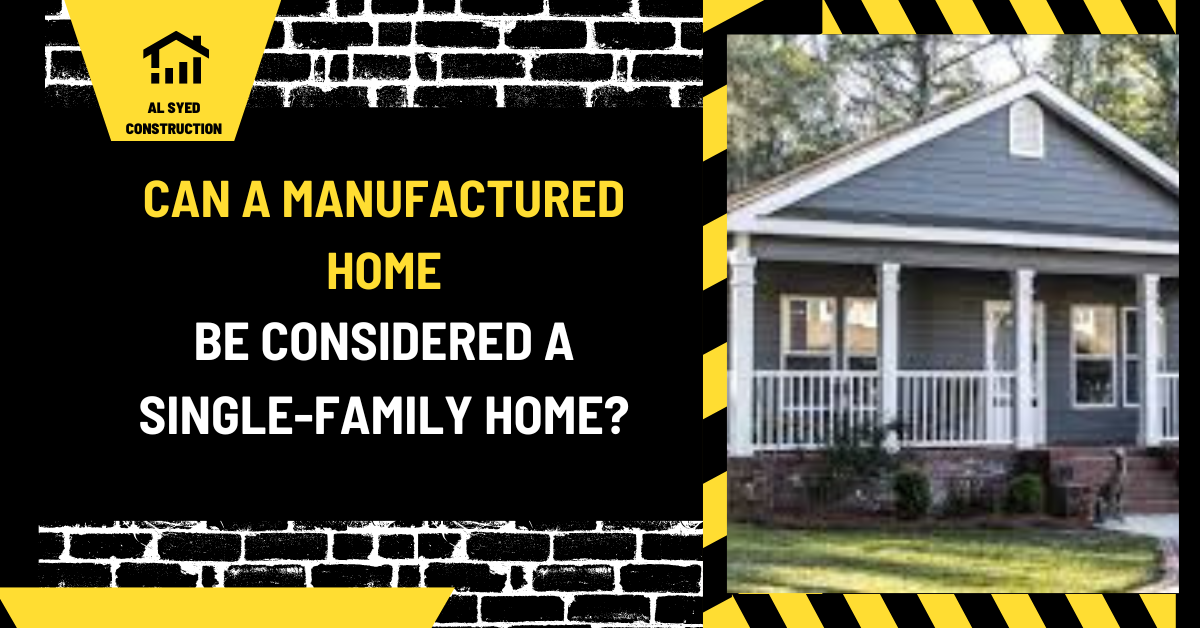
Can a Manufactured Home Be a Single-Family Home?
Yes, a manufactured home can be a single-family home. The terms describe different things. “Manufactured” identifies a home built in a factory under the federal HUD construction and safety standards when it falls within that program. “Single-family” describes how a dwelling is configured or occupied under a particular zoning, housing, financing, or property-classification rule. A one-unit manufactured home can therefore serve as a single-family residence, but local approval and legal classification depend on the property and the rule being applied.
This distinction matters when buying land, applying for a permit or loan, insuring a home, or deciding whether a home can be placed in a particular neighborhood. A HUD certification label does not automatically authorize a home on every parcel, convert the home to real property, or guarantee that a lender will approve a specific transaction. Buyers should check the applicable rules with the local planning office, building department, title professional, insurer, and lender.
“Manufactured” and “single-family” answer different questions
Manufactured housing is a construction and regulatory category. HUD describes manufactured homes as dwelling units produced in a factory and built to federal Manufactured Home Construction and Safety Standards. Homes built under the HUD program after June 15, 1976, are expected to carry certification labels on their transportable sections. A data plate inside the home provides identifying and design information. The standards apply to the home’s construction and safety; they do not by themselves decide how a local zoning code classifies the lot.
Single-family is a use or dwelling classification that appears in different legal and administrative settings. A zoning ordinance may define the permitted housing types and number of dwelling units on a parcel. A lender may use a program-specific definition for underwriting. A tax assessor may classify the home and land according to state law. An insurer may use its own eligibility and coverage rules. The same structure can receive different descriptions in different contexts because each agency or contract answers a different question.
Think of the distinction this way: manufactured describes how the home was built and which standards apply; single-family describes the home’s dwelling-unit arrangement or legal use under the rule being checked. One label does not automatically settle the other.
Can a HUD-code manufactured home be one family’s residence?
Yes. A manufactured home may be a one-unit residence designed for a household or family. It can be a single-section home or a multi-section home joined at the site. Having more than one transportable section does not make it a multifamily building. The relevant question is how many separate dwelling units the finished home contains and how the applicable program defines it.
HUD’s mortgage and program documents may define a manufactured home for a particular purpose, and those definitions can differ by program. For example, FHA guidance refers to a manufactured home as a single dwelling unit of manufactured housing in the Title II context, while other HUD programs set their own eligibility conditions. If a loan, grant, or insurance program is involved, use the current rules for that exact program rather than relying on an informal definition.
Manufactured home versus modular home
Manufactured and modular homes are both factory-built, but they generally follow different regulatory paths. HUD-code manufactured homes are built to the federal manufactured-home standards. Modular homes are typically reviewed under applicable state and local building codes, similar to site-built construction, with the details depending on the state and project. A factory-built home should not be labeled “HUD-code” solely because it was made indoors.
| Question | HUD-code manufactured home | Modular home |
|---|---|---|
| Where is it produced? | Factory, in one or more transportable sections | Factory, in panels, modules, or other sections |
| Primary construction standards | Federal HUD Manufactured Home Construction and Safety Standards | Applicable state and local building-code pathway |
| How is “single-family” determined? | By the dwelling arrangement and the rule or program being applied | By the dwelling arrangement and the rule or program being applied |
| Does factory production decide zoning? | No; site use and placement still require local review | No; site use and placement still require local review |
The guide to modular homes assembled on a lot explains how modules arrive and connect at the site. If the home is intended to remain in place, the permanent modular building overview discusses project planning and approvals for a different factory-built category.
Why zoning and land use still matter
A home’s federal construction label does not override local zoning. The local jurisdiction may regulate permitted housing types, density, minimum lot size, setbacks, access, parking, height, utilities, appearance, flood exposure, or placement in a manufactured-home community. Some jurisdictions distinguish manufactured homes from other dwellings in their zoning rules, while others may allow them in specified districts or under specific conditions. Requirements vary by state, county, city, and parcel.
Before buying a home or land, ask the local planning and building offices whether the proposed home type and configuration are allowed on the exact parcel. Provide the model, dimensions, number of sections, foundation or support plan, and intended occupancy. Ask whether a site plan, permit, special approval, community rules, or design conditions apply. A real-estate listing that calls a property “single-family” is not a substitute for a permit decision or written zoning confirmation.
Also check whether the parcel is in a homeowners association, manufactured-home park, condominium, or other community with additional covenants or lease terms. Private restrictions may apply in addition to public zoning. Confirm the permitted home type before placing a deposit or ordering transport.
Title, ownership, and real-property status
A manufactured home may be treated as personal property or as real property, depending on state law and the transaction. The home and land may have separate titles or be treated together after certain steps are completed. Requirements can involve ownership of the land, permanent installation, a qualifying foundation, surrender of a vehicle title, recording documents, or other state-specific procedures. These details affect how the home is sold, taxed, insured, financed, or used as collateral.
Do not infer real-property status from the phrase “single-family home.” A dwelling can be used by one household while the structure remains titled as personal property. Conversely, a manufactured home may be converted or recorded as real estate where local law allows and the required steps are satisfied. Ask a title company, real-estate attorney, county recorder, or qualified closing professional to verify the home’s status for the specific state and transaction.
Foundation, installation, and site approval
Installation is a separate part of the project. The site must be suitable, utilities available, and the foundation or support system designed and installed for the home, soil, climate, and applicable standards. HUD’s installation program and state-administered requirements may apply to manufactured homes. The manufacturer’s installation instructions and the jurisdiction’s requirements should be reviewed together.
Ask who is responsible for excavation, drainage, foundation or support construction, anchorage, utility connections, access steps, skirting or enclosure, inspections, and final certification. Get plans for the exact home and site, not a generic foundation detail. Soil conditions, slope, frost exposure, flood requirements, wind design, and local rules can affect the solution. The modular home foundation guide covers the planning issues for factory-built residences; the actual system must be selected and reviewed for the specific property.
Financing and insurance considerations
Loan options may depend on the home’s age, HUD certification, installation, condition, foundation, land ownership, title status, appraisal, and the lender’s program. A home classified as personal property may have different financing options from one recorded as real property. Lenders can also impose requirements that go beyond the local permit. Request a written eligibility review before committing to the purchase.
Insurance availability and cost can depend on location, age, roof and foundation condition, storm exposure, prior losses, and whether the home meets the insurer’s eligibility standards. Ask the insurer to quote the specific make, model, year, site address, and installation details. Confirm whether the policy covers the home, land-related structures, transport, setup, and liability as expected. A general description such as “single-family” may not answer underwriting questions.
Practical checklist before buying or placing a home
- Identify the construction category. Confirm whether the home is HUD-code manufactured, state-code modular, or another factory-built product.
- Check the certification records. For a HUD-code home, locate the section labels and data plate or obtain available verification documents.
- Confirm the dwelling arrangement. Determine the number of separate units and how the relevant agency defines single-family for the decision you need.
- Verify zoning for the parcel. Ask the local office about the exact home type, configuration, site plan, and placement requirements.
- Review title and land ownership. Confirm whether home and land are separately titled and what is required for real-property treatment.
- Approve the site and foundation plan. Coordinate manufacturer instructions, soil and site conditions, local installation rules, and required inspections.
- Get financing and insurance confirmation. Provide actual property and installation information to the lender and insurer before closing.
- Keep project records. Save permits, installation reports, foundation documents, titles, warranties, and inspection approvals.
Common misunderstandings
- “Manufactured” means multifamily. It describes a factory-built category; many manufactured homes are single dwelling units.
- “Single-family” means site-built. A one-unit dwelling can be factory-built, although the code and approval route depends on the product type.
- Every factory-built home follows HUD Code. Modular homes commonly follow state and local building-code pathways instead.
- A HUD label guarantees zoning approval. It identifies a construction-standard category, not permission to place the home on every parcel.
- A permanent foundation automatically converts title. Real-property treatment depends on applicable state law and required records.
- One lender’s decision sets the legal classification. Financing criteria are program-specific and may differ from zoning or tax rules.
Frequently asked questions
Is a double-wide manufactured home still single-family?
It can be. “Double-wide” describes a multi-section home, not the number of separate households or dwelling units. Confirm the finished layout and applicable local or program definition.
Can a manufactured home be placed on private land?
Often, but the exact parcel must allow the home type and satisfy zoning, access, utility, installation, and permit requirements. Verify with the local jurisdiction before purchase or delivery.
Does the HUD label make a manufactured home real estate?
No. The certification label concerns the home’s HUD-code status. Title and real-property treatment depend on state and local law and the transaction records.
Is a modular home considered a manufactured home?
Not automatically. Both are factory-built, but their construction standards and approval paths are generally different. Check the manufacturer’s certification and the jurisdiction’s rules.
Key takeaway
A manufactured home can be a single-family residence when it contains one dwelling unit and qualifies under the definition being applied. “Manufactured” identifies a construction and regulatory category; “single-family” describes dwelling use or classification. Confirm HUD or modular status, zoning, title, installation, financing, and insurance separately for the property and program involved.

Leave a Reply
Want to join the discussion?Feel free to contribute!