
Define Ox in Construction in the USA
Overview
Define Ox In Construction In The USA should be understood through its purpose, project setting, controlling documents, and the work it affects. This guide connects the topic to planning, design or scope decisions, coordination, construction checks, and handover rather than treating a label or estimate as a complete answer.
Use the source article's topic details with current project information. Local approvals, safety requirements, engineering decisions, and financial or legal treatment depend on the facts and responsible authority.
Introduction to Ox in Construction
The construction industry in the United States is filled with terminology that professionals use to describe various tools, techniques, and materials. One such term that is often encountered is "ox" in construction. While the word “ox” traditionally refers to a strong working animal, in construction, it is associated with durability, strength, and resilience.
Understanding Ox in Construction
The term ox in construction can be associated with various heavy-duty materials, equipment, and tools that are built to withstand extreme pressure, wear, and tear. In the context of modern American construction, ox-branded or ox-named products are often used to denote high-performance building materials that provide enhanced structural stability and longevity.
Types of Ox-Related Products in Construction
1. Ox Cement and Concrete Mixtures
One of the most significant uses of the term ox in construction relates to high-strength concrete and cement mixtures. These ox-branded products are engineered for superior compressive strength, making them ideal for foundations, structural beams, and load-bearing walls.
Key benefits of ox cement and concrete mixtures include:
- Higher durability against extreme weather conditions
- Enhanced resistance to cracking and shrinking
- Improved workability for construction professionals
2. Ox Reinforcement Steel (Rebar and Mesh)
In reinforced concrete structures, ox-grade rebar and steel mesh provide the necessary tensile strength to support buildings, bridges, and infrastructure projects. These high-grade steel reinforcements ensure that concrete structures can withstand heavy loads and seismic activities.
Advantages of ox reinforcement steel:
- Superior tensile strength for long-term durability
- Corrosion resistance for extended structural life
- Ideal for commercial and residential construction
3. Ox Flooring and Coatings
In commercial and industrial buildings, ox flooring systems are used for their abrasion resistance, impact strength, and slip resistance. These flooring solutions are particularly used in:
- Warehouses and factories
- Retail and commercial spaces
- Hospitals and high-traffic areas
Ox coatings and sealers further enhance the longevity of concrete and metal surfaces, protecting them from moisture, stains, and UV degradation.
Ox in Heavy Machinery and Equipment
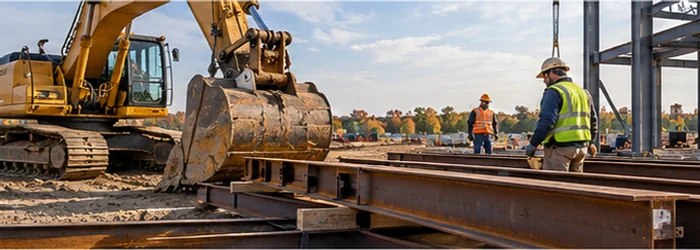
Several manufacturers in the USA produce ox-branded heavy machinery that is specifically designed for the construction sector. These machines include excavators, bulldozers, and lifting equipment, engineered to handle heavy-duty tasks in large-scale projects.
Notable features of ox-branded construction equipment:
- High horsepower and torque for tough terrains
- Enhanced hydraulic systems for increased efficiency
- Longer service life with minimal maintenance
Applications of Ox in Construction Projects
The ox branding in construction is widely recognized for high-quality, durable, and reliable construction solutions. Some of the most common applications include:
- Skyscraper foundation systems requiring high-strength ox cement and rebar
- Road and bridge construction where ox reinforcement materials provide structural integrity
- Industrial and warehouse flooring that demands high-performance ox flooring solutions
Conclusion
The term "ox" in construction is widely used to represent strength, durability, and resilience. Whether referring to cement, steel reinforcement, flooring solutions, or heavy-duty machinery, ox-branded products and materials play a crucial role in ensuring long-lasting and structurally sound construction projects in the USA.
Scope and meaning
Construction terminology is context-dependent. For define ox in construction in the usa, identify whether wording comes from drawing, specification, contract, trade conversation, code, or regional practice. The same abbreviation can mean different things. Do not infer a dimension, capacity, duty, or legal outcome from a word alone; record its source, location, revision, and phase.
Planning inputs to confirm
Check the current legend, definitions, schedules, detail references, approved submittals, and glossary. Confirm discipline and location. Compare the term with the assembly it describes. If documents conflict, preserve both references and ask through the agreed RFI or review process. Share the written answer with affected trades.
Design choices and trade-offs
Translate the word into observable requirements. Ask what is measured, where it begins and ends, which material or system it names, expected performance, and acceptance evidence. If it describes orientation, height, clearance, or connection, show it on a plan or section with unit and datum.
A practical project sequence
Capture the exact term, source, and version; locate its definition or detail; compare notes and schedules; request clarification; record the answer; update submittals or field instructions. Do not conceal work while the meaning could change the installed result.
Coordination and responsibilities
An interpretation may affect architecture, structure, estimating, procurement, inspection, and payment. Name the package and location. Explain whether uncertainty changes scope, quantity, material, sequence, or acceptance. Use consistent wording in RFI, response, drawing, meeting note, and closeout.
Cost and schedule considerations
Ambiguous terms create pricing risk because bidders may assume different work. Define the item in measurable language, identify unit and finish, and state adjacent work. Compare responses on one interpretation. Record cost or schedule effects as a separate change.
Quality checks
Acceptance should rely on specified measurements, product data, drawings, inspection criteria, or performance—not a label alone. Keep corrections in glossary or revision record. Escalate unresolved meanings before work is covered or paid, especially when safety or compliance is affected.
Risk and long-term use
Keep a glossary with plain-language meaning, source revision, location, reviewer, and limits. Retain accepted RFIs with as-builts. Confirm the term still applies to current system and requirements; do not treat local usage as universal.
Topic-specific questions
The source outline surfaces points to verify against current project information:
- Introduction to Ox in Construction. Check the exact location, source revision, reviewer, and whether the point is a definition, design intent, measurement, requirement, or example. Record the answer before procurement or installation if it changes scope, sequence, or acceptance.
- Understanding Ox in Construction. Check the exact location, source revision, reviewer, and whether the point is a definition, design intent, measurement, requirement, or example. Record the answer before procurement or installation if it changes scope, sequence, or acceptance.
- Types of Ox-Related Products in Construction. Check the exact location, source revision, reviewer, and whether the point is a definition, design intent, measurement, requirement, or example. Record the answer before procurement or installation if it changes scope, sequence, or acceptance.
Project checklist
Before committing to a decision about define ox in construction in the usa, work through these checks:
- Record location, purpose, project phase, date, and controlling revision.
- Separate verified conditions from assumptions, open questions, allowances, and exclusions.
- Confirm scope, measurement, product or system, interfaces, access, and responsibility.
- Agree who reviews the work, which evidence is required, and when inspection must occur.
- Document approved changes with location, cost or schedule effect, owner, date, and closure.
- Keep tests, photographs, record information, warranties, and maintenance instructions for handover.
Common mistakes to avoid
Do not rely on a broad label, old drawing, generic figure, or verbal field decision when the actual scope can be checked. Confirm the basis, location, version, and reviewer before work is committed. When evidence is incomplete, mark the conclusion provisional and name the next action instead of presenting an assumption as fact.
Frequently asked questions
Does a construction term always have one meaning?
No. Trade, jurisdiction, drawing, specification, and project context can change usage.
How can an abbreviation be verified?
Check the current legend, specification, schedule, contract definition, product submittal, and exact location.
Can a term alone establish compliance?
No. Compliance depends on governing requirements, documented design, measured conditions, and approvals.
What if documents disagree?
Record both references and ask the responsible designer or contract administrator for written clarification.
Why keep a glossary?
It preserves the approved meaning, source revision, location, reviewer, and limits for later teams.
Related Building Design resources
Continue with Corridor Vs Hall In Construction: Understanding, Corridor Vs Hallway In Construction: Key, ENCS Meaning in Construction. Apply each resource only to its scope and verify project decisions against approved records.
Conclusion
A reliable result for define ox in construction in the usa comes from clear scope, current evidence, coordinated decisions, and documented checks. Obtain qualified review where safety or compliance is involved, and keep the approved record available for construction and future maintenance.
Additional practical considerations
Write an unclear term beside its source and location, then describe the work in plain language. Ask what is measured, which material or role is meant, and what decision depends on the answer.
Convert define ox in construction in the usa into a decision that can be reviewed. State the question, location, project phase, controlling document, required outcome, and person who can approve it. Separate what is known from what still needs measurement, testing, or interpretation. For a construction term, record its source, discipline, revision, location, plain-language meaning, and the decision that depends on it. This makes the next action clear and keeps a broad topic from becoming an unrecorded field assumption.
Build an evidence trail for define ox in construction in the usa from the current source material. Keep drawing and specification revisions, dated site information, product data, quantities, approvals, meeting decisions, and photographs tied to a location. If two records disagree, retain both references and obtain a written resolution. A clean record lets another reviewer understand why a choice was made without relying on memory or a generic example.
Review interfaces before work is released. Check what touches the topic: structure, enclosure, utilities, access, adjacent trades, temporary conditions, inspection points, and maintenance space. Name who provides each connection and who verifies it. For a construction term, record its source, discipline, revision, location, plain-language meaning, and the decision that depends on it. Resolve the detail in the documents before procurement or concealment; an instruction to coordinate later does not explain scope or acceptance.
Compare options using the same basis. State dimensions, performance, material, finish, delivery, access, schedule, exclusions, and required testing. Explain the trade-off rather than presenting one option as universally best. Record any effect on cost, durability, operation, or future repair. Where a value depends on site or jurisdiction, identify the facts that must be checked instead of implying a fixed result.
At handover, preserve the final approved decision for define ox in construction in the usa. Include the installed configuration, approved changes, product or source information, inspection and test evidence, open items, maintenance steps, and responsible contact. Mark superseded documents and keep the final revision accessible. This closes the gap between planning and use, and gives future owners a reliable basis for repair or alteration.







Leave a Reply
Want to join the discussion?Feel free to contribute!