
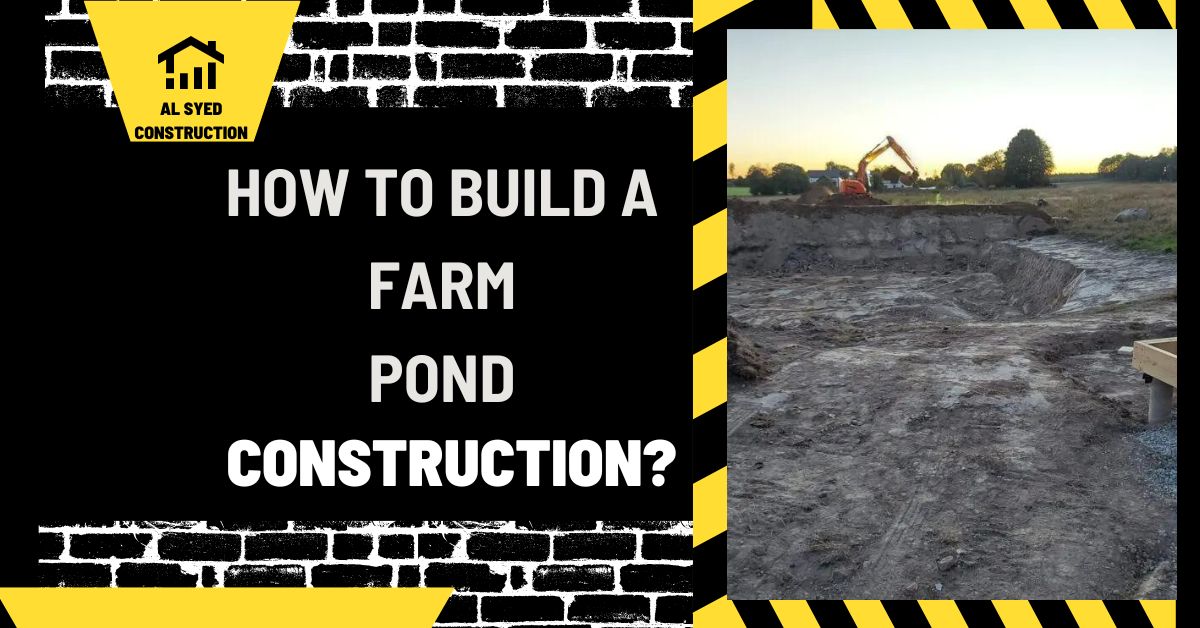
How To Build A Farm Pond
Water features and drainage projects interact with soil, groundwater, runoff, utilities, and neighboring land. building a farm pond may involve a lined garden pond, farm pond, dock, soakaway, or work near a watershed; each has different structural and environmental considerations. This guide focuses on planning, coordination, and long-term performance. It does not provide a universal excavation size or dock detail because site conditions, water level, soil, and local rules determine the design.
Quick Answer
building a farm pond should begin with a site assessment and a clear water-management objective. Map existing drainage and water levels, investigate soil and groundwater, locate utilities, and confirm permits or resource-area review before excavation. Design the structure, liner, outlet, access, and maintenance plan together, and have qualified professionals review work that affects a waterbody or supports people and loads.
What to Assess Before Work Begins
A farm pond may serve water storage, livestock, irrigation, habitat, or drainage, and those purposes affect siting and design. Soil, water source, embankment, spillway, seepage, access, and downstream consequences need early review.
Do not treat a pond embankment as ordinary landscaping. Obtain qualified engineering and permit review for dam-like or water-control features and retain an inspection and maintenance plan.
Resolve water, access, and approvals before excavation
For building a farm pond, a plan should show the source of water, normal operating level, safe overflow, maintenance access, and what happens during a storm or seasonal change. Check soil and groundwater, property boundaries, utilities, resource-area requirements, and nearby structures. A drawing that omits the receiving area or inspection access is not ready for construction.
Four checks that make the decision more reliable
- Purpose: State what the work must accomplish and how the result will be checked.
- Existing conditions: Record grade, soil, access, utilities, water, existing materials, and features that must remain.
- Interfaces: Identify nearby buildings, paths, drains, planting, property edges, other trades, or users affected by the work.
- Ownership after completion: Assign inspection, watering, cleaning, repairs, recordkeeping, and approval of future changes.
A finish that looks complete on opening day may need watering, cleaning, pruning, surface repair, or seasonal inspection to keep performing. Identify who owns those tasks and what condition should trigger a repair. Include access and replacement materials in the original plan.
Materials, Methods, or Plant Types to Compare
Compare alternatives against the same site information and scope. The options below are starting points for selection, not a substitute for a project detail or product submittal.
- Lined garden pond: A liner contains water where soil does not hold it reliably. Base preparation, underlayment, edge restraint, penetrations, water circulation, and protection from puncture depend on the system.
- Farm or stormwater pond: A larger pond may serve water storage, drainage, habitat, or agricultural purposes. Its embankment, spillway, groundwater, seepage, and downstream consequences require site-specific planning.
- Dock or access platform: A dock carries people and sometimes equipment at a changing water edge. Framing, foundations, connections, flotation, corrosion, access, and loads must follow a design suited to water level and site exposure.
- Soakaway or infiltration feature: An infiltration system accepts water only when soil and groundwater conditions permit. Testing, pretreatment, overflow, setbacks, and cleanout access are part of the system; do not route contaminated runoff into an infiltration feature.
Planning and Work Sequence
A clear sequence reduces rework because layout, utilities, material delivery, and quality checks are resolved before the work is covered or put into use.
- Survey grades, property boundaries, utilities, vegetation, access, existing drains, groundwater indicators, and the receiving water. Identify nearby buildings, wells, septic systems, and sensitive areas.
- Define the function and operating range, including routine inflow, overflow, seasonal water level, access, and maintenance. Prepare the design basis before choosing a liner, dock system, excavation approach, or infiltration product.
- Confirm local permissions, resource reviews, engineering needs, and construction access. Mark approved work limits and sequence any required erosion or sediment controls before disturbance.
- Prepare the excavation or support area according to the approved drawings. Protect stable banks and adjacent structures, handle unsuitable soil as specified, and maintain safe access for equipment and inspection.
- Install the liner, structure, drainage, filter, penetrations, and connections in the manufacturer or project sequence. Inspect concealed work before cover and keep debris out of the water system.
- Fill, test, and observe the feature under controlled conditions. Check leakage, settlement, outlet flow, support movement, and erosion, then provide an owner with maintenance and emergency instructions.
Quality Checks, Maintenance, and Long-Term Performance
Inspect after storms and changes in water level. Look for erosion at inlets and outlets, seepage, settlement, exposed liner, displaced stones, blocked screens, and new sediment. Remove debris with methods that do not destabilize the bank or discharge contaminated material.
Keep pumps, drains, dock connections, barriers, and access surfaces on a documented inspection schedule. Seasonal preparation should reflect the actual system and local exposure. If cracks, movement, unexpected seepage, or a change in downstream flow occurs, restrict access and obtain professional review before making repairs.
Define how the finished work will be checked: line and grade, plant identity and condition, drainage flow, material appearance, record documents, or an agreed maintenance handoff. A clear check makes acceptance less subjective and helps identify a defect while it can still be corrected.
Safety, Environmental, and Approval Considerations
Water work can affect wetlands, flood paths, groundwater, water quality, and neighboring land. Excavation may require permits or resource review even when the feature looks small. Use erosion controls, manage dewatering and spoil, locate buried utilities, and protect workers around open water and unstable banks. Docks and retaining components require a qualified design appropriate to loads and changing water conditions.
Common Mistakes to Avoid
- Excavating before verifying property limits, utilities, groundwater, and permit requirements.
- Assuming a pond will hold water without soil assessment or an approved liner design.
- Routing overflow toward a foundation, road, neighboring lot, or unprotected slope.
- Treating a dock or embankment as a simple DIY platform without checking loads and support.
- Using an infiltration feature where groundwater, soil, setbacks, or pollutant risks make it unsuitable.
Frequently Asked Questions
Can any yard support a pond?
No. Soil, groundwater, drainage, access, utilities, safety, and local approvals all affect feasibility.
Does a garden soakaway need testing?
Yes. The receiving soil, groundwater, setbacks, pretreatment, and overflow route should be evaluated before installation.
Can I build a dock from a standard plan?
A plan must suit the actual water level, bottom, shoreline, loads, materials, permits, and access. Qualified review is important.
How can I tell a pond bank needs repair?
Look for slumping, seepage, fresh erosion, displaced protection, settlement, or a changed outlet flow and seek professional review when stability is in doubt.
When is professional review important?
Seek qualified review when the work affects a slope, waterbody, drainage path, retaining condition, public access, structural load, or regulated resource.
Related Guides in Plants, Gardens & Landscaping
Continue with these related topics from the same category: How To Construct A Garden Pond; How To Build A Pond Dock; How To Construct A Garden Soakaway. Use the guide that matches the specific work and confirm current site requirements before acting.
Conclusion
A dependable result for building a farm pond comes from a clear objective, verified site conditions, a suitable method, and an agreed inspection and maintenance plan. Coordinate affected trades and users before work begins, follow current drawings and product instructions, and record approved changes. When design, water, safety, legal, or financial conditions are uncertain, pause and ask the responsible qualified professional to review them.
Connect design and maintenance for building a farm pond
A finish that looks complete on opening day may need watering, cleaning, pruning, surface repair, or seasonal inspection to keep performing. Identify who owns those tasks and what condition should trigger a repair. Include access and replacement materials in the original plan.
Respect differences between properties for building a farm pond
The same product or planting plan can behave differently because of soil, slope, exposure, water, shade, traffic, and workmanship. Treat examples as planning prompts, verify project requirements, and adjust to measured site conditions before deciding quantities or construction details.
Make the result verifiable for building a farm pond
Define how the finished work will be checked: line and grade, plant identity and condition, drainage flow, material appearance, record documents, or an agreed maintenance handoff. A clear check makes acceptance less subjective and helps identify a defect while it can still be corrected.
Understanding the exact search intent for building a farm pond
Readers use nearby phrases for different reasons: a definition question needs a direct meaning, a planning question needs sequence and dependencies, and a selection query needs comparison criteria. Keep the answer focused on that intent, then explain adjacent decisions only where they help the reader act.
Translate the idea into a site decision for building a farm pond
Before ordering material or choosing a method, write down the existing condition, desired result, constraints, and acceptance check. A small marked sketch, photographs, dimensions, and notes on drainage or access can prevent a broad phrase from becoming an ambiguous field instruction.
Connect design and maintenance for building a farm pond
A finish that looks complete on opening day may need watering, cleaning, pruning, surface repair, or seasonal inspection to keep performing. Identify who owns those tasks and what condition should trigger a repair. Include access and replacement materials in the original plan.
Respect differences between properties for building a farm pond
The same product or planting plan can behave differently because of soil, slope, exposure, water, shade, traffic, and workmanship. Treat examples as planning prompts, verify project requirements, and adjust to measured site conditions before deciding quantities or construction details.
Make the result verifiable for building a farm pond
Define how the finished work will be checked: line and grade, plant identity and condition, drainage flow, material appearance, record documents, or an agreed maintenance handoff. A clear check makes acceptance less subjective and helps identify a defect while it can still be corrected.



Leave a Reply
Want to join the discussion?Feel free to contribute!