
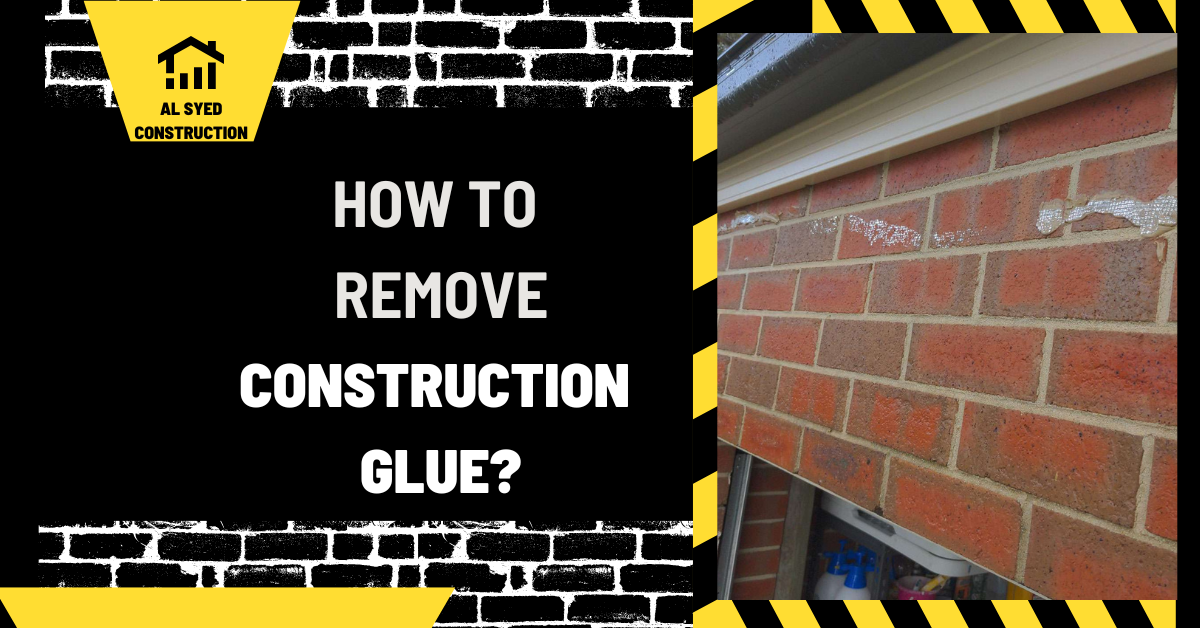
How to Remove Construction Glue?
How to Remove Construction Glue? is useful to understand when a construction team needs to identify a component, select a method, or coordinate work with another trade. This guide explains remove glue in practical terms, how it fits into a project, what to check before work begins, and how to recognize conditions that need clarification. It gives owners, estimators, designers, and field crews a shared starting point without replacing approved drawings, product instructions, or qualified judgment.
Quick Answer
In construction, remove glue relates to a adhesive system used or discussed as part of a defined task. The precise use of remove glue depends on material, setting, and approved project requirements. The right decision depends on actual materials, service conditions, loads or operating limits, and acceptance criteria. Use the exact project detail and current manufacturer information before ordering, installing, operating, or changing work.
What remove glue Means in Construction
The phrase remove glue identifies a topic, but does not by itself specify a complete design or method. The team needs to know what item or action it refers to, where it occurs, which materials are involved, and what result is expected. The precise use of remove glue depends on material, setting, and approved project requirements. This prevents a general label from being mistaken for a product approval, capacity, tolerance, sequence, or safety procedure.
Look beyond the name to interfaces around it. Ask what supports or connects to the item, what forces or environmental conditions it sees, which trades install nearby work, and how the finished condition will be inspected. If a drawing, field instruction, and product document conflict, resolve the difference through the project's review process. Clarifying before installation is easier than finding an inaccessible condition during inspection or maintenance.
How It Is Used and Why Details Matter
Adhesives work through chemistry, surface contact, and cure. Products that look similar differ in substrate approval, open time, movement, temperature, moisture tolerance, cleanup, and structural status. The words construction adhesive do not establish a rating. Verify the exact product, approved use, current instructions, submittal, and safety data.
For planning remove glue, define what is included, what remains, who supplies supporting material, and who verifies the result. A adhesive system can interact with structure, finishes, utilities, access routes, weather, or later trades. Record unusual conditions and keep enough access for inspection. The precise use of remove glue depends on material, setting, and approved project requirements. The complete system and its interfaces matter as much as the named item.
Common Applications and Field Contexts for remove glue
- Surface preparation: Dust, oil, release agents, old coatings, laitance, and moisture affect bond. Prepare both surfaces with an approved method that leaves no residue.
- Joint geometry: Bond area, gap, movement, clamping, and cure access affect the result. A bead cannot compensate for poor fit or a rigid product across a moving joint.
- Cure conditions: Temperature, humidity, ventilation, product age, and substrate temperature change working time and cure. The exact product conditions control.
- Compatibility: Some formulations stain, soften, attack, or fail to bond to plastics, coatings, membranes, or sealers. Confirm before installation or removal.
Options and Trade-Offs
There is rarely one universal choice for every remove glue situation. These broad approaches frame a discussion about performance, compatibility, access, inspection, and project constraints; they are not product recommendations. The approved documents and product scope govern the actual selection.
| Approach | Where it may fit | Check before use |
|---|---|---|
| Construction adhesive | Bonding materials specifically identified on the product label. | Do not treat a general adhesive as a structural anchor unless approved. |
| Epoxy system | Listed bonding, anchoring, repair, or coating applications. | Mixing, preparation, temperature, and cure are system-specific. |
| Urethane or hybrid | Applications permitted for listed materials and movement. | Moisture response and preparation vary by formulation. |
| Mechanical restraint | Work needing immediate restraint or a defined load path. | Mechanical connections also need compatible substrate and design. |
A comparison table cannot establish capacity, approval, compatibility, or code compliance. Keep product information with the submittal and check that delivered materials match what the project reviewed.
Selection Checks for remove glue
Review these points with the drawing, specification, real site conditions, and responsible trade. For every unknown, identify who can verify it and hold affected work until the information is available.
Confirm the substrate and condition
Dust, oil, release agents, old coatings, laitance, and moisture affect bond. Prepare both surfaces with an approved method that leaves no residue. For remove glue, turn this into a project check: name the evidence to review, who signs off, and what must be corrected before work continues. Record differences between site conditions and approved detail instead of adapting by guesswork.
Define the required function
Bond area, gap, movement, clamping, and cure access affect the result. A bead cannot compensate for poor fit or a rigid product across a moving joint. For remove glue, turn this into a project check: name the evidence to review, who signs off, and what must be corrected before work continues. Record differences between site conditions and approved detail instead of adapting by guesswork.
Check compatibility and configuration
Temperature, humidity, ventilation, product age, and substrate temperature change working time and cure. The exact product conditions control. For remove glue, turn this into a project check: name the evidence to review, who signs off, and what must be corrected before work continues. Record differences between site conditions and approved detail instead of adapting by guesswork.
Plan access, inspection, and records
Some formulations stain, soften, attack, or fail to bond to plastics, coatings, membranes, or sealers. Confirm before installation or removal. For remove glue, turn this into a project check: name the evidence to review, who signs off, and what must be corrected before work continues. Record differences between site conditions and approved detail instead of adapting by guesswork.
Planning and Work Sequence
A consistent sequence reduces rework and catches mismatches while visible. These steps are a planning framework for remove glue; approved project methods and exact product instructions take precedence.
- Confirm the exact product and application from label, submittal, data, and safety information before use.
- Check that each substrate and coating is permitted. Test a small area where instructions recommend, especially during removal.
- Prepare surfaces as specified. Remove dust and contamination by an approved method and protect adjacent finishes.
- Check age, storage, temperature, nozzle or mixing equipment, and protection. Reject damaged, expired, or improperly stored material.
- Apply within working time and assemble as specified. Support or clamp without shifting parts during cure.
- Protect for full cure. Inspect alignment, coverage, squeeze-out, and finish; record product identity when required.
For concealed work, agree on a hold point before starting. The reviewer should know what will be visible, which records are needed, and what acceptance criteria apply. Keep labels, tools, offcuts, and replacement parts organized so different products are not confused.
Safety and Quality Control
Safety and quality both start with understanding the setup. A checklist should reflect remove glue, tools and equipment, and people who could enter the work area. Use the site safety plan and applicable requirements for task-specific controls.
- Read the current label and safety data. Use the ventilation, gloves, eye protection, and spill controls specified for the chemistry and location.
- Keep uncured material away from skin, eyes, drains, and incompatible products. Do not improvise solvent mixtures.
- Treat removal as a separate chemical and substrate problem. Scraping, heat, and solvents may damage finishes, wiring, or the base.
- Do not load or conceal before stated cure. A surface skin does not prove full depth has cured.
Before closing or handover, check product identity, dimensions and alignment where specified, connection or operating condition, adjacent work, and required records. Photograph concealed details when the project requires it. If a defect is found, mark its location and keep it open until the responsible party approves correction.
Common Mistakes to Avoid
Problems with remove glue often start with a missed check rather than an unusual failure. These habits prevent rework and unsafe improvisation:
- Applying product to dusty or incompatible surfaces. Recheck approval and preparation.
- Using generic cure time instead of exact product, bead size, and ambient conditions.
- Using adhesive where detail requires a screw, anchor, or separate restraint.
- Removing cured adhesive with an untested solvent or aggressive tool. Protect and test the substrate.
When a mistake appears, stop affected work, protect the area, collect product and condition information, and ask the responsible reviewer to define the repair. Do not cover a defect with a patch or continue a repeated operation before the cause is understood. Document the correction for following shifts.
Example: Applying the Checks on a Project
For a trim repair, the installer identifies both surfaces, checks the exact label, and confirms the coating is sound. A compatibility test is completed where permitted. The surface is prepared, adhesive applied within its working time, and parts held through cure. Old adhesive removal is tested separately so the method does not damage the base.
In a real project, add the plan reference, product identity, inspection point, and responsible person to the work package. Compare field conditions with approved requirements before access becomes difficult. If conditions change, update the plan and inform adjacent trades so that the revised approach is understood by everyone.
Inspection, Maintenance, and Troubleshooting
When a bond separates, distinguish failure at the surface from cohesive failure, substrate failure, contamination, movement, or water entry. Record break location and service conditions. Broad scraping or solvents can enlarge the repair. Rebond only after correcting the cause and approving the replacement system. Follow cure, ventilation, disposal, and reinspection instructions.
When troubleshooting remove glue, record location, time, operating condition, affected materials, recent work, and changes in sound, movement, appearance, or performance. Compare evidence with approved detail and product data. Refer structural, lifting, electrical, chemical, and life-safety questions to qualified people responsible for that system. Keep temporary controls documented and time-limited; do not let an unresolved workaround become permanent.
Frequently Asked Questions About remove glue
What should be checked first when planning remove glue?
Start with the task, existing material or equipment, approved detail, and loads, operating limits, or exposure. Confirm product identity and who approves the work. Resolve unknowns before procurement or installation.
Can a similar product or tool be substituted for remove glue?
Only when the responsible project authority confirms equivalent function, compatibility, rating, geometry, and installation conditions. Appearance is not proof of equivalence. Keep the approval and revised documentation with the job.
How can installation errors be avoided?
Use current drawings and instructions, prepare the work area, inspect tools and materials, and verify a representative installation before repeating it. Train workers and hold an inspection point for concealed work.
What if the site differs from the plan for remove glue?
Pause the affected work, make the area safe, document the difference, and contact the responsible reviewer. Do not change dimensions, load paths, patterns, or procedures by guesswork.
What records are useful after completion?
Keep drawing references, product and model identification, inspection results, approved clarifications, and photos of concealed conditions where required. These records support turnover and later maintenance.
Related Guides in Tools, Equipment & Fasteners
These guides cover related topics within the same website category: Remove Epoxy Urethane Tile; How to Remove Construction Adhesive?. Use each article for its stated scope and verify project decisions against approved documents.
Conclusion
A dependable approach to remove glue starts with a clear definition, verified site conditions, a compatible product or method, and a planned inspection. Coordinate adjacent trades, follow current instructions, and record approved changes before work is hidden or put into service. Ask the responsible professional to resolve uncertain terminology or performance. This keeps the work traceable and helps the result meet its intended purpose.


Leave a Reply
Want to join the discussion?Feel free to contribute!