
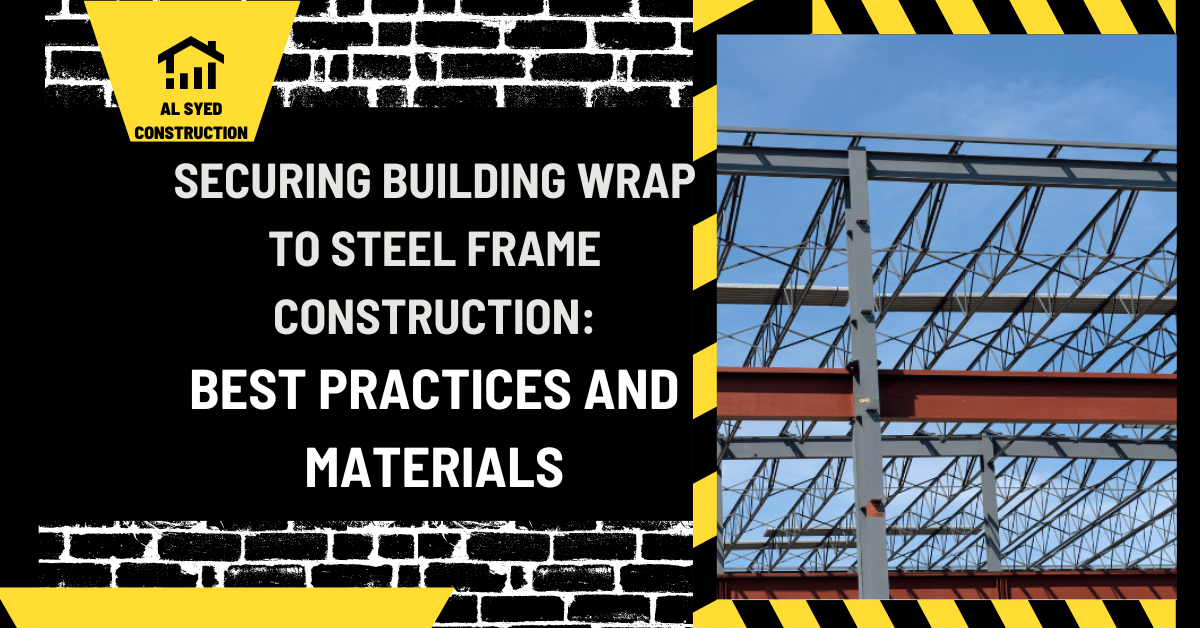
Building Wrap On Steel Frame
Building Wrap On Steel Frame is best understood by looking at the job the material or component must perform. This guide explains building wrap on steel frame, decisions that affect suitability, how to check procurement and installation, and what to record for maintenance. It gives owners, estimators, designers, suppliers, and site teams a shared starting point. Exact dimensions, ratings, mixes, and acceptance limits must come from approved project documents and product information.
Quick answer
The right choice for building wrap on steel frame depends on intended function, exposure, approved details, and evidence for the actual product. A general term is a starting point, not a complete specification.
Topic-specific background
Building wrap, also known as house wrap, plays a crucial role in protecting a structure from moisture and air infiltration, contributing to energy efficiency and longevity. In steel frame construction , securing the building wrap properly is essential to ensure its effectiveness and durability. This article explores the recommended methods and materials for attaching building wrap to steel frames, ensuring a well-protected and energy-efficient building envelope.
In practice, building wrap on steel frame should be judged against its intended application rather than a broad label, color, price, or rule of thumb. Confirm what is specified, where it will be used, what it touches, and how it will be checked. If conditions differ from the approved detail, pause the affected decision and resolve it before repeating or concealing work.
What building wrap on steel frame means on a project
A construction term has meaning only in context. One product family can be a structural part, finish, bedding layer, protective barrier, or temporary aid, and those roles create different demands. Start with the drawing, specification, schedule, or product designation. Identify who supplies it, who prepares the substrate, who installs it, and who verifies the result.
Metal products are defined by grade, manufacturing, geometry, thickness, finish, connections, exposure, and traceability. Similar-looking substitutions can have different strength, corrosion behavior, weldability, or fit.
A description such as strong, clean, suitable, galvanized, washed, fire-rated, or weather-resistant may be too broad to procure or inspect. Connect it to a grade, test, assembly, detail, or acceptance criterion. The right choice for building wrap on steel frame depends on intended function, exposure, approved details, and evidence for the actual product. A general term is a starting point, not a complete specification.
Key properties and selection decisions
Before choosing or ordering building wrap on steel frame, compare the issues below on a like-for-like basis. This avoids a decision based only on appearance or headline price while overlooking interfaces and service conditions.
Identify exact product
Check grade, dimensions, section, finish, and certificates. Distinguish structural steel, sheet, tubing, reinforcement, stainless steel, aluminum, and miscellaneous metal.
Coordinate connections
Check holes, welds, bolts, access, tolerances, and sequence. Fabrication changes can alter load paths or conflict with trades.
Design for exposure
Assess water, salts, chemicals, heat, abrasion, and dissimilar-metal contact. Specify coating, isolation, drainage, and maintenance.
Keep traceability
Retain product marks, batch records, shop drawings, inspection, and field approvals to identify pieces later.
Procurement and submittal checklist
A useful submittal identifies exactly what will be installed and where. Keep records specific; mark a field not applicable rather than leaving it ambiguous.
| Record | Why it matters |
|---|---|
| Product identity | Connects a delivery to the approved submittal and prevents similar grades or models being mixed. |
| Source, grade, batch | Supports traceability and investigation of quality concerns. |
| Dimensions and quantity basis | Clarifies units, tolerances, moisture or finish condition, and quantity reconciliation. |
| Use location and interface | Shows substrate, adjacent materials, exposure, and the detail the product must work with. |
| Inspection and care | Defines checks before concealment and information the owner needs at handover. |
A checklist coordinates work but is not an approval by itself. Resolve substitutions through project review and retain the decision with current drawings. Where supply varies, agree how samples, tests, tickets, or mock-ups will be used to accept batches.
Practical workflow from planning to installation
Use a repeatable workflow for building wrap on steel frame. The exact order changes by trade, but these checks catch rework and preserve evidence for concealed conditions.
- Confirm approved use, documents, and inspection hold points.
- Check delivery identity and condition before use.
- Prepare a clean, safe work area and suitable substrate.
- Install or place in the documented sequence.
- Check interfaces, tolerances, and concealed details.
- Record measurements, tests, and corrections.
- Protect accepted work until the next trade proceeds.
Assign responsibility for every hold point. Installers should know what remains visible, reviewers should know when to attend, and record keepers should capture location and result. If work continues before inspection, later exposure or repetition may be necessary.
Quality control and safety
Quality control should match building wrap on steel frame and the work-area risks. Check product identity and condition; confirm tools and temporary supports; control hazards such as suspended loads, excavations, moving machinery, dust, sharp edges, wet surfaces, and chemicals. Follow the site safety plan and product handling instructions.
- Assuming a generic name proves compliance.
- Comparing products with different units or test conditions.
- Accepting a delivery by appearance only.
- Making unreviewed field changes or substitutions.
- Covering work before inspection.
- Keeping no location-based quality record.
Record the drawing or specification reference, date, location, product identity, test or measurement, result, and defect disposition. Photograph concealed work where required. A failed check should identify the affected area, approved correction, and retest—not only say it was fixed.
Illustrative field example
Two beams appear alike, but the schedule assigns different grades and coatings. The inspector checks markings before release. A service opening conflicts with a connection, so the crew requests a reviewed detail instead of cutting in place. Alignment and coating repairs are recorded before enclosure.
The lesson for building wrap on steel frame is to treat a changed condition as a decision point. Record what differs, protect the work, and obtain an approved response. A short clarification before installation is easier to manage than a hidden repair after adjacent work has progressed.
Cost, storage, waste, and service life
For budgeting building wrap on steel frame, compare installed cost rather than a single unit price. Include delivery, unloading, handling, processing, protection, labor, tests, expected waste, and later maintenance. For a local market or supplier-specific item, request written quotations with date, location, unit, grade, quantity, taxes, freight, and unloading stated. Old price tables are not live quotations.
Store metals dry and supported, segregated by grade and finish. Inspect markings, cut edges, weld zones, fasteners, drainage, and coating damage. Repair protection only with a compatible approved method.
Reduce waste by coordinating dimensions, quantities, delivery timing, and storage. Keep reusable surplus identified and confirm approval before using it elsewhere. Separate unknown, contaminated, treated, or potentially hazardous material from ordinary waste. At handover, provide product identity, care instructions, and inspection information.
Common mistakes to avoid
- Treating building wrap on steel frame as a complete specification instead of checking grade, dimensions, use, and acceptance criteria.
- Comparing products with different units, tests, moisture, or exposure assumptions.
- Accepting delivery by appearance without checking identification and records.
- Allowing an unreviewed change or substitute to become repeated work.
- Covering joints, supports, reinforcement, drainage, or substrate before inspection.
- Keeping no location-based record of tests, corrections, or maintenance.
When a mismatch appears, isolate affected material or area, make work safe, document what was found, and ask the responsible reviewer to decide. Do not mix an unverified batch with accepted material or conceal a defect with a finish. Record the disposition for the next crew and owner.
Frequently asked questions
How do I know if building wrap on steel frame suits my project?
Start with intended function and approved specification. Check exact product, source or grade, exposure, interfaces, and evidence. Ask the project reviewer when documents do not answer a site-specific question.
Can another product be substituted for building wrap on steel frame?
Only after the responsible authority confirms relevant performance, geometry, compatibility, installation, and maintenance needs. Appearance or a similar name does not prove equivalence. Retain approval and revised documents.
What should I request from a supplier?
Ask for product designation, source and grade where relevant, dimensions, quantity basis, delivery conditions, technical data, and required tests. Compare current written offers with freight, taxes, unloading, and validity stated.
What must be checked before work is covered?
Verify product, substrate, dimensions, supports, joints, drainage, tests, and approved changes. Photograph concealed details where required and record location and result before the next trade proceeds.
What if material or site conditions differ from the plan?
Stop affected work, protect or separate the item, document the difference, and contact the responsible reviewer. Do not change a mix, layer, connection, or tested assembly by guesswork.
How should completed work be maintained?
Follow product instructions and handover information. Keep drainage and access clear, inspect exposed joints and surfaces, and record concerns. Use approved repairs; refer safety or performance issues to qualified people.
Related guides in Sand, Aggregates & General Materials
Explore related topics in this category: Construction Grating, Galvanized Steel In Construction, What is Steel Frame Construction. Check project decisions against approved documents and product information.
Conclusion
A dependable decision about building wrap on steel frame starts with a defined use, suitable product evidence, and a detail that accounts for surrounding conditions. Coordinate procurement, installation, inspection, and maintenance. Keep records tied to location, and resolve substitutions or unexpected conditions through project review. These steps make the result easier to verify and maintain throughout its service life.
Handover and decision records
At completion, prepare a record that helps the owner identify what was installed and how it should be inspected. Include the product or material name, supplier or source, grade or model, delivery or batch reference, installation location, date, approved drawing revision, and relevant inspection or test result. Note any accepted substitution, repair, or field clarification and link it to the affected area. For concealed work, label photographs with the room, grid, elevation, or asset reference so they remain useful after finishes are complete.
Where several deliveries or product lots were used for building wrap on steel frame, show which locations received each one. Include care instructions, compatible repair materials, limitations on cleaning or alteration, and the party responsible for routine checks where those details are available. Do not invent a maintenance interval; use the product documents or owner plan. If a defect appears later, compare its location and symptoms with the record before selecting a repair. A clear handover reduces guesswork, supports warranty discussions, and helps future workers avoid mixing incompatible products.





Leave a Reply
Want to join the discussion?Feel free to contribute!