
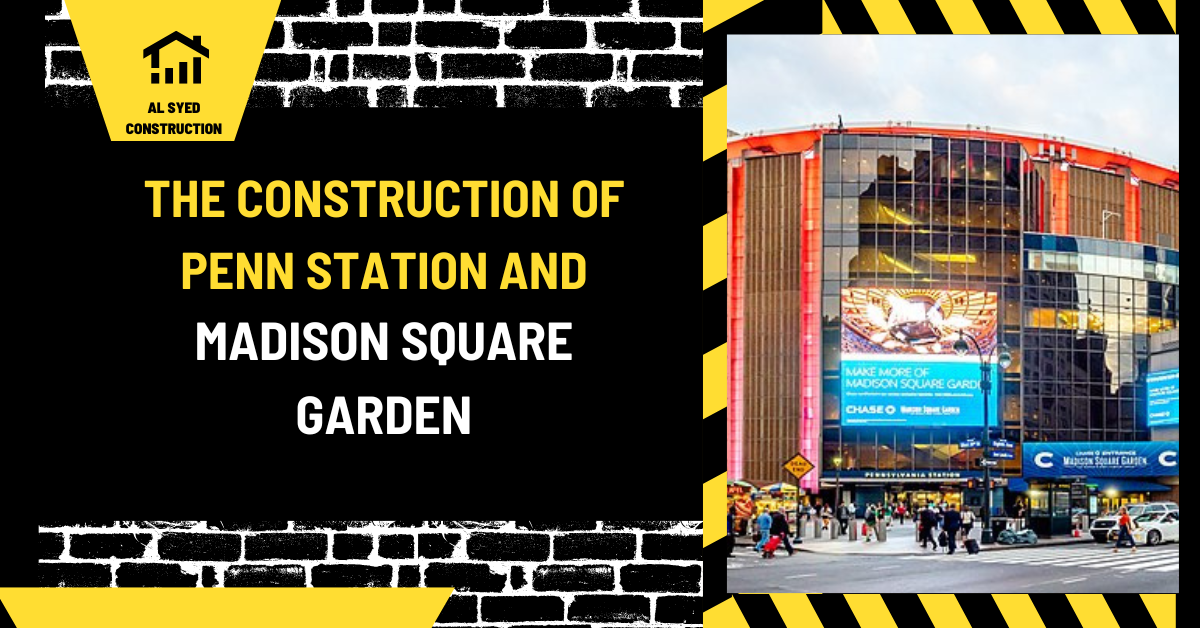
Penn Station And Madison Square Garden
Penn Station and Madison Square Garden are often discussed together because a transportation hub and a major arena occupy the same dense urban site. Their construction history raises enduring questions about redevelopment, operating rail service, structural interfaces, public circulation, and preservation. This guide separates the original station, the later below-grade station and arena complex, and current proposals so that different construction periods are not blended into one story.
Quick Answer
The original Pennsylvania Station opened in 1910. The later redevelopment replaced the original above-ground station while retaining rail operations below, with the current Penn Station and Madison Square Garden complex built in the 1960s. The construction lesson is how a major transport facility, arena, offices, utilities, passenger routes, and phased work can be coordinated on a constrained site; current transformation plans are a separate, changing project phase.
What to Assess Before Work Begins
The original Pennsylvania Station opened in 1910. The later redevelopment kept rail operations below while replacing the original above-ground station and adding Madison Square Garden and office development above. The current below-grade station and arena complex were built during the 1960s redevelopment; this is distinct from present-day transformation proposals.
A useful construction case study examines how rail service, passenger routes, structural support, utilities, deliveries, public access, and arena operations were coordinated across phases. The site is a layered project, not a single building erected in an empty lot. Label photographs and plans by phase and check any current schedule against recent agency records.
Turn the topic into a project checklist
For penn station and madison square garden, write down the intended result, existing conditions, material or service scope, responsible party, inspection point, and maintenance handoff. This makes quotes easier to compare and helps the team identify assumptions before they become field changes. Keep the decision aligned with current drawings, product information, and local requirements.
Four checks that make the decision more reliable
- Purpose: State what the work must accomplish and how the result will be checked.
- Existing conditions: Record grade, soil, access, utilities, water, existing materials, and features that must remain.
- Interfaces: Identify nearby buildings, paths, drains, planting, property edges, other trades, or users affected by the work.
- Ownership after completion: Assign inspection, watering, cleaning, repairs, recordkeeping, and approval of future changes.
Readers use nearby phrases for different reasons: a definition question needs a direct meaning, a planning question needs sequence and dependencies, and a selection query needs comparison criteria. Keep the answer focused on that intent, then explain adjacent decisions only where they help the reader act.
Materials, Methods, or Plant Types to Compare
Compare alternatives against the same site information and scope. The options below are starting points for selection, not a substitute for a project detail or product submittal.
- Preservation and adaptive reuse: Retaining significant fabric can preserve public memory and embodied work, but requires a clear survey, structural review, code strategy, and an operating plan for continued transport service.
- Replacement or redevelopment: A replacement program can reorganize circulation, capacity, and building systems, but creates major phasing, access, construction, and stakeholder challenges. Define which functions must remain active throughout work.
- Air-rights or overbuild coordination: Building above transportation infrastructure can add uses while the station remains operational. Structural loads, vibration, fire and life safety, utilities, access, and construction staging require integrated design.
- Public-private delivery: A public owner may use private development or delivery partners, but the contract must identify public control, financing, construction risk, operations, maintenance, and the route for public review.
Planning and Work Sequence
A clear sequence reduces rework because layout, utilities, material delivery, and quality checks are resolved before the work is covered or put into use.
- Set the historical or project question and identify the period being discussed. Record whether the work is original construction, later redevelopment, renovation, or a current proposal.
- Gather primary plans, agency records, environmental review documents, construction photographs, and dated public announcements. Note the author, publication date, drawing revision, and what the source actually establishes.
- Map the site layers: streets, entrances, concourses, platforms, tracks, arena or office structure, utilities, and passenger routes. Verify how each level relates to the others before describing the construction sequence.
- Identify stakeholders and operating constraints, including rail operators, arena operations, city agencies, emergency services, tenants, and nearby businesses. Assign who approves access and service changes.
- Develop construction phases that preserve safe passenger movement and required operations. Coordinate temporary paths, deliveries, structural work, utility changes, noise, dust, and emergency egress.
- Separate completed work from future concepts in the final record. Keep a dated chronology, mark assumptions, and update the article when agencies issue verified project milestones.
Quality Checks, Maintenance, and Long-Term Performance
A useful case study retains dated drawings, approval documents, photographs, construction phases, and records of how public access and rail operations were maintained. These materials help explain why later concourses or entrances differ from the original design.
For a present-day project update, review agency announcements and current environmental or procurement records before stating a schedule, delivery team, or design as fact. Construction milestones may change, and a rendering is not proof of completed work. Label historical interpretation separately from current status.
A finish that looks complete on opening day may need watering, cleaning, pruning, surface repair, or seasonal inspection to keep performing. Identify who owns those tasks and what condition should trigger a repair. Include access and replacement materials in the original plan.
Safety, Environmental, and Approval Considerations
Historical descriptions can mislead when they collapse several construction periods into one. Current redevelopment plans are time-sensitive. Verify statements against dated primary records, avoid implying that a proposal is complete, and distinguish the transportation facility from adjacent private development. Do not infer structural capacity or construction methods from an exterior photograph.
Common Mistakes to Avoid
- Treating the original station, later below-grade station, and arena as one unchanged building.
- Using a recent rendering as evidence that construction has been completed.
- Ignoring passenger circulation and rail operations when describing construction phasing.
- Assuming air-rights development removes the need for structural and utility coordination.
- Quoting an old schedule or agency arrangement as the current project status.
Frequently Asked Questions
When did the original Penn Station open?
The original Pennsylvania Station opened in 1910. Keep that structure distinct from later redevelopment and current station facilities.
How are Penn Station and Madison Square Garden connected?
The later station and arena were developed together on the same urban site, with transportation functions below and the arena above. Their construction phases and present conditions should be described separately.
What is the main construction challenge on an active station site?
Maintaining safe passenger movement and rail operations while coordinating structure, utilities, access, deliveries, and staged work.
Are current Penn Station plans the same as the 1960s construction?
No. Current transformation proposals are a separate project. Check recent agency announcements for the latest scope and schedule.
Related Guides in Plants, Gardens & Landscaping
Continue with these related topics from the same category: Sports Facility Construction Funding. Use the guide that matches the specific work and confirm current site requirements before acting.
Conclusion
A dependable result for penn station and madison square garden comes from a clear objective, verified site conditions, a suitable method, and an agreed inspection and maintenance plan. Coordinate affected trades and users before work begins, follow current drawings and product instructions, and record approved changes. When design, water, safety, legal, or financial conditions are uncertain, pause and ask the responsible qualified professional to review them.
Understanding the exact search intent for penn station and madison square garden
Readers use nearby phrases for different reasons: a definition question needs a direct meaning, a planning question needs sequence and dependencies, and a selection query needs comparison criteria. Keep the answer focused on that intent, then explain adjacent decisions only where they help the reader act.
Translate the idea into a site decision for penn station and madison square garden
Before ordering material or choosing a method, write down the existing condition, desired result, constraints, and acceptance check. A small marked sketch, photographs, dimensions, and notes on drainage or access can prevent a broad phrase from becoming an ambiguous field instruction.
Connect design and maintenance for penn station and madison square garden
A finish that looks complete on opening day may need watering, cleaning, pruning, surface repair, or seasonal inspection to keep performing. Identify who owns those tasks and what condition should trigger a repair. Include access and replacement materials in the original plan.
Respect differences between properties for penn station and madison square garden
The same product or planting plan can behave differently because of soil, slope, exposure, water, shade, traffic, and workmanship. Treat examples as planning prompts, verify project requirements, and adjust to measured site conditions before deciding quantities or construction details.
Make the result verifiable for penn station and madison square garden
Define how the finished work will be checked: line and grade, plant identity and condition, drainage flow, material appearance, record documents, or an agreed maintenance handoff. A clear check makes acceptance less subjective and helps identify a defect while it can still be corrected.
Understanding the exact search intent for penn station and madison square garden
Readers use nearby phrases for different reasons: a definition question needs a direct meaning, a planning question needs sequence and dependencies, and a selection query needs comparison criteria. Keep the answer focused on that intent, then explain adjacent decisions only where they help the reader act.
Translate the idea into a site decision for penn station and madison square garden
Before ordering material or choosing a method, write down the existing condition, desired result, constraints, and acceptance check. A small marked sketch, photographs, dimensions, and notes on drainage or access can prevent a broad phrase from becoming an ambiguous field instruction.


Leave a Reply
Want to join the discussion?Feel free to contribute!