
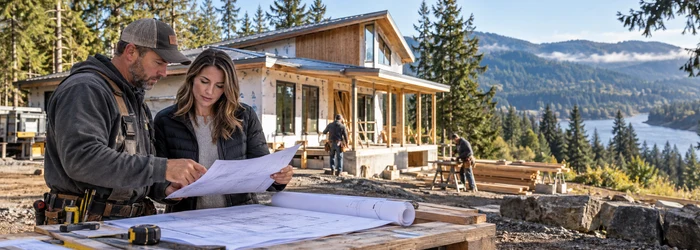
Cost To Build A House In Oregon in Construction
What this guide helps you decide
Cost To Build A House In Oregon in Construction explains cost to build a house in oregon for readers comparing proposals, preparing budgets, or interpreting project documents. Start with defined scope and assumptions. Connect terminology to evidence, practical checks, and decisions that owners, contractors, estimators, accountants, lenders, and reviewers can understand.
Use this framework for scope, documentation, timing, risk, and cost visibility. Apply it to current records. Refer legal, tax, insurance, lending, engineering, or local-rule questions to a qualified professional.
Meaning and practical scope
A local home-cost guide should build a complete budget, not repeat unsupported per-square-foot numbers. Similar homes differ by parcel, utilities, design, approvals, finishes, labor, and contract scope.
Define the decision boundary for cost to build a house in oregon. Is it planning, measurement, a contract duty, payment, insurance, accounting, or completed work? State project phase and document so assumptions do not move into another context.
Information to collect
Define area, land, parcel, slope, soil, access, utilities, drainage, approvals, climate, design, and finish. Check excavation, foundation, connections, fees, landscape, tax, and financing.
- Project, location, stage, contract type, revision, and approval owner.
- Scope boundary, unit, quantity or period, inclusions, exclusions, and owner items.
- Dated quotes, invoices, inspections, calculations, policies, permits, notices, and certificates.
- Access, utilities, schedule, lead time, local requirements, and adjacent work.
- Open assumptions, disputes, risk owner, and decision date.
Define terms from project documents, connect questions to measurable work, and separate facts from assumptions. Label unsupported figures as estimates.
Topic-specific considerations
Land Costs
For land costs, state scope, unit, date, source, and exclusions. Compare equivalent specifications and delivery terms, trace changes to records, identify the reviewer, and update project controls after approval. Keep allowances separate from commitments.
Design and Architectural Fees
For design and architectural fees, state scope, unit, date, source, and exclusions. Compare equivalent specifications and delivery terms, trace changes to records, identify the reviewer, and update project controls after approval. Keep allowances separate from commitments.
Permitting and Approval Costs
For permitting and approval costs, state scope, unit, date, source, and exclusions. Compare equivalent specifications and delivery terms, trace changes to records, identify the reviewer, and update project controls after approval. Keep allowances separate from commitments.
Construction Costs
For construction costs, state scope, unit, date, source, and exclusions. Compare equivalent specifications and delivery terms, trace changes to records, identify the reviewer, and update project controls after approval. Keep allowances separate from commitments.
Additional Costs to Consider
For additional costs to consider, state scope, unit, date, source, and exclusions. Compare equivalent specifications and delivery terms, trace changes to records, identify the reviewer, and update project controls after approval. Keep allowances separate from commitments.
Repeatable project workflow
Start with plans and measured scope. Get estimates with common specs, quantities, exclusions, schedule, and tax. Add site work, design, utilities, finance, contingency, and closeout.
- Set a baseline: project, scope, revision, date, unit, decision, and owner; preserve the original.
- Verify measurements, contract, invoice, policy, permit, or field evidence; resolve conflicting versions.
- Classify: separate known work from allowance, contingency, exclusion, claim, substitution, or change.
- Compare like with like across scope, units, quality, delivery, timing, risk, fees, and closeout.
- Obtain approval from the responsible person and record conditions.
- Update estimate, budget, schedule, procurement, payment forecast, or asset record.
- Reconcile forecast with actual work, quantities, payments, and costs; explain differences.
Write decisions with revision, location, amount, reviewer, date, and permission to proceed. Update connected records and notify affected parties.
Illustrative scenario
Two equal-size homes differ because one lot is serviced while another needs retaining and longer utility runs.
This is illustrative, not a quote, legal conclusion, underwriting decision, or design instruction. It shows how defined scope can prevent cost, delay, payment, or risk surprises. Document the trigger, decision owner, and downstream effect for cost to build a house in oregon.
Cost, timing, and change control
Every estimate needs a date and input basis. Construction cost reflects labor, specification, access, delivery, sequencing, quantity, insurance, finance, and design maturity. Historical averages can frame a question, but current pricing needs comparable dated quotes tied to scope; a generic rate is not a local quote.
For changes, record reason, location, drawing or contract reference, quantity, labor and material effect, schedule impact, fees, and approval. Keep original and revised amounts visible. If work is undefined, show an allowance with an owner and decision date instead of blending into fixed scope. This improves reconciliation and prevents double counting.
Risk checks and common mistakes
Online ranges may be stale and mix land, labor, materials, and soft costs. A starting price is not a parcel-specific quote.
- Using general information without checking contract, location, date, or scope.
- Comparing unlike units, inclusions, quality, tax, or delivery.
- Using stale drawings, quotes, policies, estimates, and forms.
- Mixing confirmed costs, allowances, contingency, disputes, and unapproved changes without labels.
- Assuming a calculator, index, certificate, or code replaces evidence.
- Proceeding or signing before authority and risk allocation are clear.
If a mismatch appears, isolate the area, make it safe if needed, document differences, and route for review. Save date, parcel, area, revision, inclusions, exclusions, quotes, allowances, taxes, utilities, and contingency.
Records and handover
A closeout file for cost to build a house in oregon should let another person reconstruct the decision: baseline, documents, calculations, dated quotes, correspondence, inspection or payment evidence, approvals, and status. Identify location and revision on attachments; follow privacy and retention rules.
At handover summarize assumptions, approvals, changes, open items, and next owner. Keep support with the final estimate or account. Save date, parcel, area, revision, inclusions, exclusions, quotes, allowances, taxes, utilities, and contingency.
Frequently asked questions
Detailed planning and review framework
Start a local budget with parcel and scope facts. Define floor area, stories, basement, garage, system, finish, slope, soil, access, drainage, utilities, climate, and approvals. Similar-size homes can have different site costs. Separate confirmed facts from items needing survey, testing, design, or utility review.
Organize cost into acquisition, site preparation, structure, enclosure, finishes, systems, external work, services, permits, insurance, finance, and contingency. For each package record unit, quantity, source, date, tax assumption, delivery basis, and exclusions. Keep land separate and avoid double counting allowances; a scope map is more useful than a single price-per-area figure.
Request bids on the same drawing revision and compare labor, materials, temporary work, utilities, cleanup, schedule, warranty, payment terms, exclusions, and allowances. Keep a risk register for soil, access, drainage, approvals, and long-lead products. Update estimates when testing, permits, and firm quotations replace assumptions, then compare actuals by package at closeout.
Applying the guidance to a project
Keep a decision record for every material assumption: describe the question, source document, date checked, reviewer, remaining uncertainty, and next action. Preserve the original baseline and create dated revisions when scope changes. This lets another reader understand why a number moved and prevents a planning allowance from being mistaken for an approved commitment.
Before comparing options, normalize units, scope, quality, location, timing, delivery, tax assumptions, and exclusions. A low amount may omit access, temporary work, testing, cleanup, or review. Ask each bidder or stakeholder for its basis and record differences explicitly. When evidence is incomplete, show a range or flag the item for decision rather than presenting unsupported precision.
Review cost to build a house in oregon at milestones and when drawings, quotes, site conditions, schedule, contract, policy, or financing assumptions change. Update connected budget, procurement, payment, and closeout records together. Assign an owner and deadline to open items. This keeps a sound explanation connected to the records people use to make and track project decisions.
At each decision point, identify the impact on scope, cost, schedule, responsibility, and evidence. Check whether a change affects adjacent packages, permits, insurance, cash flow, or later maintenance. Record what is confirmed, who owns open work, and which document will close it. For a forecast, name the next review trigger; for completed work, retain acceptance evidence. This prevents a numerical update from being mistaken for approval to proceed. Explain the decision in plain language so owners, builders, estimators, and reviewers use the same dated baseline.
Final review checklist
- Define parcel, area, finish, date, and scope.
- Compare bids with site and soft costs visible.
- Replace assumptions with local evidence.
How much to build here?
Use parcel, plans, finish, site, utilities, contract, and date for a local estimate. Check current project documents and applicable requirements; details vary by contract, stage, and jurisdiction. Keep source, scope, date, and reviewer visible.
Is cost per square foot useful?
Only with comparable area, finish, site, and scope. Check current project documents and applicable requirements; details vary by contract, stage, and jurisdiction. Keep source, scope, date, and reviewer visible.
What gets omitted?
Survey, soil, utilities, drainage, fees, tests, landscape, insurance, and finance. Check current project documents and applicable requirements; details vary by contract, stage, and jurisdiction. Keep source, scope, date, and reviewer visible.
How compare builders?
Share scope and compare exclusions, allowances, changes, payment, validity. Check current project documents and applicable requirements; details vary by contract, stage, and jurisdiction. Keep source, scope, date, and reviewer visible.
How much contingency?
Base on design maturity, site uncertainty, procurement, and available funds. Check current project documents and applicable requirements; details vary by contract, stage, and jurisdiction. Keep source, scope, date, and reviewer visible.
Related construction resources
Explore relevant resources in this category: Cost To Build A House In California in Construction, Cost To Build A House In Oklahoma in Construction, How Much Does It Cost to Build a House. Use each guide or tool for its intended scope and verify decisions against approved records.
Conclusion
A sound decision about cost to build a house in oregon starts with a defined question, current evidence, and clear scope. Compare like with like, obtain review before commitment, and update affected budget, schedule, payment, insurance, or accounting records. This makes estimates explainable and completed work verifiable.
Apply project documents and local requirements. Refer unresolved legal, tax, safety, coverage, lending, structural, or substantial payment questions to a qualified professional.






Leave a Reply
Want to join the discussion?Feel free to contribute!