
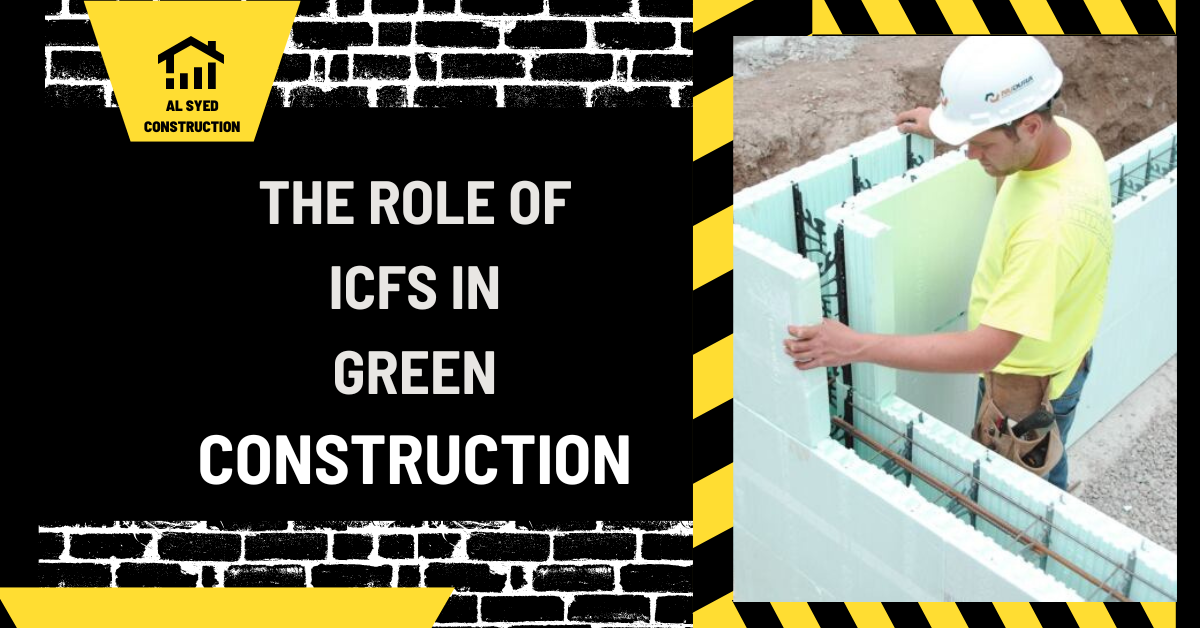
ICFs in Green Construction
ICFs in Green Construction is a useful subject for owners, designers, estimators, contractors, and building operators because decisions made during planning and construction affect long-term performance. ICFs can support energy and durability goals through insulated concrete wall assemblies, but total environmental value depends on operations and material impacts. This guide explains the term in practical project context and identifies what a team can verify before selecting an approach.
Within sustainable and resilient construction, the relevant questions reach beyond a product label. Teams need to consider whole-life resource use, emissions, site effects, service life, and end-of-life choices, alongside the actual scope, site, intended use, and governing project documents. The discussion below gives a structured starting point; final design, code interpretation, product selection, and field acceptance must remain tied to the specific project and qualified review.
Quick Answer
In brief, ICFs can support energy and durability goals through insulated concrete wall assemblies, but total environmental value depends on operations and material impacts. The practical implication is that icfs in green construction should be evaluated as part of a complete project decision: define the intended function, identify the conditions it must address, choose evidence that matches the question, and plan how the installed or documented result will be checked. Compare equivalent wall systems over the same service life, including concrete, foam, transport, maintenance, and energy assumptions. A name or general definition alone does not establish performance.
What ICFs in Green Construction Means in Construction
The term icfs in green construction is most useful when the team can connect it to a specific object, requirement, activity, or outcome. In drawings and specifications, context matters: discipline, units, location, exposure, building use, and revision can change how a phrase should be read. Start with the source document or project condition, then identify who owns the decision and what evidence will confirm it.
A sustainable and resilient approach asks how the subject interacts with the surrounding building or site. That means looking at interfaces, sequence, operation, maintenance, and future repair instead of assessing only a single component. ICFs can support energy and durability goals through insulated concrete wall assemblies, but total environmental value depends on operations and material impacts. For an existing building, verify the actual assembly and condition before assuming that it matches an original drawing or a commonly used description.
This distinction is important because construction outcomes are produced by coordinated systems. A sound material can perform poorly when a joint, connection, control sequence, drainage path, or inspection step is missing. Likewise, a design goal can be lost during purchasing, installation, or handover if the acceptance criteria were never assigned to a responsible person.
Why ICFs in Green Construction Matters for Sustainable and Resilient Projects
The project team can evaluate icfs in green construction through four connected questions. First, does the proposed decision address a real user, site, or asset need? Second, will it remain dependable through normal service and the conditions it is intended to manage? Third, can the result be verified with drawings, product information, tests, inspection, or measured operation? Fourth, can the building be maintained or adapted without avoidable damage and waste?
Useful performance
Describe the intended outcome in terms the design and field teams can observe. For icfs in green construction, identify the boundary of the decision, its interfaces, and what would count as a successful result. A goal that cannot be tied to an acceptance criterion is difficult to coordinate and even harder to verify after installation.
Durability and recovery
Consider exposure, wear, moisture, movement, access, and the practical repair path. Durable work can reduce repeat replacement, but only when people can inspect and maintain it. For icfs in green construction, record which parts are expected to be serviceable and what symptoms should trigger review by the responsible specialist.
Resource and environmental effects
Track material quantity, transport, site energy, waste, water, and future operation when those factors fall within the project scope. Avoid implying that a single feature determines the full environmental result. If the decision concerns emissions or material impacts, state the baseline, functional unit, time period, and included life-cycle stages.
People, access, and continuity
A building or site should remain usable by its intended occupants and maintainers. Review access, safe circulation, operator training, emergency needs, and the effect of construction phasing. Sustainable and resilient performance is more credible when the people responsible for day-to-day use can understand and support the system.
Options and Trade-Offs to Compare
There is rarely one correct approach for every project involving icfs in green construction. The comparison should use the same scope, service, and performance target for each alternative. The options below are planning categories rather than product approvals; site conditions, adopted requirements, owner priorities, and qualified design review determine what is appropriate.
| Approach | When it may fit | Question to resolve |
|---|---|---|
| Preserve and adapt | Useful when the existing structure is safe, serviceable, and can meet the project need. | Survey hidden conditions, accessibility, energy performance, and hazardous materials before committing. |
| Reduce demand | Useful when design can lower energy, water, transport, or material quantities before procurement. | Set a baseline and check that one improvement does not create moisture, comfort, or durability problems. |
| Select lower-impact products | Useful when alternatives meet the same function and documented performance requirements. | Compare equivalent quantities, service lives, sourcing, maintenance, and end-of-life assumptions. |
| Plan for recovery and reuse | Useful when components can be protected, disassembled, salvaged, or recycled through a real local pathway. | Market availability, contamination, dimensions, and logistics can limit recovery. |
Five Planning Lenses for ICFs in Green Construction
Before committing to scope or procurement, review the following lenses with the project documents and people responsible for design, construction, and operations. Compare equivalent wall systems over the same service life, including concrete, foam, transport, maintenance, and energy assumptions. Write down assumptions that could change if the site, occupancy, product, authority, or construction sequence changes.
Set the boundary before comparing options
Name the building or site scope, service period, function, and included life-cycle stages. A material comparison is meaningful only when the alternatives provide equivalent service. State whether the discussion covers products, construction activity, building operation, maintenance, or eventual removal; changing the boundary can change the apparent result.
For icfs in green construction, apply this lens to the real conditions rather than a generic example. Identify a drawing, specification, survey, submittal, calculation, mock-up, inspection, or operating record that can answer the question. If the evidence is incomplete, assign an owner and resolve the gap before it affects purchasing, concealment, occupancy, or closeout.
Treat durability as an environmental decision
A product that lasts longer or can be repaired may avoid replacement, but only when it remains safe, maintainable, and fit for use. Review exposure, expected maintenance, access, and compatibility. A low-impact product that fails early may create additional material, transport, disruption, and disposal impacts.
For icfs in green construction, apply this lens to the real conditions rather than a generic example. Identify a drawing, specification, survey, submittal, calculation, mock-up, inspection, or operating record that can answer the question. If the evidence is incomplete, assign an owner and resolve the gap before it affects purchasing, concealment, occupancy, or closeout.
Coordinate design with procurement
Drawings and schedules should identify quantities, performance, submittals, substitutions, and protection requirements early enough for the project team to verify them. If a product is unavailable, compare a proposed substitute against the same function and evidence rather than accepting a sustainability claim at face value.
For icfs in green construction, apply this lens to the real conditions rather than a generic example. Identify a drawing, specification, survey, submittal, calculation, mock-up, inspection, or operating record that can answer the question. If the evidence is incomplete, assign an owner and resolve the gap before it affects purchasing, concealment, occupancy, or closeout.
Control site impacts as work proceeds
Track material deliveries, offcuts, packaging, fuel, temporary power, dust, runoff, and protected resources against the project plan. Assign owners to inspections and corrective actions. Site controls need to follow actual weather, phasing, access, and neighboring uses, not merely appear in a binder.
For icfs in green construction, apply this lens to the real conditions rather than a generic example. Identify a drawing, specification, survey, submittal, calculation, mock-up, inspection, or operating record that can answer the question. If the evidence is incomplete, assign an owner and resolve the gap before it affects purchasing, concealment, occupancy, or closeout.
Plan how the asset will be operated and renewed
Performance depends on commissioning, occupant behavior, maintenance, repair access, and the ability to adapt spaces. Provide operators with usable asset data and training. Record decisions, product identities, and limits so later renovations can preserve value rather than discard components unnecessarily.
For icfs in green construction, apply this lens to the real conditions rather than a generic example. Identify a drawing, specification, survey, submittal, calculation, mock-up, inspection, or operating record that can answer the question. If the evidence is incomplete, assign an owner and resolve the gap before it affects purchasing, concealment, occupancy, or closeout.
Practical Project Sequence
A clear sequence keeps icfs in green construction tied to design intent from early planning through handover. Adapt these steps to the project’s scope and approved documents; they are not a substitute for engineering, permitting, or manufacturer instructions.
- Define the desired outcome. Describe the environmental or social objective in measurable terms and record its scope, baseline, and responsible owner. Apply the step to icfs in green construction by recording the relevant condition, responsible person, and acceptance evidence. Coordinate affected trades before work is hidden or an irreversible purchase is made.
- Survey the site and existing asset. Document constraints, reusable components, hazards, utilities, access, and conditions that affect the alternatives. Apply the step to icfs in green construction by recording the relevant condition, responsible person, and acceptance evidence. Coordinate affected trades before work is hidden or an irreversible purchase is made.
- Compare equivalent choices. Assess function, quantity, service life, maintenance, operational effects, sourcing, and end-of-life routes using consistent assumptions. Apply the step to icfs in green construction by recording the relevant condition, responsible person, and acceptance evidence. Coordinate affected trades before work is hidden or an irreversible purchase is made.
- Carry requirements into documents. Put performance criteria, approved substitutions, submittals, waste plans, and inspection points into the contract and procurement workflow. Apply the step to icfs in green construction by recording the relevant condition, responsible person, and acceptance evidence. Coordinate affected trades before work is hidden or an irreversible purchase is made.
- Protect and verify the work. Train crews, protect stored materials, inspect installation and site controls, record quantities, and correct deviations while access remains. Apply the step to icfs in green construction by recording the relevant condition, responsible person, and acceptance evidence. Coordinate affected trades before work is hidden or an irreversible purchase is made.
- Handover and measure results. Provide operations staff with records and training, then compare actual outcomes with the project baseline and document lessons for future work. Apply the step to icfs in green construction by recording the relevant condition, responsible person, and acceptance evidence. Coordinate affected trades before work is hidden or an irreversible purchase is made.
Quality Checks Before Acceptance or Close-In
A useful quality plan defines who checks the work, when it can be seen, and how a result will be recorded. For icfs in green construction, the reviewer should compare the field condition with the approved design, submittal, or project criterion rather than relying on appearance alone.
- Confirm that the intended function and project boundary for icfs in green construction are written down and understood by the people doing the work.
- Verify material identity, configuration, revision, and compatibility with the documented design before installation or acceptance.
- Inspect the transitions, connections, openings, controls, and interfaces where a single incomplete detail can undermine the whole assembly.
- Photograph or otherwise record concealed conditions, test results, changes, responsible approvals, and unresolved items before closeout.
- Provide operations staff with access, records, training, maintenance limits, and a route to report performance problems.
Common Mistakes and Better Responses
Many problems attributed to icfs in green construction begin with unclear scope, a mismatch between the chosen approach and actual conditions, or a missed handoff. The appropriate response is to document the symptom, trace it to a cause, and ask the responsible professional or product supplier to approve the correction where design or safety is affected.
- Claiming a project is sustainable because it has one efficient product or certification without defining its broader scope. Review the project requirement and record a corrective action before repeating the condition elsewhere.
- Comparing materials with different functions, quantities, lifespans, or data boundaries and presenting the result as a simple ranking. Review the project requirement and record a corrective action before repeating the condition elsewhere.
- Ordering recycled or salvaged materials before confirming quality, code acceptance, supply, dimensions, and installation responsibility. Review the project requirement and record a corrective action before repeating the condition elsewhere.
- Treating waste diversion as prevention when avoidable over-ordering, damage, and packaging have not been addressed. Review the project requirement and record a corrective action before repeating the condition elsewhere.
Example: Coordinating ICFs in Green Construction
Consider a project team reviewing a proposed change that affects icfs in green construction. The team first records the intended outcome and the source of the requirement, then checks site conditions, adjacent systems, schedule, and who will maintain the completed work. A responsible reviewer compares the proposed option with the approved documents and identifies evidence needed before the team proceeds.
The review finds that iCFs can support energy and durability goals through insulated concrete wall assemblies, but total environmental value depends on operations and material impacts. The team also recognizes that compare equivalent wall systems over the same service life, including concrete, foam, transport, maintenance, and energy assumptions. It documents the clarification, updates affected submittals or details, and adds an inspection or commissioning point while the condition remains accessible. At handover, the owner receives the relevant product or system records and knows who to contact if operation differs from expectations. This example illustrates a coordination method, not a universal design prescription.
Frequently Asked Questions About ICFs in Green Construction
What should be checked first for icfs in green construction?
Start with the intended function, the source of the requirement, and the conditions the project must address. ICFs can support energy and durability goals through insulated concrete wall assemblies, but total environmental value depends on operations and material impacts. Confirm scope, evidence, and the responsible reviewer before comparing products or making a field change.
Does icfs in green construction guarantee a sustainable or resilient result?
No single term, material, software report, or building feature guarantees whole-project performance. Review the complete assembly or process, define measurable goals, and verify the result through appropriate project evidence. Compare equivalent wall systems over the same service life, including concrete, foam, transport, maintenance, and energy assumptions.
How can a team compare alternatives for icfs in green construction?
Compare alternatives that provide the same function and service over a stated boundary. Include installation, durability, operation, maintenance, repair, and end-of-life conditions where relevant. Keep assumptions visible so reviewers can see what is included and what remains uncertain.
Who should approve a change involving icfs in green construction?
The responsible designer, code official, owner representative, or qualified product specialist depends on what the change affects. If the change touches structure, life safety, compliance, environmental controls, or product performance, obtain the required written review before proceeding.
What should be documented at handover?
Keep the approved drawings, product or system identity, inspections, tests, commissioning results, changes, warranties, and maintenance instructions that apply to the scope. Explain access and limitations to operators so the building can be inspected, repaired, and adapted safely.
Related Guides in This Category
Conclusion
A dependable decision about icfs in green construction starts with a clear purpose, current project information, coordinated interfaces, and a way to verify the result. Consider the effects on people, resources, service life, and recovery that fit the topic, then document assumptions and responsibilities before they are lost in a handoff. Where evidence or terminology is unclear, pause the affected choice and ask the responsible specialist to resolve it. These practices help teams deliver buildings and infrastructure that can perform, be maintained, and adapt over time.



Leave a Reply
Want to join the discussion?Feel free to contribute!