
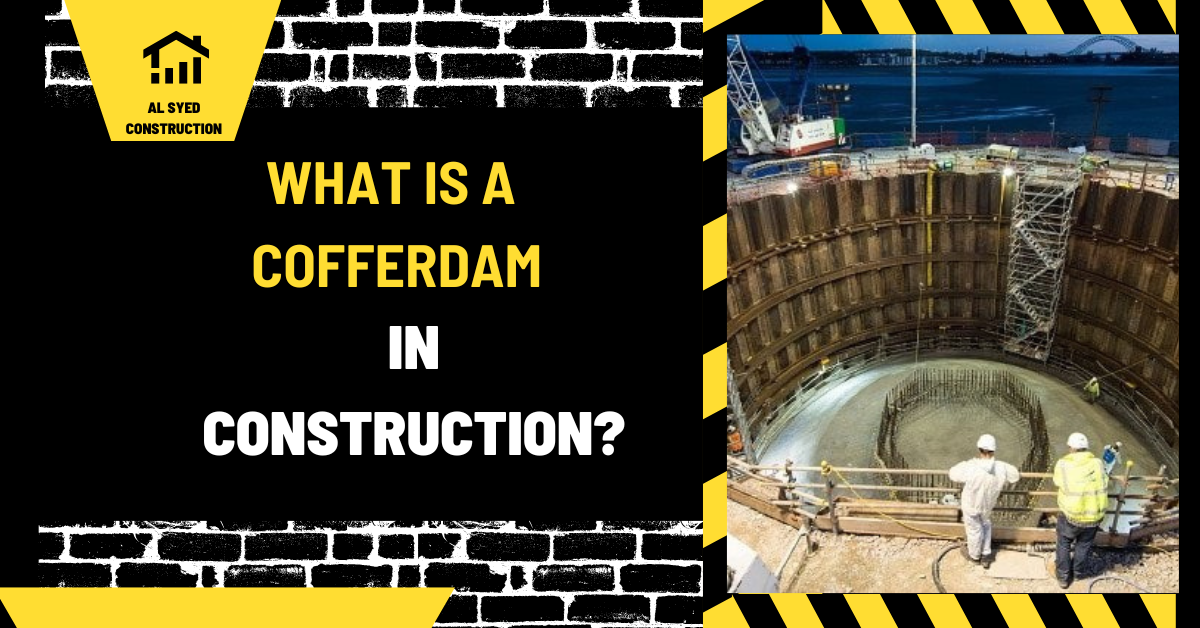
What Is a Cofferdam? Types, Uses & Safety
A cofferdam is a temporary enclosure built in or near water so crews can perform work in a comparatively dry, controlled area. It may surround a bridge pier, dam foundation, lock, utility, or marine structure. The enclosure does not make water disappear; it separates the work zone from the water and manages seepage, groundwater, river flow, and temporary loads while construction proceeds.
Cofferdams can use sheet piles, braced frames, cellular structures, earth or rock berms, or combinations of systems. The right choice depends on water depth, soil and rock, flow, access, excavation depth, nearby structures, and how long the enclosure must remain. This guide explains how a cofferdam works, how teams select and build one, and why design, monitoring, and removal are as important as the visible wall.
What a cofferdam does
The enclosure forms a barrier between the active water and a defined work area. Depending on the method, water may be excluded by driving interlocking sheet piles, placing a temporary embankment, assembling a braced cell, or using another engineered system. The inside is then excavated or prepared, and pumps or other controls manage water that enters through the base, joints, or surrounding ground.
The cofferdam must resist more than the pressure of standing water. It may face current, waves, debris, soil pressure, groundwater uplift, excavation loads, equipment loads, and changes in river level. A sheet-pile enclosure may need bracing or tiebacks; a cellular cofferdam relies on its geometry and fill; a berm needs stable slopes and erosion protection. The method and limits are established by engineering analysis.
Cofferdams are temporary works, but their failure can affect workers, the permanent structure, the waterway, navigation, and neighboring property. The temporary structure therefore needs a design basis, a construction sequence, inspection requirements, and an emergency plan. It should be treated with the same discipline as a permanent foundation system.
Common cofferdam types
Single-wall sheet-pile cofferdams use driven sheets that interlock to form an enclosure. Internal bracing or external tie systems support the wall against lateral pressure. This approach can suit smaller work areas and moderate depths when soils and installation conditions allow. The design must account for sheet penetration, bracing loads, water seepage, and excavation stages.
Double-wall cofferdams use two sheet-pile walls tied together, with fill between them. The combined system can create a larger or more stable enclosure, but it needs sufficient footprint and a designed tie system. Cellular cofferdams use connected sheet-pile cells filled with material to resist water and soil forces; they may be used for larger structures or higher loads. Each cell layout has specific stability and construction requirements.
Earth or rock-fill cofferdams can form temporary barriers where the site and flow permit. They may be suitable for certain low-velocity conditions and larger footprints, but they need erosion protection and a controlled way to manage overtopping or seepage. In some settings, inflatable or modular systems may be used for smaller, short-duration tasks. No type is universally safe or economical: geometry, foundation, flow, and construction sequence govern.
Site investigation and design inputs
The design begins with water levels, flow velocities, wave conditions, seasonal variation, flood risk, debris potential, and navigation requirements. The team also investigates soil and rock layers, groundwater, permeability, buried utilities, and nearby foundations. A cofferdam that appears stable above the waterline can fail from piping or uplift through the base if the subsurface conditions are misunderstood.
Designers establish the work area, excavation depth, equipment positions, temporary loads, and duration. They consider how the enclosure will be installed, braced, dewatered, inspected, and removed. Construction equipment near a wall can create surcharge or vibration; excavation changes the soil support as work progresses. Each stage may have a different load case and stability condition.
The plan also identifies allowable seepage, pump capacity, discharge quality, emergency drawdown or flood response, and monitoring thresholds. If the cofferdam is near a bridge pier, dam, utility, or occupied structure, movement may need to be monitored. Project requirements may call for an engineered temporary-works submittal, independent review, or permit conditions. The design and inspection responsibilities should be named before work begins.
Construction and dewatering sequence
The contractor establishes survey control, exclusion zones, access, environmental measures, and equipment positions. Sheet piles are installed or the selected barrier is assembled according to the approved method. Crews record pile location, penetration, refusal, damage, and installation changes. Unexpected obstruction or soil behavior requires engineering direction; cutting or relocating a sheet can change wall stability and leak paths.
Bracing, walers, tie rods, or fill are installed in the planned sequence. Excavation proceeds only to the stages allowed by the design. Removing soil from the inside increases lateral demand on the wall, so the next brace or support must be installed at the specified elevation and time. Do not deepen excavation or remove bracing early to speed production.
Dewatering begins in a controlled manner. Pumps lower water inside the enclosure while staff watch the wall, base, nearby ground, and adjacent structures. Rapid drawdown can create differential pressure; pumping can also draw fines through the soil or lower groundwater outside the enclosure. The discharge is managed under the environmental plan, and backup power or pump capacity is provided as required. The article on building bridges over water describes where cofferdams fit into bridge-foundation work.
| Condition to watch | Possible concern | Typical control in the approved plan |
|---|---|---|
| Seepage carrying sand or silt | Piping or loss of ground | Monitor, reduce drawdown, treat the seepage path |
| Wall movement or brace distress | Stability loss or overload | Stop work, restrict access, obtain engineering review |
| Rising river or wave levels | Overtopping or changed pressure | Track forecast, secure equipment, use response thresholds |
| Ground settlement outside wall | Leakage, drawdown, or ground loss | Survey monitoring and investigation |
| Pump or power failure | Rapid re-flooding of work area | Backup pumping, alarms, evacuation plan |
Work inside the enclosure
Once the work area reaches the specified condition, crews prepare the foundation, install reinforcement or piles, place concrete, or perform other permanent work. The cofferdam remains part of the temporary load path while equipment and materials enter the excavation. The contractor keeps access routes and escape paths clear and ensures that pumps, hoses, cables, and braces do not create trip or entanglement hazards.
Water levels and wall movement are monitored at the frequency in the approved plan. Workers report sudden changes in seepage, cracking, settlement, noise, loose connections, or unusual movement. Monitoring readings should be reviewed by people authorized to act, not simply collected. A threshold exceedance prompts the planned response: stop work, move personnel, add support if directed, reduce pumping, or take another engineered action.
Work in the enclosure needs its own hazard assessment. Risks may include confined or restricted access, falling objects, lifting, electrical equipment near water, slippery surfaces, low oxygen or hazardous atmosphere in enclosed structures, and rapid flooding. The emergency plan identifies alarms, communication, evacuation routes, rescue capability, and who has authority to suspend operations. The enclosure is not safe merely because the water level has been lowered.
Environmental and navigation controls
Cofferdam work can disturb sediment, change flow, create noise, restrict navigation, or affect aquatic habitat. Permits and environmental plans may specify timing, turbidity limits, fish or wildlife protections, work-hour restrictions, and discharge treatment. The contractor should identify the correct authority and required notifications for the specific waterway instead of assuming one permit covers every activity.
Temporary barriers can redirect current or create scour at the toe. Sediment may escape during installation, dewatering, or removal. Pumps can discharge turbid water or entrain aquatic organisms if intakes and outlets are poorly managed. The plan may require settling, filtration, diffusers, screens, or other measures. Inspect controls after changing water levels and storms because a system that worked in calm conditions may be damaged by flow.
Navigation safety is coordinated with the responsible waterway authority and other users. Markers, temporary closures, vessel routes, lighting, and work windows are determined by the project. A cofferdam can narrow a channel or create a collision hazard if its location is not clearly marked. Remove temporary markers and structures only after the work is complete and required closeout inspections are finished.
Removal and restoration
The removal sequence is designed along with the installation sequence. Before dewatering stops or sheet piles are extracted, the permanent structure must be stable and ready for the change in water pressure. Backfill, grout, or other material may be placed as designed; internal bracing is removed in the specified order. The team verifies that removal will not undermine the completed foundation or cause sudden ground loss.
Sheet piles may be pulled, cut, or left in place only when the contract and environmental approvals permit the chosen method. Vibrations from extraction can affect nearby structures or disturb sediment. Earth and rock barriers are removed or shaped so flow returns to the intended channel without leaving obstructions or unstable slopes. Disposal, recycling, and restoration follow project requirements.
The contractor documents the final condition, including channel clearance, bank stability, water quality measures, and any monitoring results. Temporary-work records, inspection reports, deviations, and as-built information are retained with the permanent structure’s project file. This closeout helps future maintenance teams understand what happened below the waterline.
Cofferdam versus caisson
A cofferdam is a temporary enclosure used to create a protected work area; a caisson is a permanent or temporary chamber or foundation element that can be sunk or constructed to support a structure or enable work at depth. The words may appear together in bridge or marine projects, but they are not interchangeable. A cofferdam is often removed after the work; a caisson may remain as part of the foundation.
The distinction matters for design, inspection, and the load path. A caisson’s structural role, construction method, and permanent connection are defined by the plans. A cofferdam’s role is to manage the temporary environment around work. Some project methods combine components or use terminology differently, so the contract documents govern.
Common questions
Does a cofferdam keep all water out?
Not necessarily. It limits water entry so work can proceed under controlled conditions, but seepage and groundwater may remain. Pumps, cutoff methods, filters, and monitoring are designed for expected conditions. Any change in seepage behavior should be evaluated.
Is a cofferdam the same as a retaining wall?
Both can resist soil pressure, but a cofferdam is a temporary enclosure designed for water and construction-stage loads. A permanent retaining wall serves a lasting function and may have different drainage, durability, and design criteria.
How is a cofferdam kept from collapsing?
Engineers select the wall type, embedment, bracing, fill, and excavation sequence to resist design loads. Crews follow the approved sequence and monitor for movement or seepage. No generic brace spacing or pile depth applies to all sites.
Can the interior be dewatered immediately?
No. Dewatering rate and sequence are part of the design. Lowering water too quickly can create pressure differences, ground loss, or impacts outside the enclosure. Follow the approved pumping plan and monitoring thresholds.
When is the cofferdam removed?
After the permanent work is stable and removal is authorized. The plan sequences backfill, water re-entry, brace removal, and sheet extraction so the completed structure and surrounding ground remain stable.
The key to a safe cofferdam
A cofferdam succeeds when site investigation, temporary-works engineering, installation, excavation, dewatering, monitoring, emergency response, environmental protection, and removal are treated as one sequence. Its temporary status does not reduce the consequences of failure. Follow the engineered plan, communicate changes promptly, and stop work when field conditions differ from the design assumptions.


Leave a Reply
Want to join the discussion?Feel free to contribute!