
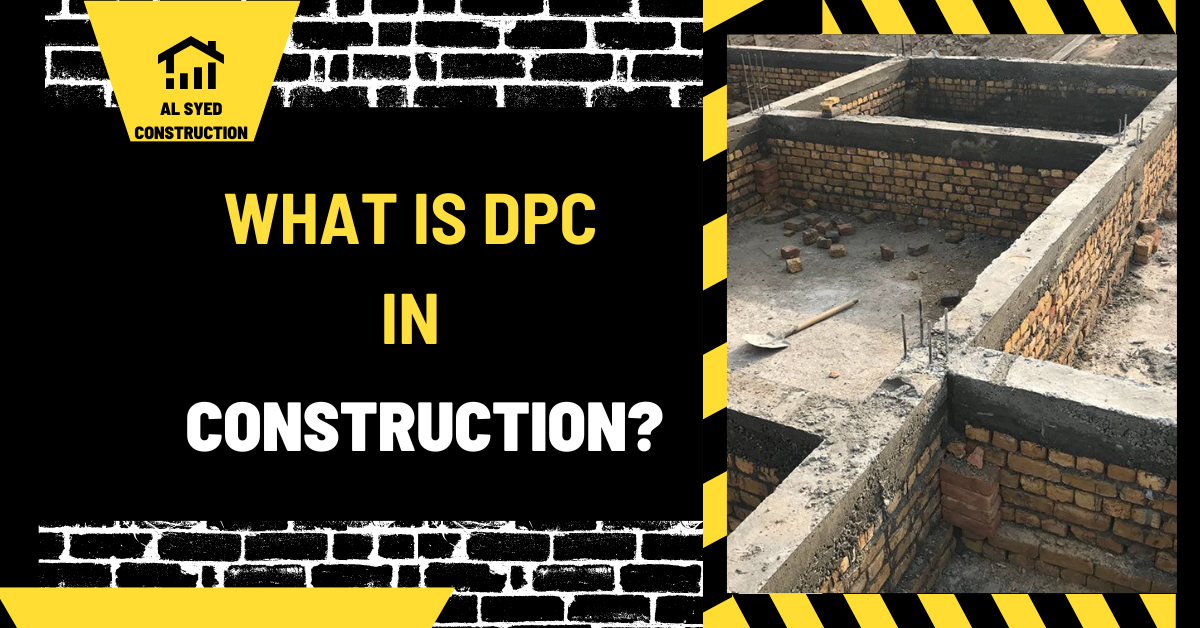
DPC in Construction: Purpose & Installation
Construction teams encounter damp-proof course (DPC) when detailing a wall base, masonry course, or foundation transition where ground moisture could rise into the wall. This guide explains the intended function, how the detail interacts with nearby materials, and what to review before the work is covered. The goal is to help owners, estimators, designers, and field crews use the term accurately, compare suitable approaches, and avoid treating a single product as a complete building system. Project conditions vary, so confirm final requirements with the approved drawings, local codes, and current manufacturer instructions.
Quick Answer
A DPC is a capillary break, not a general-purpose fix for every leak. Its continuity and connection to the wall's drainage details are essential. In a construction assembly, the right result depends on the exposure, the layers around the damp-proof course (DPC), workmanship at transitions, and inspection before close-in. Use the project drawings, adopted local requirements, and current product instructions to resolve details that vary by building and climate.
Understanding damp-proof course (DPC) in Construction
damp-proof course (DPC) refers to a continuous moisture-resistant layer at a wall base or another specified location that reduces capillary rise through masonry. Its role is defined by where it sits in the assembly and the performance requirement it is expected to meet. Two products that share a name may have different dimensions, chemistry, installation limits, or tested uses, so the specification should identify the intended application rather than rely on a broad label.
The term DPC in construction is useful only when its intended job is clear. A product or detail may manage one type of heat, air, water, vapor, sound, or movement while leaving the other control layers to separate materials. For that reason, the specification should state what the damp-proof course (DPC) must do, where it belongs, what it connects to, and how the finished work will be checked. This distinction prevents a crew from treating one layer as a substitute for every other part of the building enclosure.
Where You Encounter damp-proof course (DPC)
The location of a damp-proof course (DPC) is determined by the building assembly and the problem the design is trying to control. A useful review follows the control layer through corners, openings, floor lines, roof edges, and service penetrations instead of looking at a single product in isolation. Common project situations include:
- Foundations and below-grade walls exposed to soil moisture, groundwater, and backfill. This location matters because the damp-proof course (DPC) must work with the surrounding layers, access conditions, and exposure.
- Wet rooms, roofs, balconies, and wall openings where water must be directed away from sensitive materials. The designer should show how the damp-proof course (DPC) meets adjacent materials so that the assembly has a complete path rather than an isolated product.
- Slabs and wall bases where capillary movement can carry moisture into the assembly. Treat this as part of the whole enclosure; the performance of the damp-proof course (DPC) depends on the transition details around it.
- Repair projects where staining, efflorescence, odor, or peeling finishes indicate an unresolved moisture source. Coordinate the detail with trades that install framing, cladding, insulation, flashing, and services before the work is concealed.
To see how the same control layer relates to a neighboring detail, compare this discussion with DPC wall-base detailing. The link is included because both topics belong to the same insulation, air, or moisture-control category.
Common Options and Their Trade-Offs
There is no universal product choice for every damp-proof course (DPC). Selection should start with the required function, exposure, substrate, expected movement, access for installation, and the ability to inspect or repair the work. The table summarizes project-level questions; it is not a substitute for the manufacturer’s data or the approved specification.
| Option or approach | When it may fit | Limit to review |
|---|---|---|
| Surface coating or membrane | A continuous water-control layer is needed on a prepared substrate. | It cannot compensate for poor terminations, cracks, or missing drainage. |
| Drainage composite | Water needs a path down to a footing drain or collection point. | A drainage board is not, by itself, a waterproof membrane. |
| Capillary break or sheet | Moisture migration through a contact surface must be interrupted. | Laps, penetrations, protection, and compatibility need detailing. |
| Sealant or localized repair | A defined joint or small defect needs a compatible repair. | It is not a replacement for system-level drainage or waterproofing. |
Design and Selection Checks for damp-proof course (DPC)
Before ordering materials, the design team should agree on the performance target and the boundary of the damp-proof course (DPC). In retrofit work, first confirm the existing layers and moisture conditions; in new construction, coordinate the detail before trades establish their own sequences. Review each point below with the drawings, submittals, and site conditions:
Define the performance target
A damp-proof course separates porous masonry from a moisture source to limit capillary uptake. Record this choice in the drawings and product submittals, then verify it against the intended role of the damp-proof course (DPC).
Check the substrate and exposure
The detail should be continuous across the wall and coordinated at corners, returns, steps, and service penetrations. A good specification explains the required function, compatible substrates, transition details, and the inspection point before close-in.
Coordinate interfaces and transitions
The position relative to exterior grade, floor slabs, cavity trays, and cladding is controlled by the project detail and local requirements. Resolve this item before procurement; a product that fits the name of the damp-proof course (DPC) may still be wrong for the assembly.
Confirm product compatibility
Materials may include flexible sheet products or other specified systems; the substrate and joint treatment must be compatible. Check this condition at both design and field stages because changes in exposure or substrate can change the correct detail.
Plan inspection and maintenance
A DPC does not replace foundation drainage or a waterproofing system where water pressure or bulk leakage is present. Use the project documents and the manufacturer's current instructions to confirm this point instead of relying on a generic rule.
Construction Sequence and Coordination
A reliable damp-proof course (DPC) detail is planned, installed, and inspected in sequence. The steps below give a practical coordination framework; adjust them to the actual assembly, approved submittals, weather limits, and the responsible manufacturer’s installation instructions.
- Review the drawings and existing conditions. Confirm the design intent and location of damp-proof course (DPC), including this project-specific requirement: A damp-proof course separates porous masonry from a moisture source to limit capillary uptake. Complete this step before the next layer hides the work, and keep the damp-proof course (DPC) continuous at the relevant transition.
- Prepare and verify the substrate. Inspect the work area and substrate with this selection issue in mind: The detail should be continuous across the wall and coordinated at corners, returns, steps, and service penetrations. Make this a planned hold point: the crew should be able to inspect the damp-proof course (DPC) before cladding, backfill, tile, or finishes are installed.
- Install the primary material. Install the chosen system so that this detail remains true in the field: The position relative to exterior grade, floor slabs, cavity trays, and cladding is controlled by the project detail and local requirements. Document the material, substrate condition, and connection detail so later trades do not puncture or cover an incomplete damp-proof course (DPC).
- Complete transitions and penetrations. Coordinate edges, penetrations, and adjacent trades around this condition: Materials may include flexible sheet products or other specified systems; the substrate and joint treatment must be compatible. Use compatible accessories and follow the specified cure or set time; rushing this stage can undo otherwise careful damp-proof course (DPC) work.
- Inspect, document, and protect the work. Before close-in, verify the finished work against this performance point: A DPC does not replace foundation drainage or a waterproofing system where water pressure or bulk leakage is present. Coordinate penetrations and terminations now, because repairs after finishes are installed are slower and more disruptive.
Quality Control Before Work Is Covered
Inspection should verify the function of the damp-proof course (DPC), not just the presence of material. Set a hold point while the work is visible and define who signs it off. A short checklist also helps different crews apply the same standard across elevations and phases.
- Verify on site that A damp-proof course separates porous masonry from a moisture source to limit capillary uptake. Photograph the area and record the result before it is concealed; the damp-proof course (DPC) is difficult to assess after close-in.
- Check the installed materials against the requirement that The detail should be continuous across the wall and coordinated at corners, returns, steps, and service penetrations. Compare the installed condition with approved submittals and project details, then correct gaps while access is still available.
- Inspect transitions and concealed edges where The position relative to exterior grade, floor slabs, cavity trays, and cladding is controlled by the project detail and local requirements. Check the transition, not just the open field area: failures often begin where the damp-proof course (DPC) meets another material.
- Record the final condition and confirm that A DPC does not replace foundation drainage or a waterproofing system where water pressure or bulk leakage is present. Include a responsible trade and a clear acceptance criterion so the damp-proof course (DPC) is verified consistently across the project.
Common Problems and How to Respond
When a damp-proof course (DPC) appears to fail, identify the source and the route of the problem before choosing a repair. Moisture, air leakage, thermal discomfort, or movement can originate in a different layer from the one where the symptom becomes visible. Opening a small, representative area may be more useful than applying a broad surface patch.
- A break at a corner or service penetration can allow moisture to bypass the DPC. The visible symptom can be misleading, so trace the path back to the source before adding another layer over the damp-proof course (DPC).
- Mortar droppings or debris can bridge a cavity tray or moisture break. Correct the cause and confirm compatible repair materials; a cosmetic patch may hide deterioration without restoring the damp-proof course (DPC).
- A DPC placed below a rising exterior grade may be exposed to splashback or persistent wetting. Inspect nearby transitions and concealed cavities, since water, air, heat, or sound can bypass the damp-proof course (DPC) at a weak connection.
- Surface paint cannot correct a missing or bridged capillary break. Write down the location, weather or operating conditions, and repair so recurring damp-proof course (DPC) problems can be diagnosed accurately.
Example: Reviewing a Typical Project Detail
A ground-floor wall shows a damp band above the slab. The team checks the DPC location, continuity, external grade, downspouts, and whether mortar bridges a cavity. If the layer is missing or discontinuous, the repair needs to address the source and a feasible capillary break rather than just coating the visible interior face. The work is documented before finishes conceal the wall base, and drainage or waterproofing is added only where the diagnosis shows it is needed.
In this type of review, the team marks the damp-proof course (DPC) on the section drawing, follows it through each transition, and notes where a separate layer must take over. A site mock-up or sample installation can expose conflicts between trades before the full elevation or room is completed. The lesson is to verify a complete assembly rather than approving a product name without its edges, joints, and penetrations.
Frequently Asked Questions About damp-proof course (DPC)
What does DPC stand for in construction?
DPC stands for damp-proof course, a moisture-resistant layer used to interrupt capillary movement through a wall or masonry base.
Is a DPC the same as waterproofing?
No. A DPC limits capillary moisture at a defined location. Waterproofing systems address broader water exposure and may need drainage or resistance to water pressure.
Can paint replace a DPC?
No. Paint may alter the surface appearance but does not create a continuous capillary break within the wall assembly.
Can one product solve every DPC in construction problem?
No. A product only performs the functions for which it is designed and tested. Review the full assembly, including drainage, air control, thermal performance, vapor movement, movement joints, and any required fire or acoustic layers. Ask the design professional to resolve overlapping functions rather than assuming the damp-proof course (DPC) replaces adjacent systems.
What should be checked before the damp-proof course (DPC) is concealed?
Confirm substrate condition, product identity, continuity, compatible accessories, laps or joint geometry, terminations, and every penetration shown on the approved details. Take photos and correct incomplete transitions while the work is accessible. The exact acceptance criteria should come from project documents and the current product instructions.
Related Guides
For related topics in this same category, see DPC wall-base detailing; damp-proof membrane; damp-proofing methods; wall junction detailing. These guides cover connected insulation, air-control, moisture-control, or estimating details.
Conclusion
A dependable damp-proof course (DPC) starts with a defined function, a compatible assembly, continuous transitions, and an inspection plan. Confirm the source of heat, air, water, vapor, sound, or movement that the detail is meant to manage; then coordinate materials and workmanship before finishes conceal the result. When an existing building is involved, diagnose the condition first and document the repair. Use current project requirements rather than a one-size-fits-all rule.




Leave a Reply
Want to join the discussion?Feel free to contribute!