
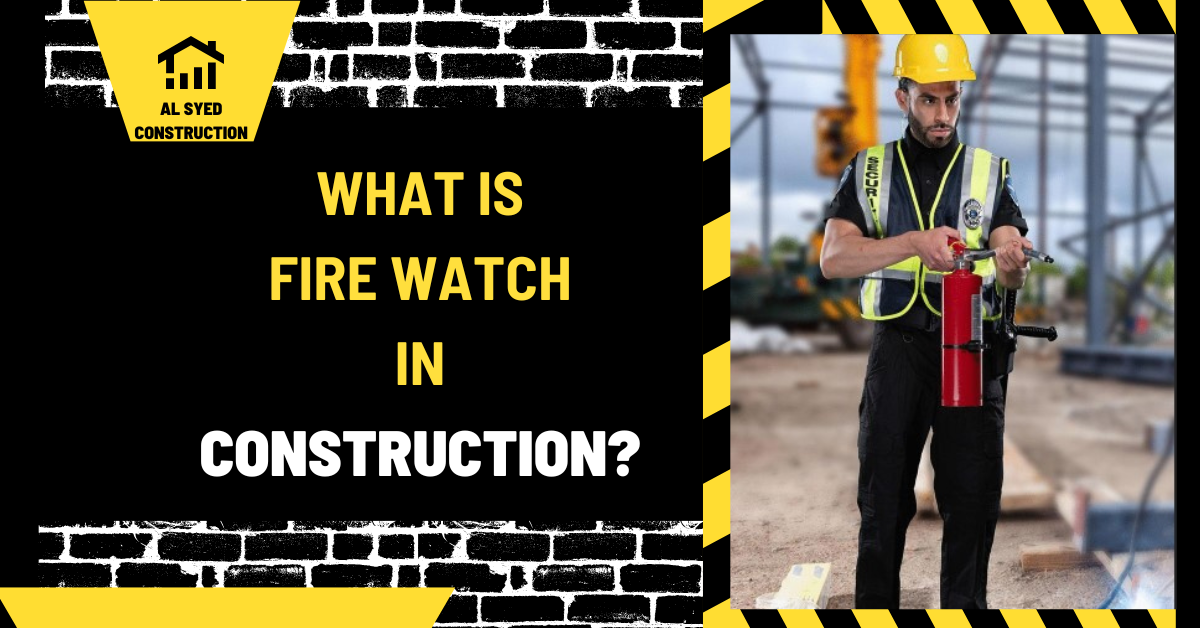
What is Fire Watch in Construction
A useful site-safety discussion of fire watch in construction starts with the work itself: what is changing, who could be affected, and what must remain stable or controlled. This article explains the topic in that context, shows how teams can plan and verify work, and highlights limits to resolve through competent project roles and local requirements.
What does fire watch in construction mean in construction?
For this guide, fire watch in construction means a designated monitoring duty during and after specified work, as defined by the site's fire plan and applicable requirements. Project drawings, specifications, employer procedures, or local rules may define the phrase more narrowly. Check the source before using an abbreviation to assign a duty or approve work. The safe interpretation matches the actual task, equipment, location, and governing requirements.
The term is most useful when it helps the team make a decision. For fire watch in construction, identify the work stage, the condition being managed, who relies on the control, and what evidence shows it remains effective. A short definition cannot describe every installation or jurisdiction. If a contract, code, or manufacturer document supplies a definition, use that source and keep its limits with the work plan.
Where it appears and why it matters
On a live project, fire watch in construction can be relevant in hot work, temporary power, combustible storage, incomplete fire barriers, alarms, new materials, occupied buildings, fire-watch duties, and emergency access. Conditions change as people, materials, and work stages move. A control that was adequate before a delivery, opening, weather change, or adjacent task may need review. Connecting the topic to the actual work area helps explain what is allowed, what needs inspection, and what should trigger a pause.
Understanding fire watch in construction supports prevention, coordination, and reliable handover. It helps close gaps between design intent and field practice, identify who owns a control, and communicate restrictions before exposure. A completed form is not a verified condition. If a hazard cannot be controlled within the approved plan, isolate the area, stop the activity, and obtain a decision from the responsible competent person.
Planning before work starts
Review current fire-risk assessment, work stage, occupancy, ignition sources, combustible load, temporary services, exits, alarm status, and responder access. Define who authorizes hot work, monitoring needs, alarms, and stop-work duties. Building classifications and precautions vary by code and jurisdiction.
Before using a procedure or equipment for fire watch in construction, walk the area with people who will perform and coordinate the task. Confirm access, nearby trades, emergency routes, deliveries, occupants, and services or structures that could be affected. Record assumptions in plain language. If a critical fact is unknown, assign someone to verify it rather than letting the crew fill the gap with guesswork.
Practical work sequence
- Review current strategy: Confirm stage, occupied areas, escape routes, alarms, fire doors, temporary barriers, and storage restrictions. A finished-building drawing may not describe today's arrangement. Brief workers and adjacent trades on hazards, routes, equipment limits, communication, and stop-work triggers. Ask workers to repeat critical points. Update the briefing after changes in scope, weather, crew, equipment, or access; attendance alone does not show understanding.
- Control ignition and fuel: Use the authorized hot-work process, protect combustibles, manage temporary power, and remove waste. An extinguisher alone does not control every risk. Observe the condition and compare it with the approved method. Keep access and exclusion controls active and address defects promptly. Stop if instructions conflict or a control is lost. Restart only after resolution and rebriefing.
- Keep escape workable: Brief crews on alarm and exit arrangements. If exits or alarms change temporarily, use an approved alternative and communicate it. At completion, leave the area ready for the next activity or occupant. Remove waste safely, restore barriers or services only with authorization, report defects, and update records. Handover should state what was checked and what remains restricted.
- Assign monitoring: Name who performs any fire-watch duty, area and period covered, and escalation path. Ensure that person has no conflicting task. Agree on the scope of fire watch in construction. Mark the location, boundary, people affected, and start and finish conditions. Compare the plan with the actual site. If conditions or instructions differ, record the difference and resolve it before the crew relies on the plan.
- Recheck after work: Inspect, restore barriers and services only with authorization, remove waste, and update the plan when occupancy or conditions change. Select controls that address the source of risk and fit the task. Consider collective protection, engineering, isolation, sequencing, and access before depending on reminders or personal equipment. Name who installs each control and how a supervisor verifies it.
Key hazards and practical controls
- Ignition near combustibles: Sparks, hot surfaces, heaters, or faults can ignite hidden or stored fuel. Use permits and assess concealed spaces. For fire watch in construction, include the control in the briefing and verify it at the work area.
- Impaired alarm or suppression: Construction may isolate systems. Use an authorized impairment process and verify restoration. For fire watch in construction, include the control in the briefing and verify it at the work area.
- Blocked escape routes: Materials and barriers can reduce escape. Keep routes clear and communicate alternatives. For fire watch in construction, include the control in the briefing and verify it at the work area.
- Unclear monitoring ownership: Fire watch is a defined duty, not a person merely nearby. Assign and record responsibility. For fire watch in construction, include the control in the briefing and verify it at the work area.
Use the hierarchy of controls as a planning aid: remove exposure where practicable, change design or method, add physical or engineering controls, then support them with procedures and suitable personal protection. Exact choices depend on hazard. PPE is not a substitute for safe design, stable access, isolation, or emergency planning when those are needed.
Coordination, roles, and communication
The project manager coordinates resources; competent safety, engineering, or specialist people advise within their scope; supervisors translate controls into daily work; and workers contribute task knowledge and report problems. Name who can approve changes and who can stop work. Duties differ with employer, project, and local law.
For fire watch in construction, tell each shift whether the work is complete, active, restricted, or awaiting review. Use a named contact so another crew does not mistake a tag, barrier, or document for permission to proceed. Coordinate building users, delivery drivers, subcontractors, and responders when their routes or work may be affected.
Inspection, records, and handover
Keep the current assessment, design or procedure, approvals, inspections, worker briefings, incidents or defects, corrective actions, and handover together. Identify the location, responsible person, revision, and status so the next shift can see what remains active.
Inspection should answer a practical question: does the current condition still match the approved plan for fire watch in construction? A tick without location, revision, result, or follow-up is weak evidence. Keep current documents at the workface and withdraw old versions. Where design approval, specialist clearance, testing, or statutory inspection is required, do not replace it with a general site check.
Common mistakes to avoid
- Relying on finished-building strategy when temporary barriers, openings, or alarms have changed. Relying on finished-building strategy when temporary barriers, openings, or alarms have changed. This matters when the crew applies fire watch in construction to a new location or work stage.
- Leaving fire-watch duty without confirming handover. Leaving fire-watch duty without confirming handover. This matters when the crew applies fire watch in construction to a new location or work stage.
- Treating a permit as the whole plan while ignoring occupancy and escape. Treating a permit as the whole plan while ignoring occupancy and escape. This matters when the crew applies fire watch in construction to a new location or work stage.
- Allowing combustible waste to accumulate by active work. Allowing combustible waste to accumulate by active work. This matters when the crew applies fire watch in construction to a new location or work stage.
Example from a changing worksite
An occupied building needs hot work near a temporary partition. The supervisor checks the fire plan, alarm status, occupants, escape route, combustibles, permit, and monitoring role. The crew stops when containment blocks an exit. The route is restored and rebriefed before work resumes.
The same lesson applies to fire watch in construction: plan for work as it will be performed, not only as it appears in a document. Set a stop point for uncertainty, assign the next decision to a competent role, and communicate the approved restart. This applies on small residential jobs and large commercial projects because interfaces and changing conditions occur at any scale.
Jurisdiction and project requirements
Construction rules, inspections, sign conventions, worker roles, and technical classifications differ between countries, states, and local authorities. The U.S., UK, and other jurisdictions do not share one universal code. For fire watch in construction, check current requirements adopted for the site, employer procedures, contract, and manufacturer instructions. Seek qualified advice when a decision depends on technical or statutory interpretation.
Frequently asked questions
Who should approve work involving fire watch in construction?
Authority and competence depend on task, design, employer procedure, and local rules. Identify that role before work. A worker, supervisor, inspector, or safety professional should not approve a design change outside assigned competence.
Can one checklist cover fire watch in construction on every site?
A checklist prompts routine checks but cannot capture every location, stage, or changed condition. Adapt it to the task, record assumptions, and review it with the workers who will use it.
What should the crew do if conditions change?
Stop affected work if a control is missing, instructions conflict, or a hazard is unclear. Secure the area, notify the supervisor, obtain the required review, update the plan, and brief workers before restarting.
Does a completed form prove fire watch in construction is safe?
No. A form records planning or inspection; the site condition still needs verification. Keep evidence of controls, results, corrective actions, and approval where applicable.
Related site safety guides
Continue with these related posts in the same Site Safety & Temporary Works category: What is Hot Work in Construction, What is O&M in Construction, Fire Hazards in Type I Building Construction, Who is Responsible for Enforcing General and Process Fire. They cover connected planning, worker protection, equipment, and hazard-control topics.
Conclusion
Strong construction practice turns fire watch in construction into a clear, assigned, and verifiable part of the work plan. Define the scope, use controls that fit real conditions, brief affected people, inspect after changes, and preserve handover. When the meaning or safety of the task is uncertain, stop affected work and involve the competent person responsible for the project decision.



Leave a Reply
Want to join the discussion?Feel free to contribute!