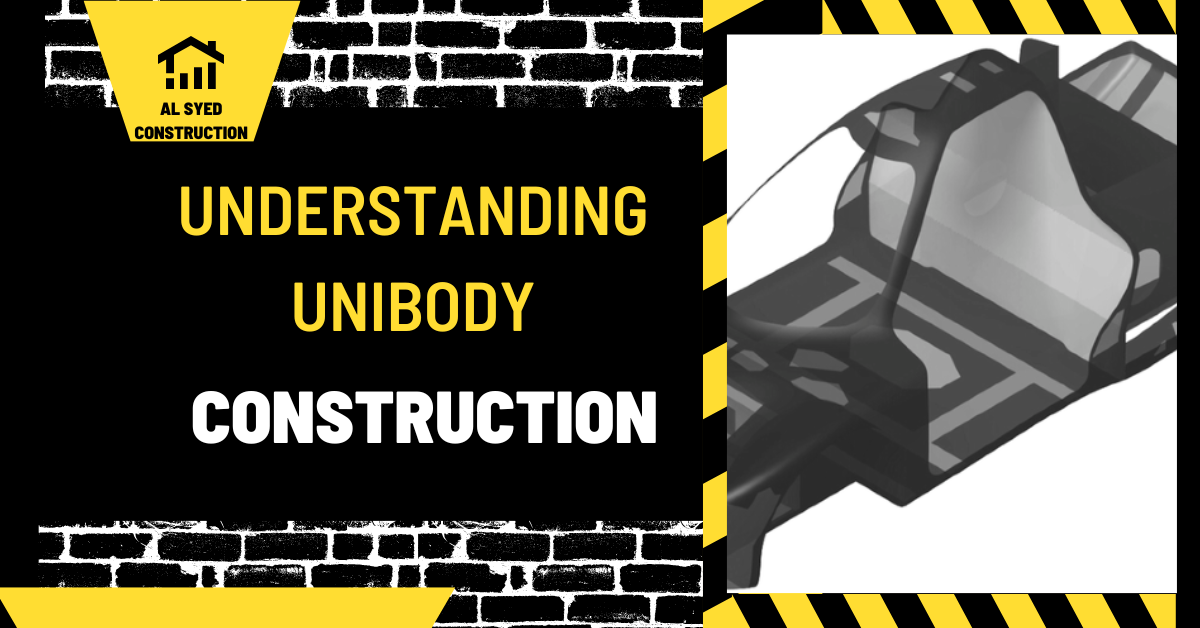
Unibody Construction: Structure, Benefits and Limits
Unibody construction, also known as monocoque construction, is a method of building vehicles, particularly automobiles, where the body and frame are integrated into a single, cohesive unit. This approach to vehicle design has become increasingly popular due to its advantages in terms of safety, weight reduction, and manufacturing efficiency. In this article, we will explore the concept of unibody construction, its benefits, and its impact on the automotive industry.
The Basics of Unibody Construction
Definition of Unibody Construction
Unibody construction involves the use of a single, continuous structure to form the chassis and body of a vehicle. Unlike traditional body-on-frame designs, where the body is mounted on a separate frame, unibody vehicles have a fused body and frame that function as a unified entity.
Advantages of Unibody Construction
Unibody construction offers several benefits, including improved structural rigidity, reduced weight, and better fuel efficiency. It also enhances safety by providing better energy absorption in the event of a collision.
Applications of Unibody Construction
Automobile Manufacturing
Unibody construction is primarily used in the manufacturing of passenger cars, including sedans, hatchbacks, and SUVs. Its application results in vehicles that are lighter, more aerodynamic, and more fuel-efficient.
Impact on Vehicle Design
The use of unibody construction has led to significant changes in vehicle design, enabling manufacturers to create sleeker, more streamlined models. It has also allowed for greater flexibility in interior space utilization.
Importance of Unibody Construction in the Automotive Industry
Safety Improvements
Unibody construction has contributed to advancements in vehicle safety by providing better protection to occupants during collisions. The integrated structure absorbs and distributes impact forces more effectively than traditional designs.
Environmental Considerations
The reduced weight of unibody vehicles leads to lower fuel consumption and emissions, making them more environmentally friendly compared to their body-on-frame counterparts.
What makes a vehicle unibody?
In a unibody vehicle, the body shell and structural members work together as an integrated structure. The floor, pillars, roof rails, rockers, crossmembers, and other components help form a load-carrying body. This differs from a conventional body-on-frame layout, where a separate frame supports the body, though real vehicle designs include variations and reinforcements that make simple labels incomplete. The owner’s manual or manufacturer service information is the right source for a specific model.
Unibody does not mean that a vehicle is one solid piece of metal. The shell is assembled from multiple stamped, cast, bonded, or welded components. The design manages loads through the structure and creates attachment points for the suspension, powertrain, safety systems, and interior. In a collision, designated zones may deform to help manage energy, while the occupant compartment is designed to retain space. The exact behavior depends on the engineering and model year; the word “unibody” by itself does not predict a crash result.
Benefits and tradeoffs depend on the design
An integrated body can provide packaging efficiency and a rigid platform for many passenger cars and crossovers. Combining body and structure can reduce the need for a separate ladder frame and can support a lower floor or more interior space in some designs. Those are design possibilities, not a guarantee that every unibody vehicle is lighter, safer, quieter, or more efficient than every body-on-frame vehicle.
Body-on-frame designs remain useful for certain trucks and specialized vehicles because a separate frame can suit particular towing, payload, or upfitting needs. However, the right comparison depends on the specific vehicle, intended load, suspension, safety performance, and manufacturer ratings. A buyer should compare the published towing and payload figures, crash-test results where available, operating costs, and use case rather than relying on a general claim that one construction type is always stronger.
| Question | What to compare | Why the label is not enough |
|---|---|---|
| Will it carry or tow the intended load? | Model-specific payload, towing rating, equipment, and hitch limits | Structure type does not override the manufacturer’s ratings. |
| How does it perform in a crash? | Independent tests for the exact model year and configuration | Crash performance depends on the full design and restraint systems. |
| Can it be repaired after structural damage? | OEM repair procedures, parts, and qualified collision repair capability | Modern structures may require specific sectioning, welding, or bonding methods. |
| Is it suitable for modification? | Manufacturer-approved upfit guidance and load paths | Cutting structural members can compromise safety and durability. |
Inspect and repair structural damage correctly
Unibody damage can affect alignment, door openings, suspension mounting points, and the vehicle’s designed crash behavior. A visual inspection may miss deformation hidden under trim, interior panels, or exterior skins. If a vehicle has been in a significant collision, have it assessed by a qualified collision repair professional using the manufacturer’s procedures and appropriate measuring equipment. A repair that merely makes the outer panel look straight may not restore the structure.
Do not weld, drill, heat, or straighten a structural component based only on a generic online tutorial. Modern vehicles can use high-strength steels, aluminum, adhesives, and mixed-material joints that require specific methods. Unapproved repair work can weaken the structure or affect airbag and sensor systems. Keep repair documentation and ask the shop to identify any replaced or sectioned structural parts.
Questions to ask before buying a used unibody vehicle
- Does the vehicle history show a collision, flood, or structural repair?
- Do panel gaps, door operation, and alignment appear consistent, and has a professional inspected it?
- Are there repair invoices and parts records for any structural work?
- Does the intended use stay within the owner’s published load and towing limits?
- Are replacement parts and qualified repair facilities available where you live?
Regulatory documents use technical definitions for vehicle structure; for example, NHTSA’s interpretation about a particular unibody regulation discusses components such as the floor pan in that regulatory context. It should not be generalized into a complete definition for every model. See the NHTSA interpretation and consult the manufacturer’s service information for model-specific details. A unibody is best understood as an integrated structural design whose benefits and repair requirements depend on the vehicle, not as a simple rating of quality.
Questions to ask before buying a unibody vehicle
Start with the intended use, then compare the actual vehicle’s specifications. Check payload and towing ratings for the exact trim and equipment, not just the engine or body style. Review crash-test data for the model year and configuration. For used vehicles, inspect the history and have a qualified professional look for signs of structural repair, corrosion, or misalignment.
Ask how replacement panels and structural components are repaired, whether local shops have the required equipment, and whether manufacturer procedures are available. A vehicle that has been repaired correctly may be a reasonable choice; a vehicle with undocumented structural damage may carry hidden risks. The decision should rely on model-specific evidence rather than a blanket claim that all unibody vehicles are safer, lighter, or weaker.
For general design terminology, see the companion unibody benefits overview. It explains why the structure’s integration can affect packaging and repair, while leaving ratings and safety conclusions to model-specific data.
Unibody and body-on-frame are not safety rankings
Buyers sometimes treat the terms as shorthand for “car-like” versus “truck-like,” but actual vehicles cross those expectations. Some crossovers have substantial towing capacity within their published limits; some frame-based vehicles are built primarily for passenger comfort. Compare the exact vehicle’s ratings and design rather than assuming its structure determines the whole use case.
What a structural inspection may include
A professional inspection can look for uneven gaps, repaired seams, distorted mounting points, corrosion, and alignment problems. Measuring equipment may be needed to compare structural dimensions with manufacturer data. A scan tool may also be required after repairs to check restraint or driver-assistance systems. These checks are different from a routine mechanical inspection of fluids, brakes, or tires.
If a seller provides a repair invoice, review which components were replaced and whether the shop followed the vehicle maker’s procedure. Ask whether airbags deployed, whether sensors were recalibrated, and whether the repair carries a warranty. A clean exterior appearance cannot answer those questions, and a generic “frame damage” label may not accurately describe an integrated body shell.
Structural modifications require model-specific guidance
Aftermarket racks, lifts, winches, or conversions can change loads and may attach to structural members. Follow approved upfit instructions and confirm the vehicle’s payload limits. A modification that cuts or drills a structural member can alter corrosion protection and load transfer. Have a qualified specialist evaluate the change before installation, especially if the vehicle is used for work or towing.
Understanding the structure helps a buyer ask better questions, but the answer still comes from the specific model’s documentation and inspection. Use NHTSA crash information and manufacturer service guidance alongside the general overview in the unibody benefits article.
Conclusion
Unibody construction has revolutionized the automotive industry by offering a safer, more efficient, and more environmentally friendly approach to vehicle design. Its widespread adoption in passenger car manufacturing has led to significant improvements in vehicle performance, safety, and fuel economy. As the industry continues to evolve, unibody construction is likely to remain a key element in the development of modern automobiles.