
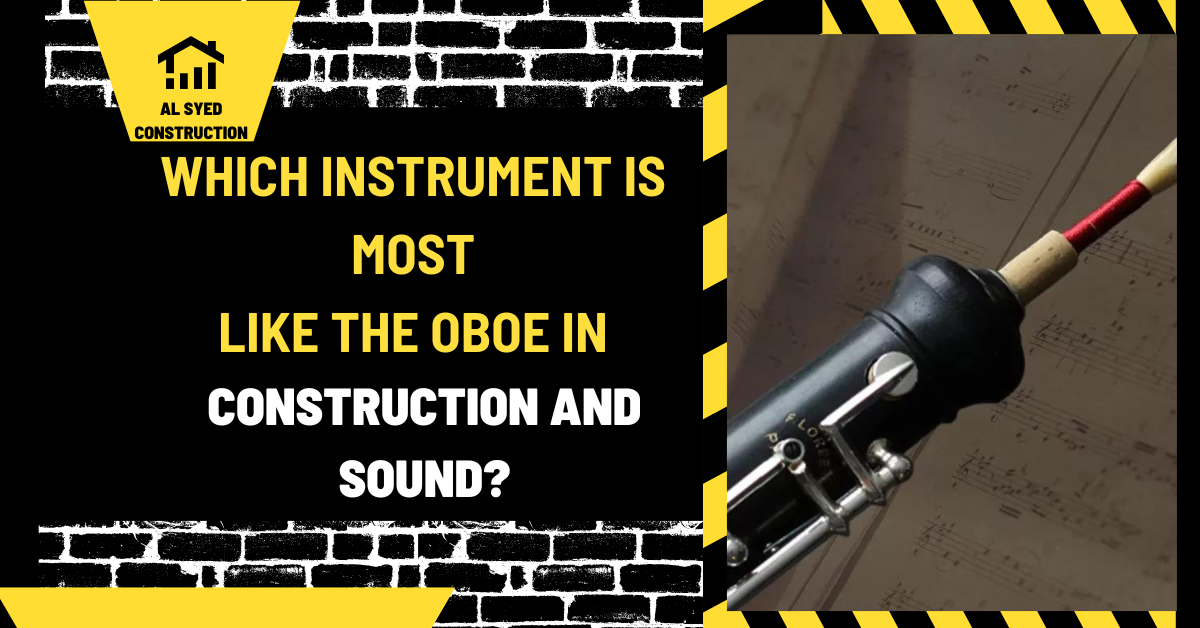
Which Instrument Sounds Most Like an Oboe?
Introduction
The oboe is a distinctive woodwind instrument known for its unique sound and construction. While it holds a singular place in the orchestra, there are other instruments that share similarities in both construction and sound. Among these, the English horn is often considered the closest relative to the oboe. This article will explore the similarities and differences between the oboe and the English horn, highlighting why they are often compared.
Construction Similarities
Double Reed
Both the oboe and the English horn are double-reed instruments, meaning they produce sound through the vibration of two reeds placed together. This is a key factor in their similar sound quality.
Conical Bore
The bodies of both instruments have a conical bore, which widens towards the bell. This shape contributes to their distinctive, resonant sound.
Sound Characteristics
Timbre
The oboe is known for its clear, penetrating sound, often described as reedy or plaintive. The English horn, while similar, has a mellower and deeper tone due to its larger size.
Pitch Range
The English horn is pitched a fifth lower than the oboe, giving it a lower and more somber range. Despite this difference, their sound qualities are remarkably alike.
Differences
Size and Key
The English horn is longer than the oboe and features a slightly bent tube with a pear-shaped bell, which contributes to its deeper sound. It is also equipped with a different key system.
Musical Roles
While both instruments are used for lyrical and expressive melodies, the oboe is more commonly featured as a solo instrument in orchestral and chamber music, while the English horn often provides a supporting or coloristic role.
A recurring idea, or musical motif, can also connect sections of a larger composition; our guide explains how composers develop one.
The closest match is usually another oboe-family instrument
If “most like an oboe” means similar construction and playing technique, the English horn—called the cor anglais in many countries—is a close match. It is a double-reed woodwind in the oboe family, and oboists commonly study or perform on both instruments. Its body is larger and its sounding range is lower, so it does not sound identical to the standard oboe. The oboe d’amore is another close relative, pitched between the oboe and English horn in the family’s lower register.
If the question means sound alone, there is no single answer without a musical context. The English horn often has a darker, more mellow quality because of its lower range and construction, while retaining the oboe family’s focused, reedy tone. The oboe d’amore is also lower than the oboe and can have a softer color. A bassoon shares the double-reed principle but has a substantially lower range and a different timbre, so it is less similar in sound to a standard oboe.
Compare instruments by the feature you care about
| Instrument | Relationship to oboe | How it may sound different |
|---|---|---|
| English horn / cor anglais | Close relative in the oboe family; double reed and related fingering approach. | Larger, lower-pitched, and often perceived as darker or more mellow. |
| Oboe d’amore | Another oboe-family instrument with a lower pitch than the standard oboe. | Often described as gentler or warmer, depending on register and player. |
| Bassoon | Also a double-reed woodwind, but belongs to a different instrument range and construction. | Much lower and broader in tone; not a close substitute for oboe parts. |
| Clarinet | Woodwind with a single reed, not the oboe’s double reed. | Can blend in orchestral colors, but differs in reed, bore, articulation, and tone. |
Similar construction is not the same as identical sound
The oboe uses a double reed attached to a narrow, conical bore. The reed vibrates when the player controls the air stream and embouchure. Related instruments share some of this setup, but differences in bore, reed, length, bell, and pitch alter the sound. A listener might hear the same family resemblance while noticing that the English horn has a lower, rounder register.
Instrument names can also cause confusion. Despite its English-language name, the English horn is not a brass horn; it is a woodwind instrument. It is also not simply a longer standard oboe. It has its own size, reed, pitch transposition, and repertoire. Yamaha’s instrument guide describes the oboe d’amore and cor anglais as lower-pitched relatives; Philharmonia likewise identifies the oboe and cor anglais as conical-bore, double-reed woodwinds. See Yamaha’s oboe-family guide and Philharmonia’s oboe overview.
Choose a comparison for a listening or school assignment
If you need one short answer, say that the English horn is usually the closest familiar orchestral relative in both family and playing approach, while the oboe d’amore is another close relative. Then state what “similar” means. For a sound comparison, play recordings of the standard oboe, English horn, and oboe d’amore at similar volume and in comparable registers. A lower instrument can seem warmer simply because it occupies a different pitch range.
For a construction comparison, compare the reed, bore, body length, and pitch. For a sound comparison, listen for attack, brightness, sustain, register, and orchestral role. For a beginner choosing an instrument, availability of teachers, reeds, repair service, and ensemble parts may matter more than a broad similarity claim. A school band director or oboe teacher can help distinguish instrument family from practical substitute.
Finally, an instrument that shares one feature may differ in another. The bassoon is also a double-reed instrument, but its size and low register make it a poor choice if the question is “which instrument sounds most like the oboe?” The clarinet can play lyrical lines in a similar part of the orchestra but uses a single reed and a different acoustic setup. Naming the comparison criterion keeps the answer accurate and useful.
Compare the sound by listening for specific features
Listen for pitch range, brightness, attack, sustain, and vibrato rather than asking only whether two instruments “sound alike.” The English horn’s lower register can make it feel warmer than the oboe, even though both belong to the oboe family and share the double-reed principle. The oboe d’amore also sits lower than the standard oboe and may sound gentler in some repertoire. Player, reed, room, and recording all affect the comparison.
Try short recordings of each instrument playing the same or similar musical phrase. Compare whether the note begins sharply, how the sound changes through the note, and how clearly it projects over accompaniment. Listen in more than one register; an instrument can sound different in its low, middle, and high ranges. A recording with different microphones or orchestration can make timbre comparisons unreliable.
Why the English horn is a practical answer
The English horn is familiar in orchestral music and is closely related to the oboe in construction and playing approach. It is pitched lower and uses its own reed. An oboist may learn it, but the instrument has distinct handling and intonation needs. It should not be treated as a drop-in replacement for every oboe part because the written and sounding pitches differ.
If a school assignment asks for the “most similar instrument,” a complete answer can say: “The English horn is a close relative and the best familiar comparison for construction, while the oboe d’amore is another lower member of the family. The closest match depends on whether the question means timbre, pitch, or playing technique.” This qualification is more accurate than naming a single instrument without explaining the criterion.
For beginners, practical access matters too. Oboe reeds require care and regular replacement, and woodwind instruments need maintenance. Ask a music teacher about rental options, available instruction, and ensemble needs before choosing an instrument based only on a sound comparison.
Short answer for a quiz
If a multiple-choice question asks which instrument is most like the oboe, look first for the English horn or cor anglais. It is a close member of the oboe family and is also a double-reed woodwind. If the question emphasizes pitch or a softer lower color, the oboe d’amore may be relevant. If it asks only about double reeds, the bassoon shares that general feature but differs greatly in range and sound.
Read the exact wording: “similar in construction,” “similar in sound,” and “same family” are not identical questions. Explain the criterion in a written response so your answer shows more than a guess.
One-line answer with a useful qualification
The English horn is generally the closest familiar orchestral relative to the oboe; the oboe d’amore is another closely related, lower-pitched instrument. If a question means only “similar sound,” listen to examples and explain whether pitch, timbre, or playing method is being compared. That qualification keeps a short answer accurate.
Compare the oboe by sound, range, and musical role
There is no single instrument that is “most like” the oboe in every respect. If the comparison is about family and tone, the English horn is the closest familiar relative: it is also a double-reed woodwind, but it sounds lower and has a different body and bell. If the comparison is about playing a melodic line in a similar register, a flute or clarinet may sometimes take a comparable orchestral role, yet each has a different tone production and color.
When identifying an oboe-like sound in a recording, listen for the quality of the tone rather than relying only on pitch. The oboe uses a double reed, often producing a focused, penetrating sound that can remain audible over an ensemble. A flute produces its sound by directing air across an opening; a clarinet uses a single reed and a different bore shape. Those construction differences contribute to their characteristic timbres, though players, instruments, room acoustics, and musical register all affect what a listener hears. In a score, compare the line’s range and articulation as well as the instrument name. A substitute instrument may cover the notes but will not necessarily reproduce the same color.
Conclusion
The English horn is the instrument most like the oboe in both construction and sound. Their shared use of double reeds and conical bores contributes to their similar timbres, while their differences in size and pitch range provide each with its unique character. Understanding the similarities and distinctions between these two instruments enhances our appreciation of their roles in music and their contributions to the rich tapestry of orchestral sound.

