
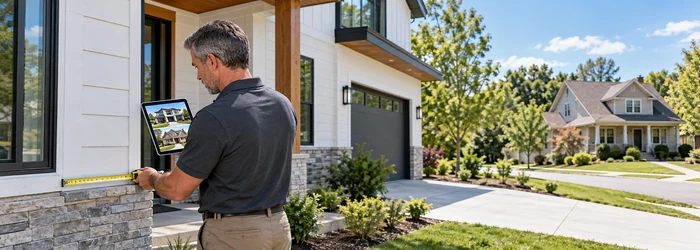
Do New Construction Homes Appraise Higher?
Overview
New Construction Homes Appraise Higher should be understood through its purpose, project setting, controlling documents, and the work it affects. This guide connects the topic to planning, design or scope decisions, coordination, construction checks, and handover rather than treating a label or estimate as a complete answer.
Use the source article's topic details with current project information. Local approvals, safety requirements, engineering decisions, and financial or legal treatment depend on the facts and responsible authority.
Quick answer: A new construction home can appraise higher than a comparable older home, but being brand-new does not automatically guarantee a higher appraisal or an appraisal equal to the builder’s contract price. Appraisers estimate market value from comparable sales, location, size, condition, quality, upgrades, lot characteristics, current market conditions, and—when useful—the cost approach. The key question is not simply whether the home is new; it is whether the local market supports the price and features of that specific home.
For buyers, builders, and lenders, this distinction matters because a new home may include design-center upgrades, lot premiums, financing incentives, and builder pricing that do not translate dollar-for-dollar into appraised value. A well-supported new build may appraise strongly, while an over-improved or aggressively priced home can still create an appraisal gap.
How a New Construction Home Appraisal Works
A new construction appraisal is designed to answer a practical lending question: what is the property worth in the open market as of the appraisal date? The appraiser is not simply adding the builder’s invoices or accepting the contract price. Instead, the appraiser analyzes the home as a market asset and compares it with competitive properties that buyers could reasonably consider.
For a completed home, the sales comparison approach is usually central. In a newer subdivision, the appraiser may use sales from the same development as well as competitive sales from outside the development to test whether the builder’s pricing is supported by the broader market. When comparable sales are limited, the cost approach can provide additional context, particularly for proposed or recently completed construction.
If your appraisal is being completed near the end of the build, the timing often overlaps with final lender and builder requirements. See our guide on when you close on a new construction home to understand how appraisal, completion, walkthrough, and closing milestones fit together.
Do New Construction Homes Usually Appraise Higher Than Resale Homes?
Sometimes—but not because “new” receives a fixed premium. A new home often has characteristics that buyers value: no physical wear, modern systems, current code compliance, energy-efficient components, contemporary layouts, new finishes, warranties, and lower expected near-term maintenance. When buyers in the local market consistently pay more for those benefits, the appraisal can reflect that market reaction.
However, appraised value is still tied to evidence. If similar resale homes and nearby new homes are selling at lower prices, the appraiser cannot simply create value because the subject property has never been occupied. Likewise, a custom finish or expensive upgrade only contributes as much value as the market supports—not necessarily what the buyer paid the builder.
FactorHow It Can Affect Appraised ValueBrand-new conditionCan support stronger condition ratings and reduce or eliminate physical depreciation.Location and neighborhood demandOften has more influence on value than the age of the home itself.Recent comparable salesStrong recent comps can support the contract price; weak or limited comps can restrict value.Upgrades and optionsMay add value, but usually only to the extent buyers in that market pay for them.Lot premiumSupported only when market evidence shows buyers pay more for the specific lot feature.Builder incentivesCan affect the analysis because concessions may influence the effective economics of a sale.Energy efficiency and modern systemsMay support value when they are recognized and supported by local market behavior.Market directionA changing market can move appraised value above or below a price agreed months earlier.
Why New Construction Can Appraise Higher
1. Little or No Physical Depreciation
A newly completed home starts with new structural components, roofing, mechanical systems, wiring, plumbing, finishes, and fixtures. Compared with an otherwise similar older property that shows wear or deferred maintenance, the new home may receive a stronger condition assessment. That can support a higher value when the market also recognizes the difference.
2. Modern Design and Buyer Preferences
Open layouts, larger kitchens, modern storage, efficient windows, newer HVAC equipment, smart-home features, and contemporary materials can make a new home more competitive. But design only matters when it aligns with what typical buyers in the area want. Highly personal or unusual customization may cost a lot without adding equivalent resale value.
3. Lower Near-Term Maintenance
A buyer comparing a new home with a 15- or 25-year-old property may reasonably consider the likelihood of upcoming roof, HVAC, plumbing, appliance, or finish replacement. That difference can influence buyer demand and sale prices. An appraisal captures market behavior rather than a simple maintenance-cost calculation, but newer condition can still be reflected through the comparable analysis.
4. New-Development Amenities and Location Features
Some new communities include parks, trails, clubhouses, better stormwater infrastructure, newer streets, or planned retail access. These features can affect marketability. The appraiser still needs comparable evidence to determine whether buyers actually pay more for them.
Why a New Build Can Appraise Lower Than the Contract Price
One of the biggest misunderstandings in new construction is assuming the builder’s price and the appraised value should be the same. The contract price reflects a negotiated transaction. The appraisal reflects an independent opinion of market value. Those numbers can differ for several reasons.
- The purchase contract was signed months before the appraisal and the local market changed during construction.
- The builder charged premiums for upgrades that the local market does not value dollar-for-dollar.
- The home is among the first completed units in a new development, leaving few strong comparable sales.
- The buyer selected unusually high-end finishes for a neighborhood where competing homes are more modest.
- The contract includes a large lot premium that is not supported by similar lot sales.
- Builder-paid closing costs, rate buydowns, or other incentives make the headline price look stronger than the underlying market transaction.
- The home is larger or more customized than typical properties in its competitive market area.
Before signing a builder contract, it helps to review more than the base price. Our questions to ask when buying a new construction home can help you evaluate upgrades, warranties, fees, timelines, and other details that may affect both value and closing.
How Comparable Sales Affect a New Construction Appraisal
Comparable sales—often called comps—are one of the most important parts of residential valuation. The appraiser looks for recent sales that are competitive with the subject home in location, size, design, quality, condition, site characteristics, and market appeal. The goal is not to find an identical house; it is to find sales that best represent how buyers are pricing similar alternatives.
In a new subdivision, builder-controlled sales can be useful, but an appraiser also needs to understand whether the broader market supports those prices. A nearby resale or a home from a competing development may provide an important reality check. If new homes in the subject community are selling for $600,000 but competitive properties outside the community are consistently selling near $525,000, the appraiser has to reconcile that difference rather than simply adopting the builder’s asking price.
How the Cost Approach Helps With New Construction
The cost approach estimates what it would cost to reproduce or replace the improvements, adds land value, and accounts for depreciation where appropriate. Because a newly built home has little physical depreciation, this approach can be useful—especially when comparable sales are scarce. Still, construction cost and market value are not identical concepts. A house can cost more to build than buyers are willing to pay, or a desirable location can produce a market value above the structure’s construction cost.
Do Upgrades Increase the Appraisal Dollar-for-Dollar?
Usually not. Appraisers apply the principle of contribution: an improvement is worth what it contributes to market value, not automatically what it cost. A buyer might spend $25,000 on premium cabinetry, upgraded tile, designer lighting, and appliances, but the market may recognize only part of that amount. Structural upgrades—such as additional finished area, an extra bathroom, a larger garage, or a functional layout improvement—may have stronger support than highly personalized cosmetic choices, but every market is different.
This is why buyers should separate “I want this feature” from “this feature will return its full cost in appraised value.” Personal enjoyment can absolutely justify an upgrade; it just should not be confused with guaranteed equity.
If you are comparing the cost of building with the value of buying an existing property, read is building a house cheaper than buying for a broader look at construction cost, purchase cost, and long-term tradeoffs.
What About Lot Premiums?
Builders often charge extra for cul-de-sac lots, corner lots, larger parcels, water views, greenbelt adjacency, privacy, or preferred orientation. A lot premium can be supported in an appraisal, but only when market evidence indicates buyers pay more for the feature. The appraiser does not have to accept the builder’s premium as market value. If buyers in comparable sales paid only a modest amount for similar lot advantages, the adjustment may be lower than the builder’s charge.
How Builder Incentives Can Affect the Analysis
New-home builders frequently compete through incentives rather than direct price cuts. Common examples include closing-cost credits, mortgage-rate buydowns, design-center credits, appliance packages, and upgrade allowances. These incentives can be valuable to the buyer, but the appraiser and lender still need to understand the economics of the sale. A $600,000 recorded price with a large incentive package is not always equivalent to a clean $600,000 sale with no concessions.
For buyers, the practical lesson is to compare net value, not just the advertised sales price. Ask the builder to clearly separate the base price, structural options, design upgrades, lot premium, and incentives. That makes it easier to understand where appraisal risk may be concentrated.
New Construction Appraisal Before the Home Is Finished
A lender may order the appraisal while the home is still proposed or under construction. In that situation, the appraiser can value the property subject to completion according to the plans and specifications. The lender may later require evidence that the home was completed as represented. If construction changes materially—for example, finished area, room count, quality level, or major options—the lender may require additional review because the finished property must match the assumptions used in the appraisal.
What Happens If the New Construction Appraisal Comes in Low?
A low appraisal creates an appraisal gap: the contract price is higher than the lender-supported value. The lender generally bases financing on the lower of the purchase price or appraised value, subject to the loan program. That can increase the buyer’s required cash or force the parties to revisit the transaction.
Your options depend on the purchase contract, loan terms, builder policy, and applicable state law, but common paths include:
- Review the appraisal for factual errors such as incorrect square footage, missing bedrooms or bathrooms, omitted upgrades, or inaccurate site characteristics.
- Ask the lender about its reconsideration-of-value process if there is credible market evidence the appraiser may not have considered.
- Provide documented comparable sales, builder settlement data, plans, specifications, and a clear upgrade schedule through the lender or permitted channel.
- Negotiate with the builder if the contract allows or if the builder is willing to adjust price, incentives, or options.
- Bring additional cash to closing if the contract requires completion and the buyer still wants the property.
- Use any appraisal contingency or financing protection that applies under the signed contract.
How Buyers Can Reduce Appraisal Risk Before Signing
- Study recent closed sales in the development and in competing nearby neighborhoods.
- Ask for a written breakdown of base price, lot premium, structural options, design upgrades, and incentives.
- Be cautious about over-improving beyond the neighborhood’s typical price range.
- Prioritize upgrades that improve function, usable space, durability, or broad buyer appeal.
- Understand the appraisal contingency and financing clauses in the builder contract.
- Keep documentation for upgrades and change orders so the lender and appraiser can identify what is actually included.
- Avoid assuming that every dollar spent in the design center creates a dollar of equity.
Appraised Value vs. Construction Cost vs. Purchase Price
These three numbers are related but not interchangeable. Construction cost is what it takes to build the home. Purchase price is what the buyer agreed to pay. Appraised value is an opinion of market value for lending purposes. A healthy transaction may have all three numbers close together, but that is not guaranteed.
NumberWhat It RepresentsWhy It Can DifferConstruction costLabor, materials, site work, contractor expenses, and other build costs.Material prices, labor rates, site complexity, and builder efficiency vary.Purchase priceThe negotiated amount in the buyer-builder contract.Can include premiums, incentives, upgrades, timing, and builder pricing strategy.Appraised valueMarket-supported value estimated by the appraiser.Depends on comparable sales, market conditions, quality, condition, location, and other value factors.
For a broader budgeting benchmark, you can compare construction economics with our USA house construction cost calculator. Cost data does not replace an appraisal, but it helps separate build cost from market value.
Frequently Asked Questions
Do new construction homes automatically appraise for the contract price?
No. The contract price is an important data point, but the appraiser must still support market value using appropriate market evidence and appraisal methods.
Can a new house appraise lower than an older house?
Yes. Location, lot, size, design, market demand, comparable sales, and pricing can outweigh the age advantage. A well-located older home can be worth more than a new home in a weaker location.
Do builder upgrades always increase the appraisal?
Upgrades can add value, but not necessarily dollar-for-dollar. The appraiser looks for market-supported contribution, not just upgrade cost.
Can a lot premium be included in appraised value?
Yes, when comparable market data supports a premium for similar lot characteristics. The builder’s stated premium alone is not proof of market value.
Why are comparable sales difficult in a new subdivision?
Early phases may have few closed transactions, and many sales may involve the same builder. The appraiser may need to use competitive sales outside the development and additional market evidence.
Can an appraisal be completed before construction is finished?
Yes. A lender can obtain an appraisal subject to completion based on plans and specifications, then require evidence that the finished home conforms to those assumptions.
What is an appraisal gap?
It is the difference between the contract price and a lower appraised value. Depending on the loan and contract, the buyer may need more cash, negotiate, challenge errors through the lender, or use contractual protections.
Does new construction have better resale value?
It can, but future resale value depends on location, supply, demand, community development, maintenance, design choices, and the broader market. Newness alone is temporary.
Bottom Line
New construction homes can appraise higher than comparable resale properties, but there is no automatic “new home premium” that guarantees the builder’s price. The strongest appraisal is one supported by recent competitive sales, a desirable location, broadly valued features, reasonable upgrades, and a contract price that matches current market behavior. Buyers should treat the appraisal as a market test—not a confirmation of what was spent on the home.
The safest approach is to evaluate the neighborhood, separate base price from upgrades and incentives, understand the builder contract, and keep expectations realistic about which features create measurable market value. That preparation reduces the chance that a low appraisal becomes an expensive surprise near closing.
Related ALSYED Construction Guides
Use our new construction home buying checklist to review builder, warranty, upgrade, and contract questions before committing to a purchase.
See when you close on a new construction home for a step-by-step explanation of the final appraisal, completion, walkthrough, lender, and closing sequence.
Scope and meaning
A cost, tax, financing, depreciation, or legal question about new construction homes appraise higher cannot be answered from a headline alone. Define transaction, location, date, parties, asset or work, contract, and purpose. Distinguish budget from bid, tax treatment from project cost, and underwriting from estimate. This is planning guidance, not legal, tax, or loan advice.
Planning inputs to confirm
Gather contract, invoices, plans, changes, payment records, asset descriptions, financing terms, permits, and dated quotes. Identify jurisdiction and who interprets it. Separate labor, materials, equipment, land, fees, services, and improvements where records allow. Mixed new work, repair, tenant work, or personal use needs documented boundaries.
Design choices and trade-offs
Build an auditable comparison from consistent assumptions. For an estimate, show quantity, unit, specification, delivery basis, date, and exclusions. For accounting or tax review, preserve source records and explain classification for qualified review. For financing, distinguish equity, draws, fees, interest, reserves, valuation, and conversion terms.
A practical project sequence
Define the question, identify governing documents and jurisdiction, collect dated evidence, separate facts from assumptions, compare equivalent scenarios, seek qualified interpretation, and record conclusion with date and scope. Preserve earlier versions when rules, contracts, designs, prices, or asset status change.
Coordination and responsibilities
Coordinate owner, contractor, lender, accountant, adviser, designer, and authority responsibilities. Assign who collects evidence and who makes each determination. Link amounts to invoices, quantities, drawings, payments, or assumptions. Keep allowances, contingency, claims, taxes, fees, and approved changes separate.
Cost and schedule considerations
Compare budgets on the same area, scope, design stage, region, schedule, finish, utilities, and site conditions. Include design, testing, approvals, external work, temporary work, finance, and closeout where relevant. A calculator can organize inputs but cannot inspect a parcel or confirm a current local quote.
Quality checks
Check that amount, date, unit, parties, project, classification, and approval agree across estimates, invoices, contracts, draw applications, and closeout. Reconcile totals. Retain the applicable interpretation. If evidence is incomplete, label the result provisional and state the next action.
Risk and long-term use
Retain the final determination with supporting records, method, source date, approvals, and revisions. Reconcile commitments, payments, changes, allowances, and remaining work. General information frames the issue; current official requirements and project facts control the final decision.
Topic-specific questions
The source outline surfaces points to verify against current project information:
- How a New Construction Home Appraisal Works. Check the exact location, source revision, reviewer, and whether the point is a definition, design intent, measurement, requirement, or example. Record the answer before procurement or installation if it changes scope, sequence, or acceptance.
- Do New Construction Homes Usually Appraise Higher Than Resale Homes?. Check the exact location, source revision, reviewer, and whether the point is a definition, design intent, measurement, requirement, or example. Record the answer before procurement or installation if it changes scope, sequence, or acceptance.
- Why New Construction Can Appraise Higher. Check the exact location, source revision, reviewer, and whether the point is a definition, design intent, measurement, requirement, or example. Record the answer before procurement or installation if it changes scope, sequence, or acceptance.
Project checklist
Before committing to a decision about new construction homes appraise higher, work through these checks:
- Record location, purpose, project phase, date, and controlling revision.
- Separate verified conditions from assumptions, open questions, allowances, and exclusions.
- Confirm scope, measurement, product or system, interfaces, access, and responsibility.
- Agree who reviews the work, which evidence is required, and when inspection must occur.
- Document approved changes with location, cost or schedule effect, owner, date, and closure.
- Keep tests, photographs, record information, warranties, and maintenance instructions for handover.
Common mistakes to avoid
Do not rely on a broad label, old drawing, generic figure, or verbal field decision when the actual scope can be checked. Confirm the basis, location, version, and reviewer before work is committed. When evidence is incomplete, mark the conclusion provisional and name the next action instead of presenting an assumption as fact.
Frequently asked questions
Can one universal number answer this?
No. Location, date, contract, scope, parties, asset, and calculation purpose matter.
What records should be collected?
Contracts, invoices, plans, quantities, changes, payments, financing terms, permits, and dated quotes.
Can a calculator replace a quote or adviser?
No. It organizes assumptions but cannot inspect or decide current legal, tax, accounting, or lending treatment.
How should estimates be compared?
Use the same scope, units, specification, location, date, schedule, inclusions, and exclusions.
When is professional advice needed?
When a result affects a filing, payment right, contract, loan, tax position, permit, or substantial investment.
Related Building Design resources
Continue with Are Commercial Construction Bids Higher Than Residential?, Are There Any Restrictions In Commercial, Average Construction Cost Per Square Foot For. Apply each resource only to its scope and verify project decisions against approved records.
Conclusion
A reliable result for new construction homes appraise higher comes from clear scope, current evidence, coordinated decisions, and documented checks. Obtain qualified review where safety or compliance is involved, and keep the approved record available for construction and future maintenance.





Leave a Reply
Want to join the discussion?Feel free to contribute!