
Does Lead-Safe Apply to Commercial Construction?
Overview
Lead-safe Apply To Commercial Construction should be understood through its purpose, project setting, controlling documents, and the work it affects. This guide connects the topic to planning, design or scope decisions, coordination, construction checks, and handover rather than treating a label or estimate as a complete answer.
Use the source article's topic details with current project information. Local approvals, safety requirements, engineering decisions, and financial or legal treatment depend on the facts and responsible authority.
In the realm of construction and renovation, safety protocols are crucial to ensure both worker health and environmental protection. One critical safety standard is the Lead-Safe Rule, established by the Environmental Protection Agency (EPA). This rule is designed to minimize the risks associated with lead exposure, particularly in residential settings. However, a common question arises: does the Lead-Safe Rule apply to commercial construction projects? This detailed guide will explore the applicability of the Lead-Safe Rule to commercial construction, offering a thorough analysis of its scope, implications, and compliance requirements.
- 1. Understanding the Lead-Safe Rule
- 1.1 Key Provisions of the Lead-Safe Rule
- 1.2 Target Audience
- 2. Applicability of the Lead-Safe Rule to Commercial Construction
- 2.1 Commercial Construction Projects and Lead Safety
- 2.2 Compliance and Regulatory Oversight
- 3. Comparing Lead-Safe Requirements: Residential vs. Commercial
- 3.1 Residential Requirements
- 3.2 Commercial Requirements
- 4. Best Practices for Lead Safety in Commercial Construction
- 4.1 Certification and Training
- 4.2 Implementing Lead-Safe Work Practices
- 4.3 Documentation and Disclosure
- 5. Conclusion
1. Understanding the Lead-Safe Rule
The Lead-Safe Rule, also known as the Renovation, Repair, and Painting (RRP) Rule, is a federal regulation enforced by the EPA. It was implemented to protect occupants and workers from lead-based paint hazards that can arise during renovation activities.
1.1 Key Provisions of the Lead-Safe Rule
- Certification Requirement: Contractors performing renovation, repair, or painting work must be certified by the EPA to ensure they follow lead-safe practices.
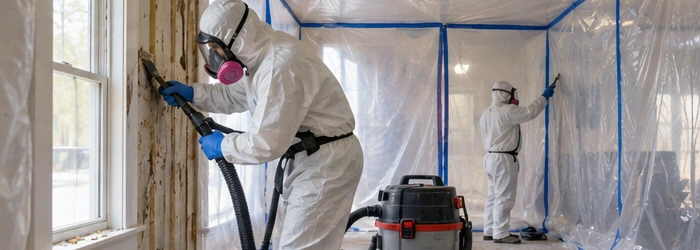
- Work Practices: The rule mandates specific work practices to contain lead dust, prevent lead contamination, and clean up lead residues.
- Notification and Disclosure: Property owners must be informed about lead-based paint hazards and the lead-safe procedures being followed.
1.2 Target Audience
Initially, the Lead-Safe Rule primarily targets residential properties, particularly those built before 1978 when the use of lead-based paint was banned in residential settings. The focus is on protecting families, especially children, from the dangers of lead exposure.
2. Applicability of the Lead-Safe Rule to Commercial Construction
The scope of the Lead-Safe Rule in commercial construction is less straightforward. While the rule is explicit in its application to residential properties, commercial projects may have different regulatory requirements and considerations.
2.1 Commercial Construction Projects and Lead Safety
Commercial construction includes a wide range of properties, such as office buildings, warehouses, retail spaces, and industrial facilities. The applicability of lead safety regulations in these contexts depends on several factors:
- Building Age: If a commercial building was constructed before 1978, it may still be subject to lead safety regulations due to the presence of lead-based paint.
- Scope of Work: The type of renovation or repair work being performed can influence whether the Lead-Safe Rule applies. For instance, major renovations might be subject to different rules compared to routine maintenance.
2.2 Compliance and Regulatory Oversight
In commercial construction, the following considerations apply:
- EPA Regulations: While the Lead-Safe Rule is tailored to residential settings, the EPA does not explicitly exclude commercial buildings from its scope. Therefore, contractors working on pre-1978 commercial buildings may need to adhere to lead-safe practices.
- State and Local Regulations: Some states and local jurisdictions have specific regulations that extend lead safety requirements to commercial projects. It is essential to consult local regulatory agencies to ensure compliance.
3. Comparing Lead-Safe Requirements: Residential vs. Commercial
Understanding the differences between residential and commercial lead safety requirements helps clarify how the Lead-Safe Rule impacts various types of construction projects.
3.1 Residential Requirements
- Focused on Health Risks: Residential regulations emphasize protecting children and families from lead exposure in homes and daycare centers.
- Strict Work Practices: Includes comprehensive guidelines for containment, cleanup, and certification to ensure lead-safe environments.
3.2 Commercial Requirements
- Broader Scope: Commercial lead safety requirements might be influenced by industry-specific standards and the building's use.
- Variable Regulations: Depending on the state and local jurisdiction, commercial projects may have different lead safety regulations or exceptions.
4. Best Practices for Lead Safety in Commercial Construction
Regardless of whether the Lead-Safe Rule explicitly applies, implementing best practices for lead safety is crucial in commercial construction.
4.1 Certification and Training
- EPA Certification: Ensure that contractors and workers are properly trained and certified in lead-safe practices, even if not explicitly required by the Lead-Safe Rule.
- Ongoing Education: Stay updated with the latest lead safety guidelines and regulations to maintain compliance.
4.2 Implementing Lead-Safe Work Practices
- Containment: Use barriers and plastic sheeting to contain dust and debris during renovation activities.
- Cleanup Procedures: Follow thorough cleaning protocols to remove lead dust and residues from the work area.
4.3 Documentation and Disclosure
- Maintain Records: Keep detailed records of lead-safe practices, training certifications, and any lead testing conducted.
- Inform Stakeholders: Provide information to building owners and tenants about lead safety measures and potential risks.
5. Conclusion
The Lead-Safe Rule primarily targets residential properties but has implications for commercial construction projects, especially those involving pre-1978 buildings. While commercial construction is not explicitly covered under the Lead-Safe Rule, adherence to lead safety practices is essential to protect health and ensure regulatory compliance. Understanding the regulatory landscape, implementing best practices, and staying informed about local regulations are key steps for managing lead safety in commercial construction.
Scope and meaning
A commercial or institutional building begins with the activities it must support. For lead-safe apply to commercial construction, define users, operating hours, equipment, deliveries, peak occupancy, security, storage, and future change. Distinguish base building, shell-and-core, tenant fit-out, owner equipment, and site work. A leasing plan may not show construction scope; assign each package.
Planning inputs to confirm
Map the program to site, circulation, servicing, and operations. Confirm how people, deliveries, waste, responders, maintenance staff, and equipment reach the building. Check the review path with responsible professionals; classifications and requirements depend on location and use. Consider accessible routes, egress, fire protection, structure, utilities, and loading early.
Design choices and trade-offs
Coordinate structure, enclosure, utilities, life-safety systems, and maintenance. Evaluate clear heights, spans, equipment rooms, risers, façade performance, acoustics, and expansion. For multiple tenants, define shared areas, metering, access, and maintenance responsibilities. Specialized equipment must fit and remain serviceable before the layout is fixed.
A practical project sequence
Plan from program and site verification through coordinated design, authority review, procurement, enabling work, structure, enclosure, rough-in, fit-out, testing, and occupancy readiness. Coordinate long-lead equipment and utility approvals. Include inspection hold points and commissioning. Phased occupancy needs temporary access, fire strategy, utilities, and unfinished-area responsibility.
Coordination and responsibilities
Use an interface matrix for architecture, structure, civil, mechanical, electrical, plumbing, fire, security, IT, lifts, and tenant scope. Identify who provides sleeves, supports, fire stopping, controls, meters, tests, training, and access. Review cost and schedule changes against operations and tenant obligations.
Cost and schedule considerations
Separate shell, landlord work, tenant improvements, owner equipment, external work, design, testing, commissioning, fees, and contingency. Compare bids on identical scope. A low base price may shift costs to fit-out or operations. Track changes by location and package, including lead time, access, testing, energy, and maintenance.
Quality checks
Define acceptance evidence before installation: approved submittals, samples, mock-ups, inspections, functional tests, balancing, controls, commissioning, and training as applicable. Follow approved documents and authority requirements. Before opening, confirm approvals, safe access, tested systems, warranties, record drawings, and responsible operators.
Risk and long-term use
Plan equipment replacement routes, roof access, shutoffs, meters, cleanouts, waste, spare parts, and service contracts. Deliver operating sequences, warranties, as-builts, approvals, and maintenance schedules. Clarify who operates shared services and how future tenant changes are reviewed.
Topic-specific questions
The source outline surfaces points to verify against current project information:
- Understanding the Lead-Safe Rule. Check the exact location, source revision, reviewer, and whether the point is a definition, design intent, measurement, requirement, or example. Record the answer before procurement or installation if it changes scope, sequence, or acceptance.
- Key Provisions of the Lead-Safe Rule. Check the exact location, source revision, reviewer, and whether the point is a definition, design intent, measurement, requirement, or example. Record the answer before procurement or installation if it changes scope, sequence, or acceptance.
- Target Audience. Check the exact location, source revision, reviewer, and whether the point is a definition, design intent, measurement, requirement, or example. Record the answer before procurement or installation if it changes scope, sequence, or acceptance.
Project checklist
Before committing to a decision about lead-safe apply to commercial construction, work through these checks:
- Record location, purpose, project phase, date, and controlling revision.
- Separate verified conditions from assumptions, open questions, allowances, and exclusions.
- Confirm scope, measurement, product or system, interfaces, access, and responsibility.
- Agree who reviews the work, which evidence is required, and when inspection must occur.
- Document approved changes with location, cost or schedule effect, owner, date, and closure.
- Keep tests, photographs, record information, warranties, and maintenance instructions for handover.
Common mistakes to avoid
Do not rely on a broad label, old drawing, generic figure, or verbal field decision when the actual scope can be checked. Confirm the basis, location, version, and reviewer before work is committed. When evidence is incomplete, mark the conclusion provisional and name the next action instead of presenting an assumption as fact.
Frequently asked questions
What must a commercial brief define?
Uses, users, hours, peak occupancy, equipment, deliveries, servicing, security, and future change.
Does the same layout work everywhere?
No. Site, use, authority requirements, utilities, access, operations, and local rules affect design.
How do shell and fit-out differ?
The contract defines the boundary; a scope matrix should identify base building, tenant work, equipment, utilities, and testing.
When should commissioning be planned?
During design and scheduling, with systems, tests, owners, records, and training defined.
What is needed before occupancy?
Required approvals, safe access, tested systems, operating instructions, training, warranties, record information, and closeout.
Related Building Design resources
Continue with Commercial Construction Require A Separate, Does New Commercial Construction Require Sidewalks?, Buying Out Homeowners For Commercial. Apply each resource only to its scope and verify project decisions against approved records.
Conclusion
A reliable result for lead-safe apply to commercial construction comes from clear scope, current evidence, coordinated decisions, and documented checks. Obtain qualified review where safety or compliance is involved, and keep the approved record available for construction and future maintenance.







Leave a Reply
Want to join the discussion?Feel free to contribute!