
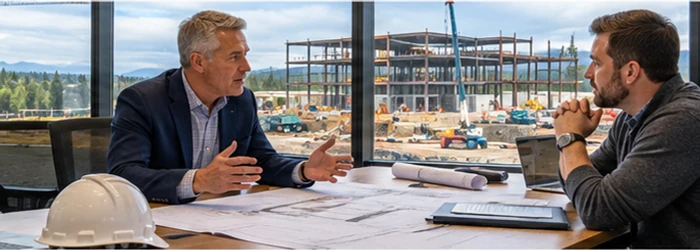
Buying Out Homeowners For Commercial
Overview
Buying Out Homeowners For Commercial should be understood through its purpose, project setting, controlling documents, and the work it affects. This guide connects the topic to planning, design or scope decisions, coordination, construction checks, and handover rather than treating a label or estimate as a complete answer.
Use the source article's topic details with current project information. Local approvals, safety requirements, engineering decisions, and financial or legal treatment depend on the facts and responsible authority.
When embarking on a commercial construction project, particularly in urban or densely populated areas, it is often necessary to buy out homeowners whose properties are situated within the planned construction zone. This process, known as property acquisition or property buyout, is a critical aspect of project planning and execution. This comprehensive guide will detail the steps, considerations, and best practices for buying out homeowners effectively and efficiently.
- 1. Understanding Property Buyouts
- 1.1. Definition and Purpose
- 1.2. Types of Property Buyouts
- 2. The Process of Buying Out Homeowners
- 2.1. Initial Planning and Assessment
- 2.2. Engaging with Homeowners
- 2.3. Valuation and Compensation
- 2.4. Legal and Financial Considerations
- 2.5. Relocation and Support Services
- 3. Best Practices for Property Buyouts
- 3.1. Transparent Communication
- 3.2. Fair Compensation
- 3.3. Compliance with Regulations
- 3.4. Professional Mediation
- 4. Conclusion
1. Understanding Property Buyouts
1.1. Definition and Purpose
A property buyout involves the process of acquiring private properties to facilitate commercial development. This is often necessary when the planned construction site includes residential properties that must be vacated and repurposed. The primary objectives of property buyouts are:
- Clearing the Site: Ensuring the land is available for commercial development.
- Legal Compliance: Meeting legal requirements for construction projects.
- Project Viability: Securing all necessary properties to make the construction feasible.
1.2. Types of Property Buyouts
Property buyouts can vary based on the nature of the project and the location:
- Voluntary Buyouts: Homeowners agree to sell their properties willingly, often due to attractive compensation offers or incentives.
- Involuntary Buyouts: In cases where homeowners are reluctant, the process may involve legal proceedings to compel the sale, usually under eminent domain laws.
2. The Process of Buying Out Homeowners
2.1. Initial Planning and Assessment
Before initiating a buyout, a detailed planning phase is essential:
- Property Assessment: Evaluate the properties to determine their value and potential challenges. This includes land surveys and property appraisals.
- Legal Review: Ensure compliance with local, state, and federal regulations regarding property acquisition and eminent domain.
2.2. Engaging with Homeowners
Effective communication with homeowners is crucial for a smooth buyout process:
- Notification: Inform homeowners about the proposed project and the need for property acquisition. Provide clear details about the benefits and the process.
- Negotiation: Engage in discussions to negotiate terms and compensation. This may include offering fair market value, relocation assistance, and other incentives.
2.3. Valuation and Compensation
Determining a fair compensation package is a key component:
- Property Appraisal: Conduct a thorough appraisal to establish the market value of each property. This should be performed by a certified appraiser.
- Compensation Offer: Present an offer based on the appraisal, which should include the value of the property and additional compensation for relocation or inconvenience.
2.4. Legal and Financial Considerations
Handling the legal and financial aspects of property buyouts involves:
- Contracts and Agreements: Draft and sign purchase agreements that outline the terms of the sale, including compensation and any contingencies.
- Eminent Domain: If applicable, follow the legal procedures for eminent domain to acquire properties when negotiations fail.
2.5. Relocation and Support Services
Providing relocation support is essential to maintain good relations and comply with regulations:
- Relocation Assistance: Offer services to help homeowners find new housing and cover moving expenses. This can include moving costs, temporary housing, and assistance with finding a new home.
- Community Outreach: Engage with the community to address any concerns and provide support throughout the transition.
3. Best Practices for Property Buyouts
3.1. Transparent Communication
Maintaining transparency throughout the process helps build trust and reduces conflicts:
- Regular Updates: Keep homeowners informed about the progress of the buyout process and any changes in plans.
- Clear Information: Provide clear, concise information about the project, the reasons for the buyout, and the benefits offered.
3.2. Fair Compensation
Ensuring that compensation is fair and adequate is crucial for a successful buyout:
- Market Value: Ensure that compensation reflects the true market value of the property.
- Additional Incentives: Consider offering additional incentives, such as bonus payments or enhanced relocation packages, to encourage acceptance.
3.3. Compliance with Regulations
Adhering to all legal and regulatory requirements is essential:
- Legal Advice: Consult with legal experts to navigate the complexities of property law and eminent domain.
- Regulatory Compliance: Ensure that all aspects of the buyout process comply with local, state, and federal regulations.
3.4. Professional Mediation
Engaging a mediator can help resolve disputes and facilitate smoother negotiations:
- Neutral Third Party: A mediator can act as a neutral third party to address conflicts and help both parties reach a mutually agreeable solution.
- Conflict Resolution: Use mediation services to address any disagreements and find solutions that benefit both the construction project and the homeowners.
4. Conclusion
Buying out homeowners for commercial construction is a complex but manageable process when approached with careful planning, effective communication, and adherence to legal and regulatory requirements. By following best practices and maintaining a focus on fair compensation and support for affected homeowners, construction projects can proceed smoothly and successfully. For more in-depth information on this topic
Scope and meaning
A commercial or institutional building begins with the activities it must support. For buying out homeowners for commercial, define users, operating hours, equipment, deliveries, peak occupancy, security, storage, and future change. Distinguish base building, shell-and-core, tenant fit-out, owner equipment, and site work. A leasing plan may not show construction scope; assign each package.
Planning inputs to confirm
Map the program to site, circulation, servicing, and operations. Confirm how people, deliveries, waste, responders, maintenance staff, and equipment reach the building. Check the review path with responsible professionals; classifications and requirements depend on location and use. Consider accessible routes, egress, fire protection, structure, utilities, and loading early.
Design choices and trade-offs
Coordinate structure, enclosure, utilities, life-safety systems, and maintenance. Evaluate clear heights, spans, equipment rooms, risers, façade performance, acoustics, and expansion. For multiple tenants, define shared areas, metering, access, and maintenance responsibilities. Specialized equipment must fit and remain serviceable before the layout is fixed.
A practical project sequence
Plan from program and site verification through coordinated design, authority review, procurement, enabling work, structure, enclosure, rough-in, fit-out, testing, and occupancy readiness. Coordinate long-lead equipment and utility approvals. Include inspection hold points and commissioning. Phased occupancy needs temporary access, fire strategy, utilities, and unfinished-area responsibility.
Coordination and responsibilities
Use an interface matrix for architecture, structure, civil, mechanical, electrical, plumbing, fire, security, IT, lifts, and tenant scope. Identify who provides sleeves, supports, fire stopping, controls, meters, tests, training, and access. Review cost and schedule changes against operations and tenant obligations.
Cost and schedule considerations
Separate shell, landlord work, tenant improvements, owner equipment, external work, design, testing, commissioning, fees, and contingency. Compare bids on identical scope. A low base price may shift costs to fit-out or operations. Track changes by location and package, including lead time, access, testing, energy, and maintenance.
Quality checks
Define acceptance evidence before installation: approved submittals, samples, mock-ups, inspections, functional tests, balancing, controls, commissioning, and training as applicable. Follow approved documents and authority requirements. Before opening, confirm approvals, safe access, tested systems, warranties, record drawings, and responsible operators.
Risk and long-term use
Plan equipment replacement routes, roof access, shutoffs, meters, cleanouts, waste, spare parts, and service contracts. Deliver operating sequences, warranties, as-builts, approvals, and maintenance schedules. Clarify who operates shared services and how future tenant changes are reviewed.
Topic-specific questions
The source outline surfaces points to verify against current project information:
- Understanding Property Buyouts. Check the exact location, source revision, reviewer, and whether the point is a definition, design intent, measurement, requirement, or example. Record the answer before procurement or installation if it changes scope, sequence, or acceptance.
- Definition and Purpose. Check the exact location, source revision, reviewer, and whether the point is a definition, design intent, measurement, requirement, or example. Record the answer before procurement or installation if it changes scope, sequence, or acceptance.
- Types of Property Buyouts. Check the exact location, source revision, reviewer, and whether the point is a definition, design intent, measurement, requirement, or example. Record the answer before procurement or installation if it changes scope, sequence, or acceptance.
Project checklist
Before committing to a decision about buying out homeowners for commercial, work through these checks:
- Record location, purpose, project phase, date, and controlling revision.
- Separate verified conditions from assumptions, open questions, allowances, and exclusions.
- Confirm scope, measurement, product or system, interfaces, access, and responsibility.
- Agree who reviews the work, which evidence is required, and when inspection must occur.
- Document approved changes with location, cost or schedule effect, owner, date, and closure.
- Keep tests, photographs, record information, warranties, and maintenance instructions for handover.
Common mistakes to avoid
Do not rely on a broad label, old drawing, generic figure, or verbal field decision when the actual scope can be checked. Confirm the basis, location, version, and reviewer before work is committed. When evidence is incomplete, mark the conclusion provisional and name the next action instead of presenting an assumption as fact.
Frequently asked questions
What must a commercial brief define?
Uses, users, hours, peak occupancy, equipment, deliveries, servicing, security, and future change.
Does the same layout work everywhere?
No. Site, use, authority requirements, utilities, access, operations, and local rules affect design.
How do shell and fit-out differ?
The contract defines the boundary; a scope matrix should identify base building, tenant work, equipment, utilities, and testing.
When should commissioning be planned?
During design and scheduling, with systems, tests, owners, records, and training defined.
What is needed before occupancy?
Required approvals, safe access, tested systems, operating instructions, training, warranties, record information, and closeout.
Related Building Design resources
Continue with Can Commercial Construction Push Out Homeowners?, Commercial Construction Require A Separate, Does Lead-Safe Apply to Commercial Construction?. Apply each resource only to its scope and verify project decisions against approved records.
Conclusion
A reliable result for buying out homeowners for commercial comes from clear scope, current evidence, coordinated decisions, and documented checks. Obtain qualified review where safety or compliance is involved, and keep the approved record available for construction and future maintenance.
Additional practical considerations
Review expected operations: deliveries, shift changes, peak use, cleaning, security, waste, service access, and equipment replacement. Record these in the program and test the layout with people who will operate the building.
Convert buying out homeowners for commercial into a decision that can be reviewed. State the question, location, project phase, controlling document, required outcome, and person who can approve it. Separate what is known from what still needs measurement, testing, or interpretation. For commercial work, test the choice against actual operations, occupancy, equipment, servicing, fit-out boundaries, and future changes. This makes the next action clear and keeps a broad topic from becoming an unrecorded field assumption.
Build an evidence trail for buying out homeowners for commercial from the current source material. Keep drawing and specification revisions, dated site information, product data, quantities, approvals, meeting decisions, and photographs tied to a location. If two records disagree, retain both references and obtain a written resolution. A clean record lets another reviewer understand why a choice was made without relying on memory or a generic example.
Review interfaces before work is released. Check what touches the topic: structure, enclosure, utilities, access, adjacent trades, temporary conditions, inspection points, and maintenance space. Name who provides each connection and who verifies it. For commercial work, test the choice against actual operations, occupancy, equipment, servicing, fit-out boundaries, and future changes. Resolve the detail in the documents before procurement or concealment; an instruction to coordinate later does not explain scope or acceptance.
Compare options using the same basis. State dimensions, performance, material, finish, delivery, access, schedule, exclusions, and required testing. Explain the trade-off rather than presenting one option as universally best. Record any effect on cost, durability, operation, or future repair. Where a value depends on site or jurisdiction, identify the facts that must be checked instead of implying a fixed result.
At handover, preserve the final approved decision for buying out homeowners for commercial. Include the installed configuration, approved changes, product or source information, inspection and test evidence, open items, maintenance steps, and responsible contact. Mark superseded documents and keep the final revision accessible. This closes the gap between planning and use, and gives future owners a reliable basis for repair or alteration.







Leave a Reply
Want to join the discussion?Feel free to contribute!