
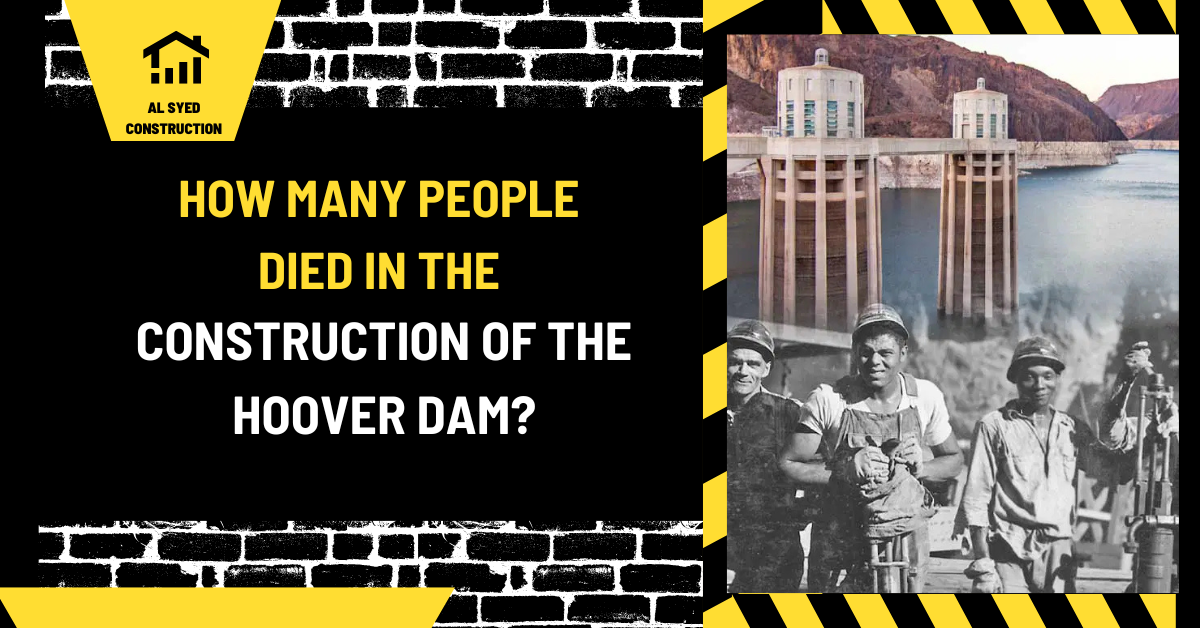
How Many People Died Building Hoover Dam?
The Bureau of Reclamation’s official count is 96 industrial fatalities at the Hoover Dam construction site. That is the clearest short answer to “How many people died building Hoover Dam?” The number is not a count of every death connected in any way to the wider Boulder Canyon Project. It uses a narrower definition tied to deaths at the dam site from industrial causes during construction.
Other references sometimes give a higher figure, often 112, because they include additional project-associated deaths, earlier surveys, deaths away from the jobsite, or causes outside the Bureau’s industrial-fatality category. The difference is mainly about scope, not arithmetic. This page explains how to use the 96 figure accurately and why a source may report a different total.
The direct answer: 96 official industrial fatalities
Reclamation identifies 96 as the official number of fatalities involved in building Hoover Dam. Its historical explanation describes these as men who died at the dam site from industrial causes. The agency lists examples such as drowning, blasting, falling rocks or slides, falls from canyon walls, being struck by heavy equipment, and truck accidents.
When repeating the statistic, include the word “official” and the phrase “industrial fatalities at the dam site” or a similarly clear description. Saying only “96 people died because of Hoover Dam” makes the number sound broader than Reclamation’s definition. The project employed thousands of people and included work beyond the dam face, so the scope of the count matters.
The direct answer is useful for readers who want one number, but a number does not explain the record. Reclamation notes that the available historical information is not perfectly clear and that it compiled its best information from project histories covering the construction years. Its online presentation includes corrections where the historical records were found to be inaccurate.
Why some sources report 112
The higher figure of 112 appears in some accounts of deaths associated with the broader project. Reclamation explains that such totals can include events that occurred before the dam was authorized or construction started. For example, two Reclamation employees conducting geological surveys drowned in the Colorado River in 1922. Their deaths preceded the dam’s authorization by six years and the start of construction by eight years.
Some broader tallies include people who lived in Boulder City or worked for the project but did not die at the dam site or from working there. Other sources may count people who were injured at the site but died later in a hospital or after being transported away. The Bureau’s official definition excludes some of those cases because the person was not at the jobsite when the death occurred.
These examples show why totals cannot be compared without a definition. One number may measure industrial deaths at the construction site; another may measure all project-related deaths over a longer period. Both may be based on historical records, yet answer different questions. A responsible article names which total it is using and avoids presenting a broader number as if it were the official construction-site count.
| Number cited | What it generally represents | How to describe it accurately |
|---|---|---|
| 96 | Reclamation’s official industrial fatalities at the dam site during construction | The official construction-site count |
| 112 | A broader total used by some sources for deaths associated with the project | A broader project-associated count; state the source and inclusion rules |
| Other totals | May include illness, off-site deaths, surveying, or later deaths after injury | Explain the specific historical method before comparing |
What the 96 figure includes
The official industrial-fatality category refers to deaths from work-related industrial incidents at the dam site. The causes described by Reclamation include several types of acute hazards: water, explosives, falling or sliding material, falls from height, vehicles, and heavy equipment. The record is not simply a tally of one kind of accident.
The count is a useful historical statistic because it uses a defined project record and identifies the site and cause category. It allows readers to discuss construction fatalities without mixing in deaths that occurred during earlier surveys, non-work-related illnesses, or other residents and employees whose deaths were not classified in the same way.
It is still limited. Reclamation notes that its figure does not include deaths from heat, pneumonia, heart trouble, and other causes it did not classify as industrial fatalities. It also describes uncertainty about cases involving workers who were injured at the dam and died after being taken elsewhere. The published number should therefore be treated as the official count for that specific category, not a complete accounting of all mortality during the project period.
Construction years and historical context
Construction of Hoover Dam began in 1931 and the project was completed in the mid-1930s. The work took place in Black Canyon on the Colorado River, where crews built diversion works, excavated rock, installed foundations, placed massive amounts of concrete, and erected power and water-control features. The site’s steep terrain, remote location, heat, machinery, and changing river conditions shaped daily work.
The dam was built before the modern U.S. occupational safety and health framework existed in its current form. This context helps explain differences in protective equipment, medical response, training, reporting, and standards compared with present-day work. It does not make the deaths less significant. Historical context helps readers understand why a large infrastructure achievement also carries a serious human cost.
The count should not be used to imply that fatalities were inevitable or that a large project’s value offsets loss of life. Modern construction teams use historical incidents to identify hazards and improve engineering controls, safe access, fall protection, equipment separation, heat planning, emergency response, and recordkeeping. The detailed article on worker fatalities at Hoover Dam explores those risks and lessons in more depth.
Why historical fatality statistics can differ
Older project records may have been compiled by different employers and agencies, used changing definitions, or recorded information inconsistently. A person could be counted based on employment, location, cause, timing, or a link to the project. If a source does not explain these choices, a reader cannot know whether its total is comparable to Reclamation’s 96.
“During construction” can also be interpreted in different ways. It may mean only the period when the dam’s main construction contract was underway, or it may include advance surveys, related infrastructure, town operations, and work after the main structure was complete. Likewise, “died in construction” may mean a fatal accident at the site or any death believed to be connected with project work.
A clear citation prevents confusion. Mention the Bureau of Reclamation’s official industrial-fatality count, then state that broader totals may include other project-associated deaths. If a report uses a different number, look for its primary source and inclusion rules before adopting it. Do not combine figures from different periods or categories without explaining the method.
How to answer the question responsibly
For a short answer, write: “The Bureau of Reclamation identifies 96 official industrial fatalities at the Hoover Dam construction site.” That wording is concise and preserves the category. If there is room, add: “Some sources report higher project-associated totals, such as 112, because they include additional deaths outside that site-specific industrial count.”
Avoid saying “96 workers were killed in accidents at the dam” without qualification. Reclamation’s description includes industrial fatalities but the records and causes are varied; “killed in accidents” can incorrectly imply that every death had the same cause. Avoid presenting 112 as a correction to 96 unless the source has established a broader definition and the reader knows what it includes.
For academic or professional writing, cite the underlying Bureau of Reclamation history rather than repeating an unsourced number from a secondary article. For public-facing writing, keep the qualification adjacent to the number, not several paragraphs later. This makes the answer accurate when quoted or shared outside its original context.
Common questions
Is 96 the official death toll for Hoover Dam?
It is Reclamation’s official number of industrial fatalities at the dam site during construction. It is the standard short answer when the question means construction-site industrial deaths, but it is not a broader count of every death associated with the Boulder Canyon Project.
Why is 112 sometimes mentioned?
Some sources use a broader project-related total that can include earlier survey deaths, off-site deaths, illness, or people associated with Boulder City and the project. The Bureau distinguishes those cases from its 96 site industrial-fatality count.
Did the official 96 include deaths from heat?
No. Reclamation says the 96 figure excludes deaths from heat and several medical causes. Those cases may be part of a broader discussion of project mortality, but they are not counted in the agency’s industrial-fatality total.
Were all 96 deaths at the dam itself?
Reclamation defines the official number as fatalities at the dam site from industrial causes. The particular incidents varied, and its history presents yearly records. That definition is narrower than all deaths connected with project employment or residence.
How should I cite the number in an article?
Name the Bureau of Reclamation and describe the 96 as its official construction-site industrial-fatality count. If you mention 112 or another number, explain that it uses broader inclusion rules and identify the source.
The answer in one sentence
The Bureau of Reclamation’s official count is 96 industrial fatalities at the Hoover Dam construction site; higher totals such as 112 generally refer to a broader set of project-associated deaths. Keeping those definitions separate gives readers a direct answer without overstating what the historical record says.

Leave a Reply
Want to join the discussion?Feel free to contribute!