
How to Get Rid of Ants in a New Construction Home?
Overview
Get Rid Of Ants In A New Construction Home should be understood through its purpose, project setting, controlling documents, and the work it affects. This guide connects the topic to planning, design or scope decisions, coordination, construction checks, and handover rather than treating a label or estimate as a complete answer.
Use the source article's topic details with current project information. Local approvals, safety requirements, engineering decisions, and financial or legal treatment depend on the facts and responsible authority.
- Introduction
- Identifying the Source of the Infestation
- Locating Entry Points
- Eliminating Attractants
- Effective Ant Control Methods
- Using Baits and Traps
- Applying Insecticides
- Natural Remedies
- Preventing Future Infestations
- Regular Maintenance
- Landscaping Considerations
- Conclusion
Introduction
Moving into a new construction home is an exciting experience, but discovering an ant infestation can quickly dampen the excitement. Ants are attracted to new homes for various reasons, including the presence of moisture, food sources, and shelter. Fortunately, there are effective strategies to eliminate ants and prevent them from returning. This article will guide you through the steps to get rid of ants in your new construction home and maintain a pest-free environment.
Identifying the Source of the Infestation
Locating Entry Points
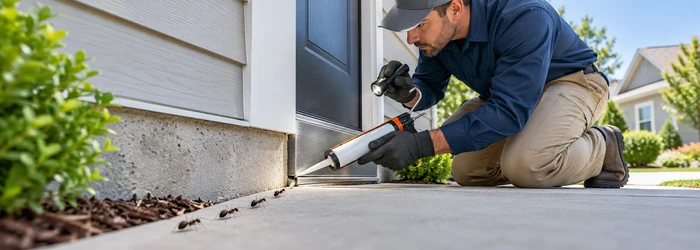
The first step in tackling an ant infestation is to identify how they are entering your home. Common entry points include cracks in walls, gaps around doors and windows, and openings around pipes and wires. Inspecting the exterior of your home and sealing these entry points can significantly reduce the number of ants getting inside.
Eliminating Attractants
Ants are attracted to food and moisture. Ensure that your kitchen is clean, with no crumbs or spills left unattended. Store food in airtight containers and fix any leaks or moisture problems in your home. Removing these attractants will make your home less appealing to ants.
Effective Ant Control Methods
Using Baits and Traps
Ant baits and traps are effective tools for controlling ant populations. These products contain a slow-acting poison that worker ants carry back to the colony, eventually eliminating the entire nest. Place baits and traps near ant trails and entry points for the best results.
Applying Insecticides
Insecticides can provide a quick solution to an ant infestation. Choose a product specifically designed for ants and follow the instructions carefully. Apply the insecticide along ant trails and around the perimeter of your home to create a barrier.
Natural Remedies
For a more eco-friendly approach, consider using natural remedies such as diatomaceous earth, vinegar, or essential oils. These substances can deter ants without the use of harsh chemicals. Sprinkle diatomaceous earth along ant trails or spray a vinegar solution in areas where ants are present.
Preventing Future Infestations
Regular Maintenance
Regular maintenance is key to preventing future ant infestations. Keep your home clean, especially in the kitchen, and promptly address any moisture issues. Seal cracks and crevices in your home's exterior to block potential entry points for ants.
Landscaping Considerations
The area surrounding your home can also contribute to ant problems. Keep shrubs and trees trimmed away from your house, and avoid using mulch or other materials that retain moisture near your foundation. Proper landscaping can discourage ants from nesting near your home.
Conclusion
Dealing with ants in a new construction home can be frustrating, but with the right approach, you can effectively eliminate them and prevent future infestations. Identifying the source of the problem, using effective control methods, and maintaining a clean and well-maintained home are key steps in keeping your new home ant-free. By taking proactive measures, you can enjoy your new construction home without the unwanted company of ants.
Scope and meaning
Treat get rid of ants in a new construction home as a set of decisions about household use, the parcel, and the construction that will be maintained after move-in. A home plan sets circulation, privacy, daylight, storage, service routes, structure, and envelope. Record the intended household, accessibility needs, future changes, and priorities before comparing layouts. Separate fixed requirements from preferences.
Planning inputs to confirm
Start with verified parcel information, not an online boundary sketch. Confirm ownership and restrictions, obtain a survey where appropriate, and identify access, grades, drainage, utilities, easements, neighboring structures, and construction access. Soil, groundwater, slope, trees, and exposure can alter foundation work. Keep unverified conditions on an investigation list with an owner and target date.
Design choices and trade-offs
Translate the brief into room relationships before settling on exterior style. Consider entry, public and private zones, noise, daylight, storage, door swings, stairs, furniture, and equipment at realistic scale. Compact form may reduce envelope area but does not guarantee lower cost if it adds complex structure, retaining, unusual spans, or difficult access.
A practical project sequence
Coordinate architecture, structure, civil, electrical, plumbing, mechanical, and landscape. Resolve beams at openings, service routes through framing, equipment access, and drainage paths. A field suggestion does not replace design review. Keep plans, elevations, details, schedules, and specifications on the same approved revision.
Coordination and responsibilities
Budget by defined area, revision, finish, site assumptions, and date. Separate land, design, surveys, testing, utilities, site preparation, structure, enclosure, interiors, equipment, approvals, finance, and contingency. Per-area figures hide basements, garages, retaining, utility distance, and access; use current local quotes and identify exclusions.
Cost and schedule considerations
Inspect layout, foundations, structural connections, weather barriers, window interfaces, penetrations, drainage, and equipment access before concealment. Follow approved requirements for tests. Photograph hidden work with date and location, retain product data, and close punch items with an owner, deadline, and correction evidence.
Quality checks
Plan for life after construction: shutoffs, filters, cleanouts, equipment clearances, drainage routes, finish care, and service panels. Keep warranties, commissioning, drawings, inspection reports, and maintenance intervals together. Before later alterations, review structure and services rather than cutting based on appearance.
Topic-specific questions
The source outline surfaces points to verify against current project information:
- Identifying the Source of the Infestation. Check the exact location, source revision, reviewer, and whether the point is a definition, design intent, measurement, requirement, or example. Record the answer before procurement or installation if it changes scope, sequence, or acceptance.
- Locating Entry Points. Check the exact location, source revision, reviewer, and whether the point is a definition, design intent, measurement, requirement, or example. Record the answer before procurement or installation if it changes scope, sequence, or acceptance.
- Eliminating Attractants. Check the exact location, source revision, reviewer, and whether the point is a definition, design intent, measurement, requirement, or example. Record the answer before procurement or installation if it changes scope, sequence, or acceptance.
Project checklist
Before committing to a decision about get rid of ants in a new construction home, work through these checks:
- Record location, purpose, project phase, date, and controlling revision.
- Separate verified conditions from assumptions, open questions, allowances, and exclusions.
- Confirm scope, measurement, product or system, interfaces, access, and responsibility.
- Agree who reviews the work, which evidence is required, and when inspection must occur.
- Document approved changes with location, cost or schedule effect, owner, date, and closure.
- Keep tests, photographs, record information, warranties, and maintenance instructions for handover.
Common mistakes to avoid
Do not rely on a broad label, old drawing, generic figure, or verbal field decision when the actual scope can be checked. Confirm the basis, location, version, and reviewer before work is committed. When evidence is incomplete, mark the conclusion provisional and name the next action instead of presenting an assumption as fact.
Frequently asked questions
What should be checked first?
Confirm intended use, parcel, access, utilities, drainage, soil questions, and local review path. Separate verified facts from items needing survey, testing, or professional review.
Can one plan work on every lot?
No. Orientation, setbacks, slope, soil, climate, utilities, access, and household needs change the design.
Is cost per square foot enough?
No. It is only a rough comparison when area, finish, site work, systems, and exclusions match. Use current scope-based quotes.
When should a change be approved?
Before affected work is ordered or installed. Record drawing, location, cost and schedule effect, and responsible approval.
What belongs in handover?
Approved and record drawings, inspections, tests, product data, warranties, service instructions, open items, and maintenance contacts.
Related Building Design resources
Continue with Back of a House in Construction, The Ultimate Guide to the Construction of a Tiny House, Cornice on a House in Construction in the USA. Apply each resource only to its scope and verify project decisions against approved records.
Conclusion
A reliable result for get rid of ants in a new construction home comes from clear scope, current evidence, coordinated decisions, and documented checks. Obtain qualified review where safety or compliance is involved, and keep the approved record available for construction and future maintenance.
Additional practical considerations
Test household circulation at ordinary and future use: entry, sleeping rooms, shared areas, storage, service access, and clear routes. Draw furniture and equipment at scale, then review door swings and maintenance clearances; area totals alone do not reveal these conflicts.
Convert get rid of ants in a new construction home into a decision that can be reviewed. State the question, location, project phase, controlling document, required outcome, and person who can approve it. Separate what is known from what still needs measurement, testing, or interpretation. For home work, relate the decision to parcel conditions, household use, the envelope, services, and future maintenance. This makes the next action clear and keeps a broad topic from becoming an unrecorded field assumption.
Build an evidence trail for get rid of ants in a new construction home from the current source material. Keep drawing and specification revisions, dated site information, product data, quantities, approvals, meeting decisions, and photographs tied to a location. If two records disagree, retain both references and obtain a written resolution. A clean record lets another reviewer understand why a choice was made without relying on memory or a generic example.
Review interfaces before work is released. Check what touches the topic: structure, enclosure, utilities, access, adjacent trades, temporary conditions, inspection points, and maintenance space. Name who provides each connection and who verifies it. For home work, relate the decision to parcel conditions, household use, the envelope, services, and future maintenance. Resolve the detail in the documents before procurement or concealment; an instruction to coordinate later does not explain scope or acceptance.
Compare options using the same basis. State dimensions, performance, material, finish, delivery, access, schedule, exclusions, and required testing. Explain the trade-off rather than presenting one option as universally best. Record any effect on cost, durability, operation, or future repair. Where a value depends on site or jurisdiction, identify the facts that must be checked instead of implying a fixed result.
At handover, preserve the final approved decision for get rid of ants in a new construction home. Include the installed configuration, approved changes, product or source information, inspection and test evidence, open items, maintenance steps, and responsible contact. Mark superseded documents and keep the final revision accessible. This closes the gap between planning and use, and gives future owners a reliable basis for repair or alteration.







Leave a Reply
Want to join the discussion?Feel free to contribute!