
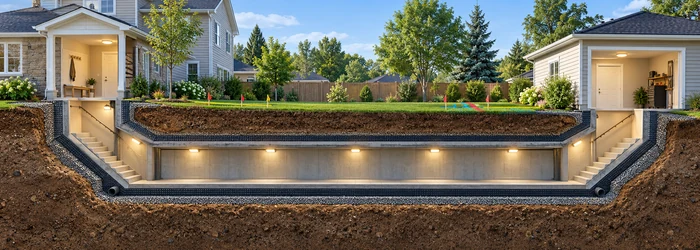
Constructing a Tunnel from House to Garage
Overview
Constructing A Tunnel From House To Garage should be understood through its purpose, project setting, controlling documents, and the work it affects. This guide connects the topic to planning, design or scope decisions, coordination, construction checks, and handover rather than treating a label or estimate as a complete answer.
Use the source article's topic details with current project information. Local approvals, safety requirements, engineering decisions, and financial or legal treatment depend on the facts and responsible authority.
In this guide, we'll walk you through the detailed steps involved in building a tunnel from your house to your garage. Constructing such a tunnel can be a challenging yet rewarding project, offering convenience and protection from the elements. Here's how you can get started:
- Planning and Preparation
- Excavation and Foundation
- Construction of the Tunnel
- Finishing Touches
- Conclusion
Planning and Preparation
Before beginning any construction, it's essential to carefully plan out the tunnel's design and layout. Consider the following factors:
- Location: Determine the best location for your tunnel, taking into account the distance between your house and garage, existing structures, and any obstacles in the way.
- Permits: Check with your local building authority to see if you need any permits or approvals for the construction of the tunnel.
- Safety: Ensure that the tunnel will be structurally sound and safe for use. Consider consulting with a structural engineer for advice.
Excavation and Foundation
Once you've completed the planning phase, you can begin the excavation process:
- Digging: Excavate the ground between your house and garage to create the tunnel's pathway. Use caution to avoid damaging any existing utilities or structures.
- Foundation: Construct a strong foundation for the tunnel using concrete or other suitable materials. This will provide stability and support for the structure.
Construction of the Tunnel
With the foundation in place, you can now focus on constructing the actual tunnel:
- Walls: Build the walls of the tunnel using durable materials such as concrete blocks or bricks. Ensure that the walls are thick enough to withstand the pressure of the surrounding soil.
- Roof: Construct a sturdy roof over the tunnel to protect it from the elements. Consider using reinforced concrete or metal roofing for added durability.
- Ventilation: Install proper ventilation systems in the tunnel to ensure adequate airflow. This will help prevent the buildup of harmful gases and maintain a comfortable environment inside the tunnel.
- Lighting: Install lighting fixtures inside the tunnel to provide illumination. Consider using energy-efficient LED lights for long-lasting and cost-effective lighting.
Finishing Touches
Once the tunnel is constructed, you can add the finishing touches to complete the project:
- Flooring: Install a suitable flooring material inside the tunnel, such as concrete, tiles, or epoxy coating.
- Access: Create access points at both ends of the tunnel, such as doors or staircases, to allow for easy entry and exit.
- Safety Features: Install safety features such as handrails, emergency exits, and fire extinguishers to ensure the tunnel is safe to use.
Conclusion
Building a tunnel from your house to your garage can be a challenging yet rewarding project. By following the steps outlined in this guide, you can construct a tunnel that is safe, durable, and convenient to use. If you have any questions or need further assistance, feel free to contact us. Happy tunneling!
Scope and meaning
Treat constructing a tunnel from house to garage as a set of decisions about household use, the parcel, and the construction that will be maintained after move-in. A home plan sets circulation, privacy, daylight, storage, service routes, structure, and envelope. Record the intended household, accessibility needs, future changes, and priorities before comparing layouts. Separate fixed requirements from preferences.
Planning inputs to confirm
Start with verified parcel information, not an online boundary sketch. Confirm ownership and restrictions, obtain a survey where appropriate, and identify access, grades, drainage, utilities, easements, neighboring structures, and construction access. Soil, groundwater, slope, trees, and exposure can alter foundation work. Keep unverified conditions on an investigation list with an owner and target date.
Design choices and trade-offs
Translate the brief into room relationships before settling on exterior style. Consider entry, public and private zones, noise, daylight, storage, door swings, stairs, furniture, and equipment at realistic scale. Compact form may reduce envelope area but does not guarantee lower cost if it adds complex structure, retaining, unusual spans, or difficult access.
A practical project sequence
Coordinate architecture, structure, civil, electrical, plumbing, mechanical, and landscape. Resolve beams at openings, service routes through framing, equipment access, and drainage paths. A field suggestion does not replace design review. Keep plans, elevations, details, schedules, and specifications on the same approved revision.
Coordination and responsibilities
Budget by defined area, revision, finish, site assumptions, and date. Separate land, design, surveys, testing, utilities, site preparation, structure, enclosure, interiors, equipment, approvals, finance, and contingency. Per-area figures hide basements, garages, retaining, utility distance, and access; use current local quotes and identify exclusions.
Cost and schedule considerations
Inspect layout, foundations, structural connections, weather barriers, window interfaces, penetrations, drainage, and equipment access before concealment. Follow approved requirements for tests. Photograph hidden work with date and location, retain product data, and close punch items with an owner, deadline, and correction evidence.
Quality checks
Plan for life after construction: shutoffs, filters, cleanouts, equipment clearances, drainage routes, finish care, and service panels. Keep warranties, commissioning, drawings, inspection reports, and maintenance intervals together. Before later alterations, review structure and services rather than cutting based on appearance.
Topic-specific questions
The source outline surfaces points to verify against current project information:
- Planning and Preparation. Check the exact location, source revision, reviewer, and whether the point is a definition, design intent, measurement, requirement, or example. Record the answer before procurement or installation if it changes scope, sequence, or acceptance.
- Excavation and Foundation. Check the exact location, source revision, reviewer, and whether the point is a definition, design intent, measurement, requirement, or example. Record the answer before procurement or installation if it changes scope, sequence, or acceptance.
- Construction of the Tunnel. Check the exact location, source revision, reviewer, and whether the point is a definition, design intent, measurement, requirement, or example. Record the answer before procurement or installation if it changes scope, sequence, or acceptance.
Project checklist
Before committing to a decision about constructing a tunnel from house to garage, work through these checks:
- Record location, purpose, project phase, date, and controlling revision.
- Separate verified conditions from assumptions, open questions, allowances, and exclusions.
- Confirm scope, measurement, product or system, interfaces, access, and responsibility.
- Agree who reviews the work, which evidence is required, and when inspection must occur.
- Document approved changes with location, cost or schedule effect, owner, date, and closure.
- Keep tests, photographs, record information, warranties, and maintenance instructions for handover.
Common mistakes to avoid
Do not rely on a broad label, old drawing, generic figure, or verbal field decision when the actual scope can be checked. Confirm the basis, location, version, and reviewer before work is committed. When evidence is incomplete, mark the conclusion provisional and name the next action instead of presenting an assumption as fact.
Frequently asked questions
What should be checked first?
Confirm intended use, parcel, access, utilities, drainage, soil questions, and local review path. Separate verified facts from items needing survey, testing, or professional review.
Can one plan work on every lot?
No. Orientation, setbacks, slope, soil, climate, utilities, access, and household needs change the design.
Is cost per square foot enough?
No. It is only a rough comparison when area, finish, site work, systems, and exclusions match. Use current scope-based quotes.
When should a change be approved?
Before affected work is ordered or installed. Record drawing, location, cost and schedule effect, and responsible approval.
What belongs in handover?
Approved and record drawings, inspections, tests, product data, warranties, service instructions, open items, and maintenance contacts.
Related Building Design resources
Continue with Back of a House in Construction, Building a Hoop House Greenhouse, Building a House with Rock. Apply each resource only to its scope and verify project decisions against approved records.
Conclusion
A reliable result for constructing a tunnel from house to garage comes from clear scope, current evidence, coordinated decisions, and documented checks. Obtain qualified review where safety or compliance is involved, and keep the approved record available for construction and future maintenance.
Additional practical considerations
Test household circulation at ordinary and future use: entry, sleeping rooms, shared areas, storage, service access, and clear routes. Draw furniture and equipment at scale, then review door swings and maintenance clearances; area totals alone do not reveal these conflicts.
Convert constructing a tunnel from house to garage into a decision that can be reviewed. State the question, location, project phase, controlling document, required outcome, and person who can approve it. Separate what is known from what still needs measurement, testing, or interpretation. For home work, relate the decision to parcel conditions, household use, the envelope, services, and future maintenance. This makes the next action clear and keeps a broad topic from becoming an unrecorded field assumption.
Build an evidence trail for constructing a tunnel from house to garage from the current source material. Keep drawing and specification revisions, dated site information, product data, quantities, approvals, meeting decisions, and photographs tied to a location. If two records disagree, retain both references and obtain a written resolution. A clean record lets another reviewer understand why a choice was made without relying on memory or a generic example.
Review interfaces before work is released. Check what touches the topic: structure, enclosure, utilities, access, adjacent trades, temporary conditions, inspection points, and maintenance space. Name who provides each connection and who verifies it. For home work, relate the decision to parcel conditions, household use, the envelope, services, and future maintenance. Resolve the detail in the documents before procurement or concealment; an instruction to coordinate later does not explain scope or acceptance.
Compare options using the same basis. State dimensions, performance, material, finish, delivery, access, schedule, exclusions, and required testing. Explain the trade-off rather than presenting one option as universally best. Record any effect on cost, durability, operation, or future repair. Where a value depends on site or jurisdiction, identify the facts that must be checked instead of implying a fixed result.
At handover, preserve the final approved decision for constructing a tunnel from house to garage. Include the installed configuration, approved changes, product or source information, inspection and test evidence, open items, maintenance steps, and responsible contact. Mark superseded documents and keep the final revision accessible. This closes the gap between planning and use, and gives future owners a reliable basis for repair or alteration.







Leave a Reply
Want to join the discussion?Feel free to contribute!