
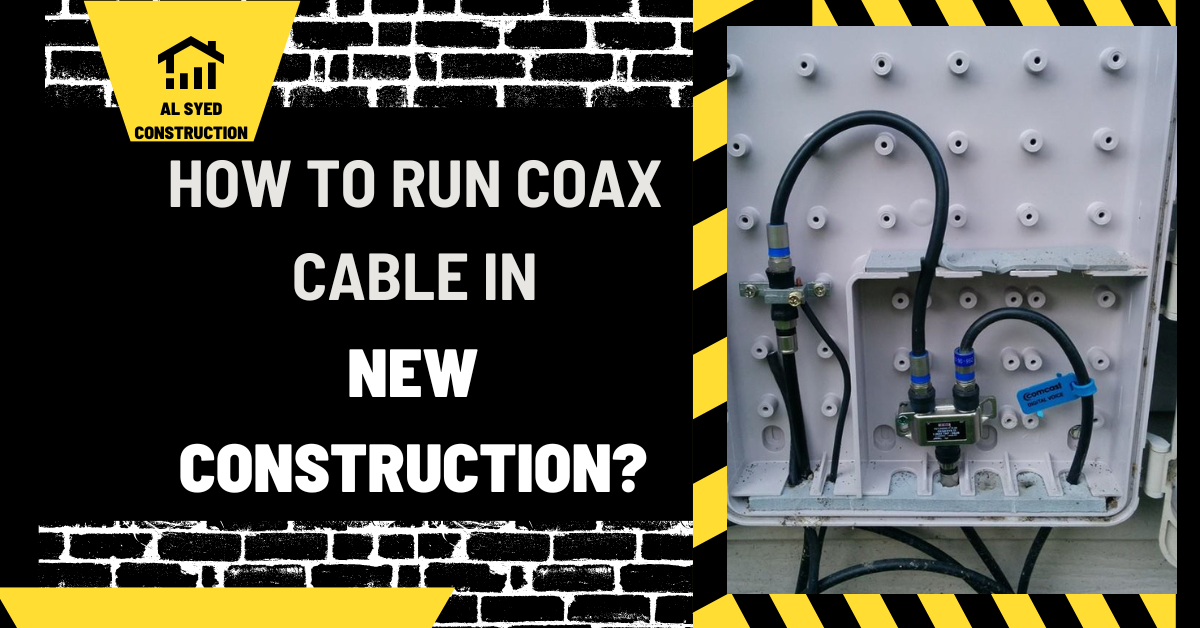
How to Run Coax Cable in New Construction
Safety note: This article supports planning and review; it is not a procedure for working on energized equipment. Electrical installation, testing, fault diagnosis, and changes to electrical equipment belong with qualified personnel under the adopted code, approved plans, manufacturer instructions, and site safety requirements. Confirm local requirements with the AHJ.
Project review checklist for how to Run Coax Cable in New Construction
| Review point | What to verify | Why it matters |
|---|---|---|
| Scope | system function, equipment and connector requirements | Prevents a generic term or product label from replacing the approved project requirement. |
| Coordination | power and low-voltage trades, network or security designers, framing | Resolves location, sequence, and ownership before work is concealed or ordered. |
| Acceptance | cable identification at both ends, pathway continuity, supports and protection | Leaves a verifiable record for inspection and future operations. |
For adjacent guidance, see Ethernet Cable Rough-In for New Homes and The Most Commonly Used Cable Types in Residential. These companion articles cover related stages of U.S. electrical planning and construction.
Introduction
Running coaxial (coax) cable in new construction is an essential part of preparing a building for modern telecommunications and entertainment systems. Coax cable is commonly used for cable television, internet connections, and other data transmission needs. Proper installation during the construction phase ensures optimal performance and avoids the need for costly retrofitting. This article provides a step-by-step guide on how to run coax cable in new construction effectively.
Planning and Preparation
Assessing the Layout
Before running coax cable, it’s crucial to assess the building’s layout and determine the optimal routing for the cables. This includes identifying the locations of outlets, junction boxes, and any potential obstacles such as HVAC ducts or load-bearing walls.
Gathering Materials
Ensure you have the necessary materials, including coax cable, wall plates, low-voltage mounting brackets, fish tape, and cable staples. Choose high-quality, RG6 or RG11 coax cable for better signal transmission and durability.
Running the Coax Cable
Installing Conduits
If the construction allows, install conduits within the walls to protect and organize the coax cables. Conduits make it easier to add or replace cables in the future without opening the walls.
Fishing the Cable
Use fish tape to guide the coax cable through walls, ceilings, and floors from the central distribution point to each outlet location. Take care to avoid sharp bends or kinks in the cable, which can degrade the signal quality.
Securing the Cable
Secure the coax cable along its route using cable staples or clips, ensuring that it is not too tight, which could damage the cable. Maintain a safe distance from electrical wiring to avoid interference.
Connecting and Testing
Installing Wall Plates
At each outlet location, install a low-voltage mounting bracket and attach a coax wall plate. Connect the coax cable to the wall plate, ensuring a secure and snug fit.
Testing the Signal
Once all connections are made, test the signal at each outlet to ensure that the coax cable is transmitting data effectively. Use a signal strength meter or connect a device such as a television or modem to verify connectivity.
Conclusion
Running coax cable in new construction requires careful planning, precise installation, and thorough testing to ensure reliable signal transmission. By following these steps and adhering to best practices, you can ensure that the building is well-equipped for cable television, internet, and other coax-dependent services. Properly installed coax cable systems contribute to the functionality and value of the property, meeting the demands of modern technology.
What how to Run Coax Cable in New Construction means in project context
Treat the subject as one coordinated decision, not an isolated product choice; the room, route, interface, access, and handover all affect whether it works as intended. For this topic, the key is carry power, communications, control, or signal between defined endpoints, with the cable type and pathway matched to the system design rather than chosen by name alone. That distinction matters because a similar-looking term, component, or installation may serve a different system function. Read the item together with its drawing note, schedule, specification, and approved submittal. If these disagree, record the exact sheet, location, and conflict and request clarification before procurement or concealment. This keeps the article’s general explanation separate from decisions that belong to the project engineer, electrical contractor, manufacturer, or AHJ.
Inputs to settle before work begins
Before selecting or laying out how to Run Coax Cable in New Construction, gather system function, equipment and connector requirements, approved cable type, route length and access, environmental exposure, bend and pulling limits in manufacturer data, separation requirements, fire or plenum conditions where applicable, and labeling conventions. Put these inputs in one review set rather than relying on assumptions carried from a previous job. Confirm which revision governs and who owns each decision. Where the documents omit information, make a concise RFI that identifies the location, the conflicting details, and the proposed options without presenting an unapproved option as accepted. This sequence reduces late substitutions and gives purchasing, field crews, and inspectors a consistent basis for review.
Coordination with adjacent work
The coordination list for this subject includes power and low-voltage trades, network or security designers, framing, HVAC, fire protection, ceiling layouts, equipment locations, pathway capacity, and the sequence for testing before ceilings close. Hold the review early enough that one trade’s route or equipment choice does not force another trade into a concealed conflict. Mark the relevant access zones and interfaces on coordinated drawings, including where work crosses a structural element or rated enclosure. Assign a person to close every clash and update the affected documents. A meeting note alone is not a design revision: field teams should work from the approved response or updated drawing.
Quality checks before acceptance
A practical inspection for how to Run Coax Cable in New Construction compares the installed condition with the approved design and the applicable product instructions. Review cable identification at both ends, pathway continuity, supports and protection, no crushed jacket or sharp kink, connector compatibility, test results appropriate to the system, and documented exceptions. Use the project’s required tests and inspection points; do not invent a numerical acceptance limit from a general article. Record the location, equipment or pathway identifier, date, reviewer, result, and any corrective action. For work that will be concealed, take clear photographs while the relevant interfaces remain visible and confirm that required inspections have occurred before close-in.
Common causes of rework
Teams can prevent common problems by watching for selecting a cable from a broad label without checking its actual rating, mixing systems without design approval, leaving no accessible pathway, exceeding a product’s pull limits, or omitting labels and test documentation. Most of these issues begin as coordination gaps rather than difficult technical failures: a drawing revision is missed, an access zone is blocked, a responsibility boundary is unclear, or installation starts before a pending decision is closed. A short pre-installation review should identify the current drawing set, sequence, inspection hold points, and person to contact when field conditions differ. Stop and document a conflict instead of making an undocumented change that later trades cannot see.
A project example
Consider this illustrative situation: a new residence needs television, data, and control connections in several rooms; the plan assigns outlets and a central termination point, coordinates routes before insulation, and tests each run before drywall makes repair difficult. The useful lesson is the decision path, not a universal product or dimension. The team compares the actual condition with the approved documents, identifies the authority for the decision, checks adjacent trades, and captures the approved outcome. If a different building, code edition, product, or utility interface is involved, the details may change. Use the example as a checklist for questions to ask, then rely on project-specific engineering and inspection.
Closeout and future maintenance
The value of a correct installation can be lost if future teams cannot identify or reach it. Preserve cable schedule, approved product data, endpoint and pathway labels, test reports, patch or termination schedule where relevant, and as-built locations for future changes. Make sure the final record reflects approved field changes instead of copying an early design unchanged. Labels should agree with schedules and equipment directories, and the owner should receive the documents needed to locate, operate, inspect, or maintain the system. When a component is expected to be replaced or accessed later, explain that access in the handover notes so finishes, storage, and landscaping do not obscure it.
How to handle unresolved terminology or scope
If how to Run Coax Cable in New Construction is named differently in a drawing, product sheet, or field conversation, compare the exact wording and surrounding context before choosing a definition. Note the sheet or specification section, the system involved, and whether the difference affects product selection, routing, safety, price, or inspection. A project glossary or submittal can help, but it does not override an approved design revision. Send a focused clarification request when the intent remains uncertain, and distribute the response to the estimator, purchaser, foreperson, and inspector who rely on it.
Frequently Asked Questions
How is the right cable selected?
The project meaning is the one established by its approved drawings, specification, schedule, and product documents. A general definition helps explain the concept, but it cannot settle a conflict between project records. Identify the exact sheet and location, then ask the responsible designer for clarification if the meaning changes scope or installation.
More Questions About how to Run Coax Cable in New Construction
Where should endpoints be shown?
Start with the latest approved plan and the relevant schedule or specification. Compare the system purpose, physical location, product data, and handoff to other trades. For how to Run Coax Cable in New Construction, the most important inputs include system function, equipment and connector requirements, approved cable type. If a required value or approval is missing, leave it open for the project team rather than guessing.
More Questions About how to Run Coax Cable in New Construction
What does a pathway review catch?
The responsible reviewer depends on the decision. Design interpretation goes to the designer or engineer of record; installation and testing go to qualified trade personnel; product performance comes from approved manufacturer data; and jurisdictional acceptance belongs to the AHJ. For how to Run Coax Cable in New Construction, document who resolved the issue and which revision carries that decision.


Leave a Reply
Want to join the discussion?Feel free to contribute!