
Temple of the Feathered Serpent: Teotihuacan
Introduction
The Temple of the Feathered Serpent, also known as the Temple of Quetzalcoatl, is one of the most significant ancient structures located in the pre-Columbian site of Teotihuacan, Mexico. This magnificent temple is a testament to the architectural ingenuity and cultural richness of the Teotihuacan civilization. This article explores the distinctive style of construction that characterizes the Temple of the Feathered Serpent, shedding light on its historical and cultural significance.
The Architectural Style of the Temple
Mesoamerican Influence
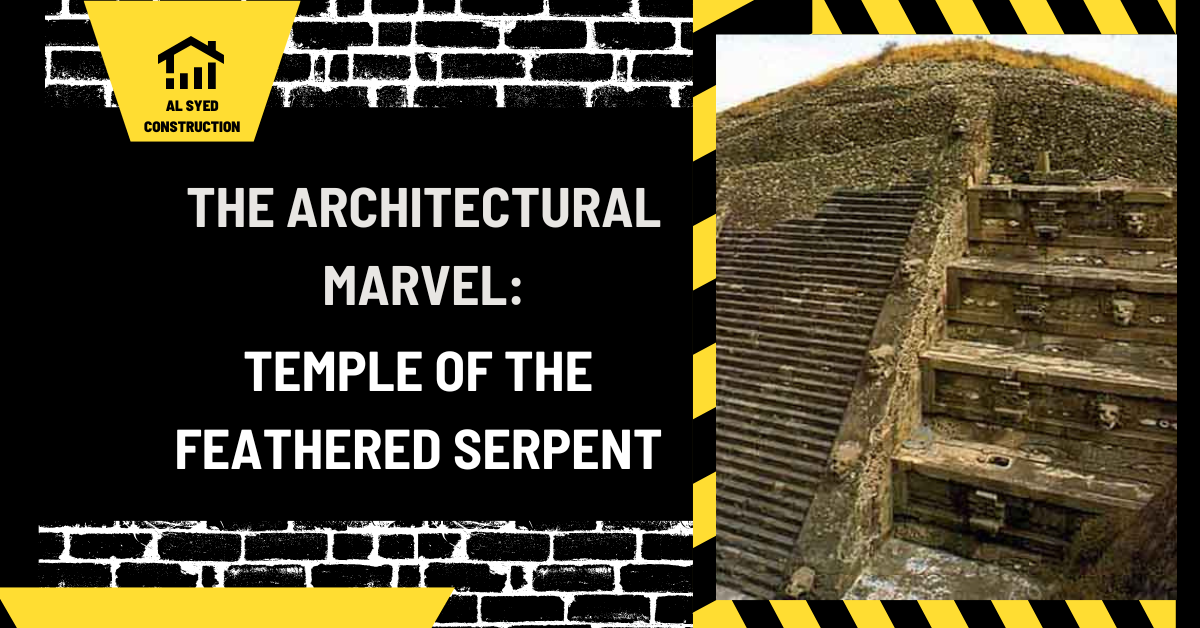
The Temple of the Feathered Serpent was constructed in a style that is emblematic of Mesoamerican architecture. This style is characterized by step-pyramids, talud-tablero platforms (a sloping base topped with a vertical panel), and intricate stone carvings. The temple’s design reflects the religious and ceremonial importance attributed to it by the Teotihuacan people.
Symbolism and Ornamentation
One of the most distinctive features of the temple is its elaborate ornamentation. The structure is adorned with numerous stone heads representing the Feathered Serpent deity, Quetzalcoatl, and other symbolic figures such as the War Serpent. These carvings not only demonstrate the artistic skill of the builders but also hold deep religious significance.
Construction Techniques and Materials
Use of Local Materials
The builders of the Temple of the Feathered Serpent utilized locally sourced materials for its construction. The core of the temple was made of earth and rubble, while the outer layers and decorative elements were crafted from cut stone, a testament to the advanced quarrying and masonry skills of the Teotihuacan people.
Engineering and Design
The construction of the temple required meticulous planning and engineering. The use of talud-tablero architecture allowed for the creation of a stable and imposing structure that could withstand the test of time. The precise alignment of the temple with astronomical phenomena further highlights the sophisticated knowledge of the builders.
Cultural and Historical Significance
A Center for Religious Ceremonies
The Temple of the Feathered Serpent was not just an architectural marvel but also a central site for religious ceremonies and rituals. It is believed to have been a place of worship dedicated to the Feathered Serpent deity, playing a crucial role in the spiritual life of the Teotihuacan civilization.
Legacy and Influence
The architectural style and construction techniques of the Temple of the Feathered Serpent have had a lasting impact on Mesoamerican architecture. The temple’s design elements can be seen in later structures built by the Aztecs and other civilizations, showcasing its enduring influence.
Temple of the Feathered Serpent at Teotihuacan
The Temple of the Feathered Serpent is one of the major monuments within the pre-Hispanic city of Teotihuacan in present-day Mexico. The site is also known as the Temple of Quetzalcoatl, after the feathered-serpent imagery associated with the building. Teotihuacan developed as a large urban center with planned avenues, monumental precincts, residential districts, and ceremonial spaces. The temple should be understood as one part of that wider city rather than as an isolated pyramid.
The temple’s sculpted façade includes repeated serpent imagery and architectural elements that make the building especially distinctive. The visual program combines form, ornament, and ceremonial setting. It is important not to project later Aztec meanings directly onto the earlier Teotihuacan structure without evidence. The Aztec name and later interpretations are part of the site’s history of reception, while the original builders and exact ritual meanings remain subjects of scholarship.
Urban planning and architectural sequence
Teotihuacan’s urban plan included a strong central axis and large complexes positioned in relation to one another. The Temple of the Feathered Serpent sits within the Ciudadela complex, a large enclosed precinct. Its scale, orientation, and relation to plazas shaped how people approached and experienced it. The site’s architecture cannot be explained by the temple façade alone; circulation, public space, neighboring structures, and the broader city plan are essential.
Archaeological evidence indicates that the monument and surrounding area developed through construction phases. Buildings at major ancient cities were often enlarged, rebuilt, or covered by later work. A visible surface may therefore represent only one stage of a longer history. Excavation and conservation must document layers and avoid assuming that the current appearance exactly matches the original building at every period.
| Feature | What it contributes to interpretation |
|---|---|
| Ciudadela precinct | Shows the temple within an enclosed urban and ceremonial setting |
| Central avenue | Connects the monument to Teotihuacan’s larger city plan |
| Sculpted serpent imagery | Links architectural surface, symbolism, and craft |
| Construction layers | Reveal change and rebuilding over time |
Materials, labor, and craft
The monument’s construction involved planning, earth and stone work, masonry, surface treatment, and a coordinated labor force. Decorative sculptural elements required careful fabrication and placement, while the underlying mass and platforms established the building’s form. A large ceremonial center also required sourcing materials, moving them to the site, and organizing workers. Archaeological research can identify construction phases and materials, but it may not reveal every tool, sequence, or social role.
Interpretation should distinguish the evidence of architecture from modern speculation about builders’ intentions. The repeated imagery is visible; a precise explanation of every symbol is less certain. Responsible writing can describe the observed motifs, their placement, and the scholarly interpretations without presenting one hypothesis as settled fact. This approach is especially important for ancient cultures whose own written records may be limited or interpreted through later accounts.
Preservation and visitor experience
Historic stone and plaster surfaces are vulnerable to weather, water, salts, biological growth, earthquakes, vibration, and visitor contact. Conservation teams monitor the structure, control drainage, document surface condition, and manage access. Protective interventions should be evaluated for their effects on the monument and its setting. A replica or reconstructed section can help visitors understand a missing feature, but it should be clearly identified as new work.
Teotihuacan is a major archaeological and cultural landscape. Preservation must address the surrounding city as well as the temple. Urban development, visitor pressure, and environmental conditions can affect the setting and archaeological deposits. The site’s guide to Egyptian pyramids and modern construction gives a comparison with another monumental tradition; the two should remain distinct in culture, chronology, materials, and urban context.
Questions readers ask
Where is the Temple of the Feathered Serpent? It is within the ancient city of Teotihuacan in central Mexico, inside the Ciudadela complex.
Is it an Aztec temple? It predates the Aztec Empire. Later Aztec naming and interpretation should be distinguished from the original Teotihuacan context.
Why is it called the Feathered Serpent temple? The name refers to the serpent imagery associated with the building and its later identification with Quetzalcoatl.
Why is the surrounding city important? The temple’s location, avenue, precinct, and relationship to other monuments reveal its role within a planned urban landscape.
Temple of the Feathered Serpent at Teotihuacan
The Temple of the Feathered Serpent, also known as the Temple of Quetzalcoatl, is part of the ancient city of Teotihuacan in central Mexico. The monument is associated with the Ciudadela complex and is famous for sculpted serpent imagery on its façade. Its construction belongs to Teotihuacan’s urban and ceremonial history; interpreting its symbols requires archaeological context rather than assuming that later Aztec names or beliefs map directly onto the earlier city.
The temple’s stepped form and sculpted architectural surfaces combine mass, rhythm, and iconography. Feathered-serpent heads and other elements project from the façade, while repeated panels create a carefully organized visual field. Stone carving and architectural placement worked together: imagery was not applied randomly but formed part of the monument’s public face and ceremonial setting.
Teotihuacan’s broader urban grid, plazas, avenues, and monumental complexes help explain the temple’s position. The Ciudadela is a large enclosed precinct that could gather many people. The monument therefore served within a social landscape where ritual, political authority, and public movement met. The relationship between building and city is essential to understanding the temple’s role.
Construction involved foundations, platforms, masonry cores, facing materials, and sculpted stonework, though details vary across building phases. Archaeologists study joins, fill, repair layers, and decoration to reconstruct sequence. The exact workforce and administrative organization are not fully known, so accounts should distinguish evidence from hypotheses about labor and ritual.
Preservation must manage erosion, rainwater, salts, biological growth, visitor contact, and pollution. Sculpted surfaces are particularly vulnerable because the relief is shallow and small losses affect both form and interpretation. Monitoring, drainage, barriers, and carefully tested conservation treatments help retain the monument. Public interpretation should explain uncertainty and the city’s Indigenous history without presenting the temple only as a visual attraction.
Archaeological interpretation and visitor care
The temple has been investigated and conserved as part of a larger archaeological landscape. Excavation, restoration, and interpretation can reveal details but can also alter what remains exposed. Responsible presentation explains how evidence was recovered and identifies restored or reconstructed portions when known. Visitors should follow barriers because touching carved projections accelerates wear and can loosen fragile edges.
The Feathered Serpent imagery has attracted many interpretations. Researchers compare iconography, inscriptions, burials, offerings, and regional history to assess meaning. The monument’s symbolism should not be reduced to a single popular explanation, especially because Teotihuacan’s language and political structure remain subjects of research. What can be stated confidently should be separated from competing hypotheses.
Conclusion
The Temple of the Feathered Serpent stands as a remarkable example of Mesoamerican architectural style, characterized by its step-pyramid structure, talud-tablero platforms, and intricate stone carvings. Its construction reflects the advanced engineering skills and deep religious devotion of the Teotihuacan people. As a site of historical and cultural significance, the temple continues to captivate scholars and visitors alike, offering a glimpse into the rich heritage of ancient Mesoamerica.



Leave a Reply
Want to join the discussion?Feel free to contribute!