
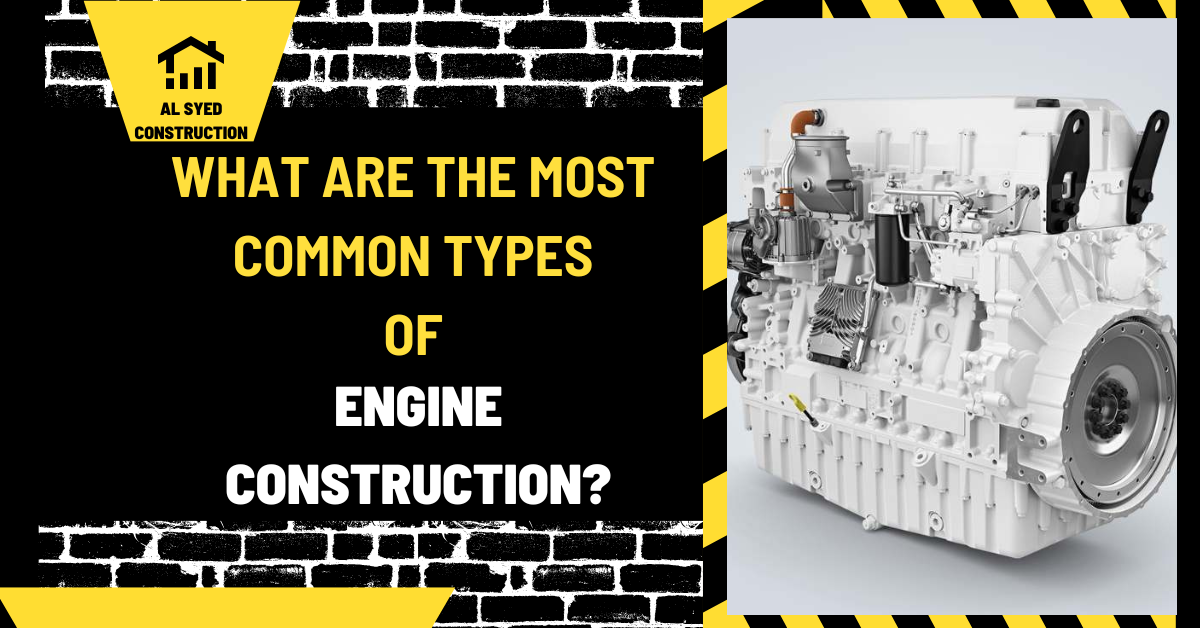
Common Engine Layouts: Inline, V, Flat and More
Introduction
Engines are the powerhouse of vehicles and machinery, converting fuel into mechanical energy to drive motion. Over the years, various types of engine constructions have been developed to meet different performance, efficiency, and application requirements. This article will explore the most common types of engine construction, their characteristics, and their typical uses in the automotive and machinery industries.
When comparing cars, keep engine layout separate from body structure; the guide to unibody construction explains the latter.
Types of Engine Construction
Reciprocating Internal Combustion Engines
The most widely used engine construction in automobiles is the reciprocating internal combustion engine. This type of engine operates on the principle of converting the linear motion of pistons into rotational motion through a crankshaft. It includes various configurations, such as inline, V-type, flat, and rotary engines.
Diesel Engines
Diesel engines are a subtype of internal combustion engines known for their high torque and fuel efficiency. They use compression ignition, where air is compressed to a high temperature and diesel fuel is injected into the combustion chamber, igniting spontaneously.
Gas Turbine Engines
Gas turbine engines, commonly used in aircraft, generate power through a continuous combustion process. Air is compressed, mixed with fuel, and ignited in a combustion chamber, producing high-velocity exhaust gases that drive a turbine connected to a compressor and output shaft.
Electric Motors
With the rise of electric vehicles, electric motors have become a prevalent type of engine construction. Electric motors convert electrical energy into mechanical energy using electromagnetic fields, offering smooth operation, high efficiency, and zero emissions.
Hybrid Engines
Hybrid engines combine an internal combustion engine with an electric motor to improve fuel efficiency and reduce emissions. They can operate on either power source independently or use both simultaneously for enhanced performance.
“Engine construction” can describe layout or operating design
The phrase “engine construction” is used in more than one way. It can refer to the arrangement of cylinders and major components, such as an inline, V, or horizontally opposed layout. It can also refer to how an engine operates: four-stroke or two-stroke cycle, spark ignition or compression ignition, naturally aspirated or turbocharged, and gasoline, diesel, hybrid, or another power source. These categories describe different features, so an engine may be both a V-layout and a four-stroke gasoline engine.
For a vehicle buyer, the layout is only one part of the decision. Displacement, torque curve, transmission pairing, cooling, emissions equipment, vehicle weight, gearing, and intended duty affect how the engine feels and performs. Two engines with the same number of cylinders can behave very differently because their tuning and supporting systems differ.
Common cylinder layouts
| Layout | Basic arrangement | Common design considerations |
|---|---|---|
| Inline | Cylinders arranged in one row. | Can be compact across the engine bay, but overall length grows with cylinder count. |
| V engine | Two cylinder banks set at an angle around a shared crankshaft. | Can package more cylinders in less length; bank angle and balance vary by design. |
| Horizontally opposed (flat) | Opposing cylinders lie on either side of the crankshaft. | Can lower the engine’s profile, while increasing width and affecting service access. |
| Rotary | A rotor performs combustion-cycle functions within a shaped housing. | Different sealing, emissions, and maintenance characteristics from piston engines. |
These are broad architecture descriptions, not quality rankings. Manufacturer documentation is needed for exact specifications, service intervals, and compatibility. Some models use unusual layouts or combine systems, and “V,” “flat,” or “rotary” does not by itself reveal fuel economy or reliability.
Operating cycle is a separate classification
A four-stroke piston engine completes intake, compression, power, and exhaust strokes over two crankshaft revolutions. A two-stroke design completes a power cycle in fewer strokes, but its intake, exhaust, lubrication, and emissions arrangements differ. Modern applications vary significantly, so do not assume every two-stroke is inefficient or every four-stroke is economical without considering the actual machine and its use.
Ignition method is another separate distinction. Spark-ignition engines use a spark to ignite the air-fuel mixture; compression-ignition engines rely on compression heat to ignite fuel. Hybrid vehicles may combine an internal-combustion engine with electric machines and controls. These categories help explain operation, but vehicle efficiency depends on the full powertrain and driving conditions.
How to compare engines for a real purchase
- Identify the exact model year, engine code, and vehicle configuration.
- Compare manufacturer specifications for horsepower, torque, displacement, fuel, and required maintenance.
- Check independent reliability and safety information for the specific vehicle, not just its engine layout.
- Consider repair access, parts availability, warranty, and the driving or work conditions expected.
- For towing or payload, follow the complete vehicle’s ratings; an engine description alone does not establish a safe load.
For example, two SUVs can both use V6 engines but have different turbocharging, transmission gearing, cooling systems, and weight. The engine that sounds more powerful on paper may not be the better fit if the vehicle is used mainly for short trips, heavy towing, or high-altitude work. Similarly, a flat engine’s lower profile can affect packaging but does not prove one vehicle handles or protects occupants better.
Use the right source for technical details
Check the owner’s manual for recommended fuel and routine service. Use the manufacturer’s service information for repair procedures and torque specifications. A generic online explanation should not replace an engine-specific diagnostic procedure; modern engines can have high-pressure fuel systems, hot components, and electrical hazards. If the goal is to compare a used vehicle, arrange an inspection by a qualified mechanic and review maintenance records.
When an article or listing says “engine construction,” ask whether it means cylinder layout, cycle, materials, or an engine’s role in a building or machine. Defining the term first makes comparisons more useful and prevents a layout label from being mistaken for a complete measure of performance, durability, or safety.
Layout does not determine an engine’s complete performance
An inline, V, or horizontally opposed layout describes where cylinders sit relative to each other. It does not by itself specify horsepower, fuel economy, reliability, or service cost. Those outcomes depend on displacement, combustion design, boost, cooling, controls, emissions equipment, transmission, and the vehicle into which the engine is installed. A small turbocharged engine and a larger naturally aspirated engine can have very different torque and maintenance profiles even if both are inline four-cylinders.
Balance and vibration also depend on the design. Engineers may use crankshaft arrangements, counterweights, mounts, and balance shafts to manage vibration. A cylinder count and arrangement can suggest common tendencies, but the specific engine’s engineering matters more than a broad category. Look up the exact engine code and model year before applying a generic description.
Match an engine to the task
- Commuting: compare real-world fuel use, cold-start behavior, maintenance intervals, and traffic conditions.
- Towing: confirm the full vehicle’s published tow rating, payload, cooling package, hitch rating, and axle limits.
- Commercial or industrial use: review duty cycle, service access, parts support, and operating hours.
- Used-vehicle purchase: inspect maintenance records, known model-specific issues, and diagnostic history.
Do not choose by displacement alone. A vehicle’s gearing can affect acceleration and towing feel, while tire size and weight affect efficiency. A test drive should include the driving conditions you expect, but it cannot replace a mechanical inspection or a review of the owner’s manual.
Engine “construction” can also mean materials and assembly
In a technical discussion, engine construction may refer to block and head materials, cylinder arrangement, valve train, fuel system, cooling passages, or manufacturing method. A cast-iron block and an aluminum block have different mass and thermal properties, but material alone does not establish durability. Design, machining, lubrication, maintenance, and operating temperature all contribute.
For repairs, use service information for the exact engine. Torque sequence, clearances, fluids, and safety procedures are model-specific. High-pressure fuel, hot coolant, rotating parts, and electrical systems can cause injury. If the task involves disassembly or diagnosis beyond routine maintenance, a qualified mechanic and manufacturer procedures are safer than a generic engine-layout article.
When reading a comparison, check whether “construction” means cylinder layout, operating cycle, materials, or an engine used in construction equipment. These are separate categories. Defining the question first makes a comparison useful and prevents layout names from being treated as a complete performance score.
Understand specifications before comparing two engines
Engine specifications should be compared under the same measurement standard and model year. Horsepower is not the same as torque, and peak values do not show how power is delivered through the rev range. A turbocharged engine may deliver strong low-speed torque, while another engine may need higher rpm. Gear ratios and transmission programming affect the driver’s experience, so examine the complete powertrain rather than one number.
Fuel-economy estimates are also vehicle-specific. Body shape, tires, weight, gearing, emissions controls, and driving cycle all contribute. Use official fuel-economy data for the vehicle configuration and consider your usual route. For a used engine, maintenance records and a pre-purchase inspection often matter more than the broad architecture label.
Compare a specific engine, not just a layout label
When comparing two vehicles, note that an engine description can combine several independent labels. One listing may identify a V6 engine, while another specifies a turbocharged four-cylinder; those phrases describe cylinder arrangement and induction, not the whole driving experience. Check the exact engine code and model year, then compare the manufacturer’s torque and power curves, fuel requirement, maintenance schedule, cooling system, transmission, and vehicle ratings. A similar cylinder count does not guarantee similar performance or service cost.
Match the engine to the intended use. Frequent short trips, long highway commutes, towing, stop-and-go work, and high-altitude operation can place different demands on the powertrain. Use the vehicle’s published towing and payload ratings rather than inferring capacity from displacement or horsepower. For a used vehicle, service history and inspection findings often matter more than a broad reputation attached to an engine layout. This approach turns “which engine type is best?” into a more useful comparison of a specific vehicle, operating conditions, ownership costs, and maintenance support.
Conclusion
The choice of engine construction depends on various factors, including the intended application, desired performance characteristics, fuel efficiency, and environmental considerations. Understanding the different types of engine construction helps in selecting the appropriate engine for specific vehicles and machinery, ensuring optimal performance and efficiency.

