
Wall Panels? Types, Uses, Benefits, And
Overview
Wall Panels? Types, Uses, Benefits, And should be understood through its purpose, project setting, controlling documents, and the work it affects. This guide connects the topic to planning, design or scope decisions, coordination, construction checks, and handover rather than treating a label or estimate as a complete answer.
Use the source article's topic details with current project information. Local approvals, safety requirements, engineering decisions, and financial or legal treatment depend on the facts and responsible authority.
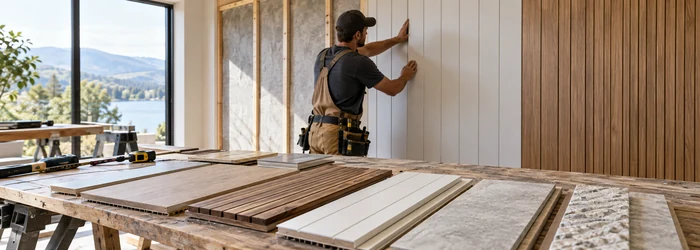
Wall panels are prefabricated wall sections used in construction to create interior and exterior walls faster and more efficiently than traditional building methods.
Instead of building walls piece by piece on-site, wall panels are manufactured in sections and installed directly at the construction site. This approach reduces labor requirements, improves quality consistency, and speeds up project completion.
In the United States, wall panels are widely used in residential homes, commercial buildings, warehouses, office spaces, modular construction, and energy-efficient building projects.
What Are Wall Panels in Construction?
Wall panels are flat structural or decorative building components designed to form walls.
Depending on the application, wall panels may provide:
- Structural support
- Thermal insulation
- Sound reduction
- Moisture resistance
- Fire protection
- Interior decoration
- Exterior weather protection
Wall panels can be load-bearing or non-load-bearing.
Load-bearing wall panels support building loads.
Non-load-bearing panels mainly serve finishing and design purposes.
Types of Wall Panels
1. Structural Wall Panels
Structural wall panels carry building loads and transfer forces into the foundation.
Examples include:
- Structural Insulated Panels (SIPs)
- Engineered wood panels
- Precast concrete panels
- Modular wall systems
Common applications:
- Residential construction
- Multi-family buildings
- Commercial projects
2. Decorative Wall Panels
Decorative wall panels improve appearance and interior aesthetics.
Popular choices include:
- Wood wall panels
- PVC panels
- MDF panels
- Acoustic wall panels
- 3D decorative panels
Common applications:
- Living rooms
- Offices
- Hotels
- Commercial interiors
3. Insulated Wall Panels
Insulated wall panels combine structural materials with insulation layers.
Typical insulation materials:
- Polyurethane foam
- EPS insulation
- Mineral wool
Benefits include:
- Better indoor comfort
- Lower energy bills
- Improved thermal performance
These panels are increasingly used across the USA because of stricter energy-efficiency requirements.
4. Concrete Wall Panels
Concrete wall panels provide durability and structural strength.
Advantages:
- Long lifespan
- Excellent fire resistance
- Minimal maintenance
Typical uses:
- Commercial buildings
- Industrial facilities
- Exterior walls
- Retaining structures
5. Metal Wall Panels
Metal wall panels are manufactured using:
- Steel
- Aluminum
- Composite metals
Benefits:
- Modern appearance
- Weather resistance
- Fast installation
Popular in:
- Warehouses
- Office buildings
- Industrial construction
Materials Used for Wall Panels
Wood
Provides a natural appearance and good insulation.
PVC
Lightweight and moisture-resistant.
Gypsum
Common for interior finishing systems.
Concrete
Offers superior strength and durability.
Composite Materials
Deliver balanced performance with reduced weight.
Advantages of Wall Panels
Faster Construction
Panels reduce construction time significantly.
Lower Labor Costs
Less on-site work means lower labor expenses.
Better Quality Control
Factory production improves accuracy and consistency.
Improved Energy Efficiency
Insulated systems help reduce heating and cooling costs.
Cleaner Construction Sites
Less waste compared with traditional wall construction.
Disadvantages of Wall Panels
Wall panels also have some limitations.
- Higher initial material cost
- Transportation requirements
- Limited modification after manufacturing
- Specialized installation methods
Interior Wall Panels vs Exterior Wall Panels
FeatureInterior PanelsExterior PanelsExposureLowHighWeather ResistanceModerateHighInsulationOptionalOften RequiredStructural FunctionUsually NoSometimes
How Wall Panels Are Installed
Typical installation steps include:
- Site preparation
- Layout measurement
- Frame installation
- Panel placement
- Fastening system installation
- Joint sealing
- Final finishing
Installation methods vary depending on panel type and building requirements.
Are Wall Panels Better Than Traditional Walls?
Wall panels are often preferred when:
- Construction speed matters
- Labor costs are high
- Energy efficiency is a priority
- Modular construction is planned
Traditional wall systems may still work better for highly customized projects.
Frequently Asked Questions
What are wall panels used for?
Wall panels are used for structural support, insulation, protection, and decorative purposes.
Are wall panels waterproof?
Some wall panel systems such as PVC and metal panels provide excellent moisture resistance.
Are wall panels load-bearing?
Only structural wall panels carry building loads.
How long do wall panels last?
Depending on materials and maintenance, wall panels can last for decades.
Are wall panels energy efficient?
Insulated wall panel systems can significantly improve building performance.
Final Thoughts
Wall panels have become an important solution in modern construction because they offer faster installation, better efficiency, and improved building performance.
Whether you are building a residential home, commercial structure, or energy-efficient project in the USA, choosing the right wall panel system can improve both construction speed and long-term value.
Suggested next semantic articles:
- Types of Wall Panels
- Exterior Wall Panel Systems
- Structural Insulated Panels (SIP)
- Precast Concrete Wall Panels
- Wall Panel Installation Cost
- Decorative Wall Panels for Homes
Scope and meaning
A building method or assembly must meet a defined performance need within a larger structure. For wall panels? types, uses, benefits, and, identify what it supports, spans, encloses, connects, drains, or protects. A familiar name does not establish capacity or suitability. Geometry, loads, materials, connections, exposure, sequence, tolerance, adjacent systems, and approved documents govern.
Planning inputs to confirm
Collect current drawings, specifications, dimensions, site measurements, product data, and existing-condition evidence. Confirm substrate, bearing, opening size, access, lifting, tolerance, moisture, temperature, and adjacent finishes. Identify whether work is temporary or permanent and who designs, supplies, installs, inspects, and accepts it. Record deviations before ordering.
Design choices and trade-offs
Compare alternatives by performance, material behavior, load path, fire and moisture needs, durability, repair access, and availability. Check how forces transfer through the assembly. Review movement, joints, penetrations, bridges, and drainage. Do not infer capacity from appearance or a label; project calculations need qualified review.
A practical project sequence
Translate approved design into field steps: establish lines and levels, verify dimensions, prepare support, install in order, protect completed work, inspect connections, and record concealed layers. Coordinate temporary stability and safe access. Follow product instructions for fastening, welding, adhesive, grout, cure, and adjustment.
Coordination and responsibilities
Coordinate openings, sleeves, supports, edges, movement joints, flashing, membranes, fire stopping, finishes, and access panels. Assign who provides each element and checks continuity. Review interfaces in plan, section, and detail. Record substitutions and preserve compatibility across connected materials.
Cost and schedule considerations
System cost includes design, testing, mock-ups, supports, hardware, equipment, access, waste, protection, inspection, maintenance, and replacement. Compare complete assemblies under the same performance and scope. Include transport, lifting, storage, and field connections for specialized work. State quote date and exclusions.
Quality checks
Set acceptance criteria before work: approved product, dimensions, alignment, connection, support, continuity, finish, and tests. Inspect the first installation, then repeat at specified hold points. Photograph concealed interfaces, retain test records, and close nonconformances with evidence.
Risk and long-term use
Keep as-built configuration, product data, installation and inspection records, tests, access points, and maintenance instructions. Tell the owner what must remain clear and which replacement parts are compatible. For future work, locate load path, membrane, service, fire, and movement details before cutting.
Topic-specific questions
The source outline surfaces points to verify against current project information:
- What Are Wall Panels in Construction?. Check the exact location, source revision, reviewer, and whether the point is a definition, design intent, measurement, requirement, or example. Record the answer before procurement or installation if it changes scope, sequence, or acceptance.
- Types of Wall Panels. Check the exact location, source revision, reviewer, and whether the point is a definition, design intent, measurement, requirement, or example. Record the answer before procurement or installation if it changes scope, sequence, or acceptance.
- Structural Wall Panels. Check the exact location, source revision, reviewer, and whether the point is a definition, design intent, measurement, requirement, or example. Record the answer before procurement or installation if it changes scope, sequence, or acceptance.
Project checklist
Before committing to a decision about wall panels? types, uses, benefits, and, work through these checks:
- Record location, purpose, project phase, date, and controlling revision.
- Separate verified conditions from assumptions, open questions, allowances, and exclusions.
- Confirm scope, measurement, product or system, interfaces, access, and responsibility.
- Agree who reviews the work, which evidence is required, and when inspection must occur.
- Document approved changes with location, cost or schedule effect, owner, date, and closure.
- Keep tests, photographs, record information, warranties, and maintenance instructions for handover.
Common mistakes to avoid
Do not rely on a broad label, old drawing, generic figure, or verbal field decision when the actual scope can be checked. Confirm the basis, location, version, and reviewer before work is committed. When evidence is incomplete, mark the conclusion provisional and name the next action instead of presenting an assumption as fact.
Frequently asked questions
Can a typical detail work everywhere?
No. Geometry, loads, support, material, exposure, tolerance, and adjacent assemblies vary.
What should be checked before installation?
Approved drawings and products, dimensions, substrate, support, sequence, stability, access, interfaces, and inspection criteria.
Can a field crew change a detail?
Not when performance, capacity, fire, water control, or compliance changes without review.
How is quality demonstrated?
Use measurements, product data, inspections, tests, photos of concealed work, and correction records.
What belongs in closeout?
As-built configuration, product data, tests, inspection records, access points, maintenance instructions, and warranties.
Related Building Design resources
Continue with Unraveling The Mystery: Understanding The Role, A Build-out In Construction? Full Guide With, What is a Mushroom Head in Construction?, Wainscoting Layout Calculator. Apply each resource only to its scope and verify project decisions against approved records.
Conclusion
A reliable result for wall panels? types, uses, benefits, and comes from clear scope, current evidence, coordinated decisions, and documented checks. Obtain qualified review where safety or compliance is involved, and keep the approved record available for construction and future maintenance.
Additional practical considerations
Trace the load and water path through connected parts, including support, restraint, movement, drainage, weather protection, and access. Confirm who designs each interface and inspect it before concealment.
Convert wall panels? types, uses, benefits, and into a decision that can be reviewed. State the question, location, project phase, controlling document, required outcome, and person who can approve it. Separate what is known from what still needs measurement, testing, or interpretation. For a building system, verify the whole assembly, support, connection, movement, protection, inspection, and maintenance path. This makes the next action clear and keeps a broad topic from becoming an unrecorded field assumption.
Build an evidence trail for wall panels? types, uses, benefits, and from the current source material. Keep drawing and specification revisions, dated site information, product data, quantities, approvals, meeting decisions, and photographs tied to a location. If two records disagree, retain both references and obtain a written resolution. A clean record lets another reviewer understand why a choice was made without relying on memory or a generic example.
Review interfaces before work is released. Check what touches the topic: structure, enclosure, utilities, access, adjacent trades, temporary conditions, inspection points, and maintenance space. Name who provides each connection and who verifies it. For a building system, verify the whole assembly, support, connection, movement, protection, inspection, and maintenance path. Resolve the detail in the documents before procurement or concealment; an instruction to coordinate later does not explain scope or acceptance.
Compare options using the same basis. State dimensions, performance, material, finish, delivery, access, schedule, exclusions, and required testing. Explain the trade-off rather than presenting one option as universally best. Record any effect on cost, durability, operation, or future repair. Where a value depends on site or jurisdiction, identify the facts that must be checked instead of implying a fixed result.
At handover, preserve the final approved decision for wall panels? types, uses, benefits, and. Include the installed configuration, approved changes, product or source information, inspection and test evidence, open items, maintenance steps, and responsible contact. Mark superseded documents and keep the final revision accessible. This closes the gap between planning and use, and gives future owners a reliable basis for repair or alteration.





Leave a Reply
Want to join the discussion?Feel free to contribute!