
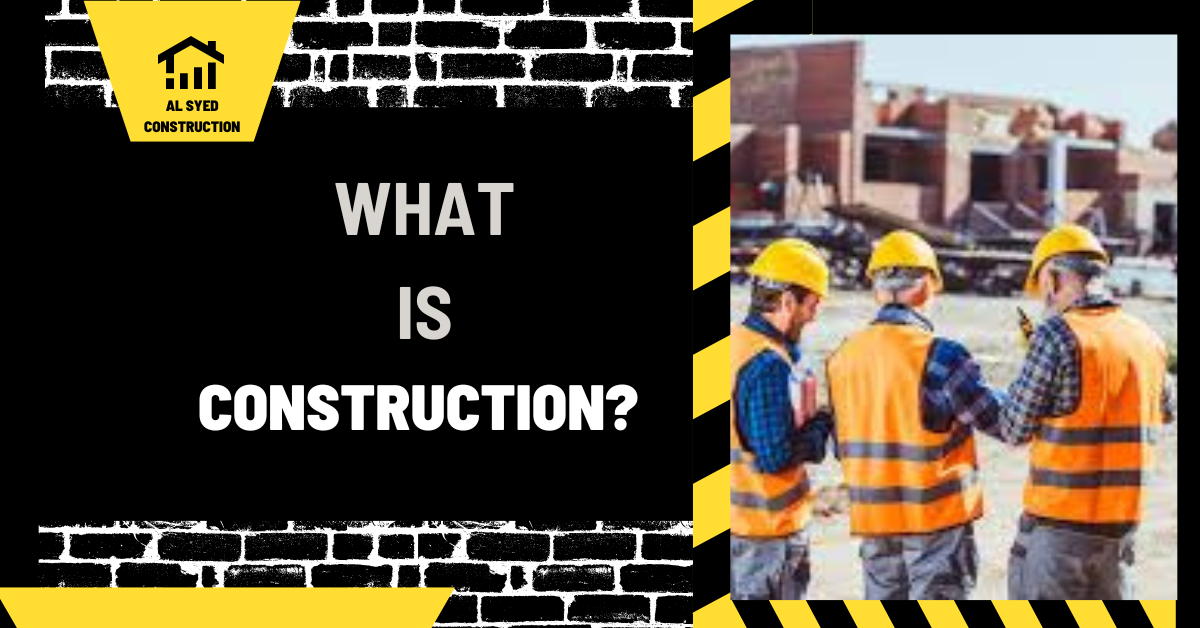
What Is Construction? Meaning, Work and Project Types
Construction is the coordinated work of creating, altering, repairing, or removing buildings and other built assets. It combines planning, design, materials, labor, equipment, management, safety, inspections, and project records. The term can refer to physical work on a site, the broader delivery process, or the industry made up of owners, designers, contractors, trades, suppliers, and authorities.
A construction project is more than assembling materials. The team has to translate requirements into a design, organize people and resources, manage interfaces, verify work, and hand over an asset that can be used and maintained. For a sequence from the initial need to the finished building, see the building construction process flow guide.
Construction in plain language
In everyday use, construction describes work that forms part of a building or infrastructure project. It may include a new home, a school renovation, a commercial fit-out, a road, a bridge, a utility system, or a building addition. The exact scope is established by the project documents and contracts.
Construction also has a broader meaning. A building’s creation involves decisions that happen before workers arrive: defining a need, testing a site, arranging funding, selecting a design and delivery approach, and obtaining approvals. After installation, testing, and closeout, the owner operates and maintains the asset. Some project teams refer to this wider cycle as development or project delivery.
The word should not be used as a substitute for a precise scope. “Construction work” can include different activities under different contracts or laws. A contract may define construction, renovation, demolition, temporary work, owner-furnished items, and closeout in specific ways. For project decisions, use the applicable agreement and approved documents.
Major types of construction work
Building construction creates or modifies facilities such as residential, commercial, institutional, industrial, and public buildings. Work can include foundations, structure, enclosure, interior systems, finishes, and equipment. Different uses create different requirements. A grocery store, laboratory, apartment building, and warehouse may all be buildings, but their systems and operations differ.
Heavy civil and infrastructure construction includes projects such as roads, bridges, transit, water and wastewater facilities, dams, ports, and public utilities. The work may extend across large sites and include earthwork, structures, drainage, utilities, and traffic management. Design and construction depend on terrain, public access, environmental factors, and existing networks.
Industrial construction creates or modifies facilities where process equipment, production, energy, or specialized operations are central. These projects require close coordination between the building, process systems, equipment vendors, controls, and the operating organization.
Renovation and adaptive reuse modify an existing asset. The team must understand existing conditions, protect occupants or neighboring operations, coordinate demolition and new work, and deal with concealed conditions. Existing drawings can be incomplete, so field verification and a clear change process are important.
Maintenance and repair preserve or restore existing assets. Some repair work is small and routine; other work involves structural or system upgrades. The owner and contractor should define scope, access, occupied conditions, testing, and what constitutes a complete repair.
Who participates in a construction project?
The owner defines the need, funds or authorizes the work, and makes key decisions. Owners may be individuals, businesses, public agencies, institutions, or developers. The owner’s operations staff can explain how the finished asset must function and be maintained.
The architect often leads building design and coordinates design consultants, depending on the contract. Engineers design specialized systems such as structure, civil works, mechanical, electrical, plumbing, fire protection, or other disciplines. The project’s design professionals and their scopes depend on the project.
The general contractor organizes construction work under its agreement. Trade contractors perform specialized packages. Suppliers provide materials and equipment. Construction managers may provide preconstruction or construction-phase services under a defined role. The contract defines each participant’s authority and responsibilities.
Authorities review and inspect work under applicable laws and local processes. Their role is distinct from the owner’s quality review and the contractor’s responsibility to build according to contract documents. An approval or inspection does not automatically settle every contract question.
What happens during construction?
The construction phase usually starts with planning and mobilization. The contractor confirms site access, logistics, safety arrangements, temporary facilities, submittals, procurement, and coordination. Existing conditions and utilities are verified as appropriate. Work then progresses through the planned packages and phases.
Physical construction can include earthwork, utilities, foundations, structural systems, enclosure, interior construction, building services, finishes, and equipment. Work may happen concurrently across areas. Sequencing depends on access, inspections, design completion, weather, procurement, and trade coordination.
The project team monitors progress, cost, quality, safety, changes, and risks. Requests for information clarify documents or conditions. Submittals provide product or fabrication information for review. Change orders document authorized changes according to the contract. Site reports, photographs, meeting minutes, test records, and inspection documents help maintain a traceable project history.
At completion, teams test systems, correct deficiencies, collect required documents, train operators, and hand over the asset. The word “finished” should be tied to an agreed milestone. Physical completion, substantial completion, final completion, occupancy approval, and operational readiness can be different events.
How contracts and delivery methods shape construction
A delivery method determines how design, pricing, and construction responsibilities are organized. Under some approaches, the owner contracts separately with the designer and builder. Other approaches combine more responsibility under one contract or involve a construction manager. The chosen method affects coordination and risk, but the name alone does not tell the whole story.
Contracts define scope, price, payment, schedule, insurance, changes, site access, quality requirements, dispute processes, and closeout. The team should understand the document hierarchy if drawings, specifications, addenda, and schedules differ. Questions should follow the agreed communication path.
A construction price may be fixed, cost-based, unit-priced, or otherwise structured. The contract explains how it is calculated and adjusted. Allowances, contingencies, exclusions, escalation terms, and alternates can change how a proposal should be compared. Owners should evaluate scope and risk alongside price.
Why planning and terminology matter
Construction involves handoffs between people who may use different terminology. Words such as “approval,” “acceptance,” “review,” and “inspection” can have distinct meanings. The project team should use consistent terms and reference the contract or specification when making a decision. A broader construction terms overview can help readers get oriented.
Planning helps connect decisions to work. A project’s phase plan can organize scope, roles, sequencing, logistics, safety, quality, and turnover. The construction phase plan outline provides a useful way to review the information a team may need.
What construction is not
Construction is not only the activity of workers on a site. The work depends on design, procurement, approvals, management, quality control, and owner decisions. At the same time, a design concept or construction budget is not a completed project. A building may be designed but not permitted, permitted but not procured, or physically complete but not tested or ready for use.
Construction is also not a single standard process that applies identically everywhere. Building codes, permit processes, labor practices, contract forms, and project delivery methods vary. The team should verify the rules and responsibilities relevant to the actual location and project.
How to recognize a well-organized project
A well-organized project has a clear brief, current drawings, defined decision authority, documented scope, realistic schedule, procurement tracking, site coordination, planned inspections, and a method for managing changes. The team knows who owns each issue and what evidence is needed to close it.
The project should have a path for resolving design questions without relying on informal assumptions. Cost and schedule effects should be identified before changes are authorized. The owner should be involved at the decision points that affect function, budget, or operations.
A good handover is planned from the beginning. The people who will use the asset know what they are receiving, what remains incomplete, how equipment operates, where records are stored, and how to report defects. These basics apply whether the project is a small remodel or a large facility.
Construction work as a connected system
A project brings together several kinds of work that depend on each other. Design defines requirements and interfaces. Procurement secures materials, equipment, and services. Site operations coordinate people, access, safety, and sequence. Quality processes verify work. Project controls track time and cost. Closeout prepares the owner to operate the result. A delay in one area can affect another even when each trade performs its own task well.
Consider a building addition. The team must connect new foundations and structure to the existing building, protect occupants, locate services, manage temporary access, and confirm how new systems will tie into existing equipment. The physical work is only one part of the effort. Planning and communication determine whether the addition can be built while the facility remains in use.
This is why a project brief and clear scope are important. The team needs a shared answer to what will be built, what remains in operation, who approves changes, and how completion will be demonstrated. Those answers vary by project but should be recorded before they are needed in the field.
Frequently asked questions
What does construction mean in a project contract?
The contract’s definitions and scope control. In general, construction refers to work that creates, alters, repairs, or removes part of a built asset, but the agreement may define included work and exclusions in detail.
Does construction include design?
Design is usually a distinct professional service, although the delivery model may integrate design and construction responsibilities. The contract should state which party provides each service and how design decisions are coordinated.
What is the difference between construction and development?
Construction commonly refers to delivering the physical work and associated project services. Development usually includes the earlier business decisions that determine whether and how a project should proceed, such as site, feasibility, funding, approvals, and delivery strategy.


Leave a Reply
Want to join the discussion?Feel free to contribute!