
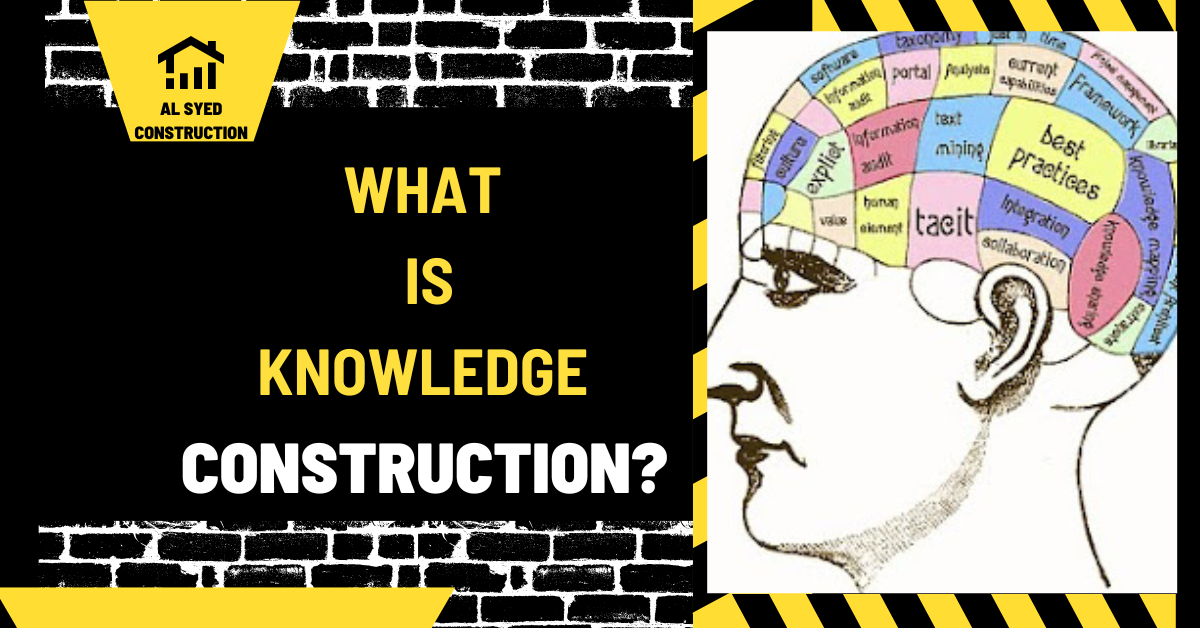
Knowledge Construction: How Learning Builds Meaning
Introduction
Knowledge construction is a fundamental concept in the field of education and cognitive development. It refers to the process by which individuals create, modify, and internalize new information through experiences, interactions, and reflection. This concept challenges traditional views of learning as mere absorption of facts and emphasizes the active role of learners in shaping their understanding of the world. Understanding knowledge construction is crucial for educators and learners alike, as it informs teaching strategies and learning approaches that foster deeper comprehension and critical thinking.
The Process of Knowledge Construction
Active Learning
Knowledge construction involves active engagement with information and ideas. Learners actively participate in their learning process by questioning, exploring, and applying concepts to real-world situations. This active involvement facilitates a deeper understanding and retention of knowledge.
Social Interaction
Social interactions play a significant role in knowledge construction. Collaborative learning environments, discussions, and group activities provide opportunities for learners to exchange ideas, challenge assumptions, and construct knowledge collectively.
Theoretical Frameworks
Constructivism
Constructivism is a key theoretical framework that underpins the concept of knowledge construction. It posits that learners construct their understanding and knowledge of the world through experiences and interactions with their environment. Constructivist approaches to education emphasize problem-solving, inquiry-based learning, and the importance of context in the learning process.
Sociocultural Theory
Sociocultural theory, particularly the work of Lev Vygotsky, highlights the influence of social and cultural factors on knowledge construction. According to this theory, learning is a social process, and cognitive development is shaped by interactions with more knowledgeable others and the cultural tools and practices available to the learner.
Implications for Education
Student-Centered Learning
Knowledge construction advocates for student-centered learning approaches that prioritize the learner’s active participation and autonomy. Teachers act as facilitators, guiding students in their exploration and construction of knowledge.
Authentic Assessment
Assessment in a knowledge construction framework focuses on authentic tasks that require students to apply their understanding in meaningful ways. Portfolios, projects, and performance-based assessments are aligned with the principles of knowledge construction.
What knowledge construction means in learning
Knowledge construction describes how learners actively organize information, connect new ideas with what they already know, and revise their understanding through experience, explanation, and feedback. It does not mean that learners can decide facts by preference. Evidence, disciplinary methods, and interaction with other people constrain how a useful explanation is built. The learner participates in making meaning rather than only receiving a finished answer.
A student learning fractions, for example, may begin with an everyday idea of “half,” then connect that idea to equal parts of a whole, number lines, and equivalent fractions. If the student sees that two different diagrams represent the same value, the new relationship becomes part of a more organized mental model. If later examples reveal a misconception, the student may need to revise the earlier model.
Connect prior knowledge with new evidence
Prior knowledge can support learning, but it can also create a misconception. A teacher can surface students’ initial thinking with a prediction, question, quick drawing, or short explanation. Then learners compare that thinking with a demonstration, data, text, or worked example. The important step is making the connection explicit: what changed, what evidence supported the change, and which part of the earlier explanation remains useful?
Teachers can use an entry question such as “What do you think will happen, and why?” before presenting a concept. Students record an initial explanation, examine new evidence, and then revisit the explanation. This structure helps make learning visible without assuming that everyone starts from the same background. It also lets an instructor identify which prerequisite idea needs attention.
Learning activities that support knowledge building
- Retrieval practice: learners recall an idea without immediately seeing the answer, then check and correct it.
- Worked examples: students examine a solved problem and explain why each step is appropriate.
- Comparison: learners compare two examples, cases, or explanations to identify what changes and what stays constant.
- Discussion: students give reasons, listen to alternatives, and revise claims in response to evidence.
- Application: learners use a concept in a new situation and explain where the analogy fits or fails.
These activities are most effective when they are aligned with the learning goal. A discussion can produce many opinions without improving understanding if students do not examine evidence. A project can be engaging but still leave a central idea unclear if the task does not require students to use it. Give learners a clear question, resources, feedback, and a way to explain their reasoning.
Assess the reasoning, not just the final answer
A correct answer can result from guessing, copying, or memorizing a pattern without understanding. Ask students to show a diagram, explain a choice, compare examples, or apply the concept to a new case. A constructed-response task can reveal how learners connect evidence to a claim; see the guide to constructed responses and rubrics.
Assessment should also distinguish a durable concept from a temporary performance. A quick quiz can provide useful feedback, but a single score does not capture every part of a learner’s knowledge. Use multiple examples and revisit key ideas over time. If students can explain a concept in their own words, recognize it in different representations, and apply it appropriately, that is stronger evidence of understanding than a memorized definition alone.
Build classroom discussion around evidence
Group work can support knowledge construction when students have a meaningful shared problem and must explain their reasoning. Assign roles such as summarizer, evidence-checker, or questioner only when those roles serve the activity. Give students time to think individually before discussion, so quieter learners have an entry point. Establish norms for disagreeing with an idea respectfully and asking for evidence.
Teachers can prompt deeper thinking with questions such as “What evidence would change your mind?”, “How is this case different from the example?”, and “Which step connects the observation to your conclusion?” These questions shift conversation from unsupported agreement to reasoning. They also help the instructor notice where students are relying on an incomplete model.
Limits and misconceptions
Knowledge construction is sometimes misread as meaning that all answers are equally valid. In academic learning, interpretations must be evaluated against evidence and accepted methods in the field. Another misconception is that discovery learning always works better than direct instruction. Learners may need clear explanation, vocabulary, demonstrations, and guided practice before they can investigate independently. The right balance depends on the learner’s background and the complexity of the task.
For teachers, a practical design question is: what should learners be able to explain or do afterward that they could not do before? Choose an activity that elicits the needed thinking, offer feedback, and check whether learners can transfer the idea beyond the original example. This turns knowledge construction from a slogan into an observable teaching and learning process.
Knowledge construction is not learning alone
Learners build understanding through individual thinking and social activity. A class discussion can expose different explanations, but the teacher still needs to help students evaluate claims against evidence. Peer talk is most useful when learners have a shared question, clear terms, and enough time to explain why they agree or disagree.
In a science lesson, groups might predict which material insulates best, test samples under the same conditions, compare measurements, and revise their explanation. The group’s knowledge develops through evidence and discussion, not simply because students worked together. Record the prediction before the test so the change in reasoning is visible.
Check whether learning transferred
After an activity, ask learners to apply the concept to a new example with different surface features. If they can only repeat the original demonstration, they may not yet understand the underlying relationship. A short explanation, drawing, or constructed response can reveal whether they can select the relevant idea and justify it.
Use assessment evidence to plan the next lesson: revisit a prerequisite, provide another worked example, or offer a more challenging application. Knowledge construction is an ongoing process, so a single quiz should not be treated as a complete map of what a student understands.
Give feedback that helps learners revise
Useful feedback points to the reasoning, not only to the score. Instead of “wrong,” a teacher might ask which evidence supports the claim, or identify the step where an assumption changed. Learners then have a concrete opportunity to revise their model. Feedback is most useful when it arrives while students can still act on it.
Students can also keep a brief learning log: initial idea, new evidence, what changed, and what question remains. The log makes revision visible and helps distinguish a changed answer from a changed understanding. It can also guide the next lesson or a small-group review.
Conclusion
Knowledge construction is a dynamic and interactive process that lies at the heart of learning and cognitive development. It emphasizes the active role of learners in creating and shaping their understanding through experiences, social interactions, and reflection. By embracing knowledge construction, educators can create learning environments that promote critical thinking, collaboration, and a deeper engagement with content, ultimately empowering learners to navigate and make sense of an ever-changing world.


Leave a Reply
Want to join the discussion?Feel free to contribute!