
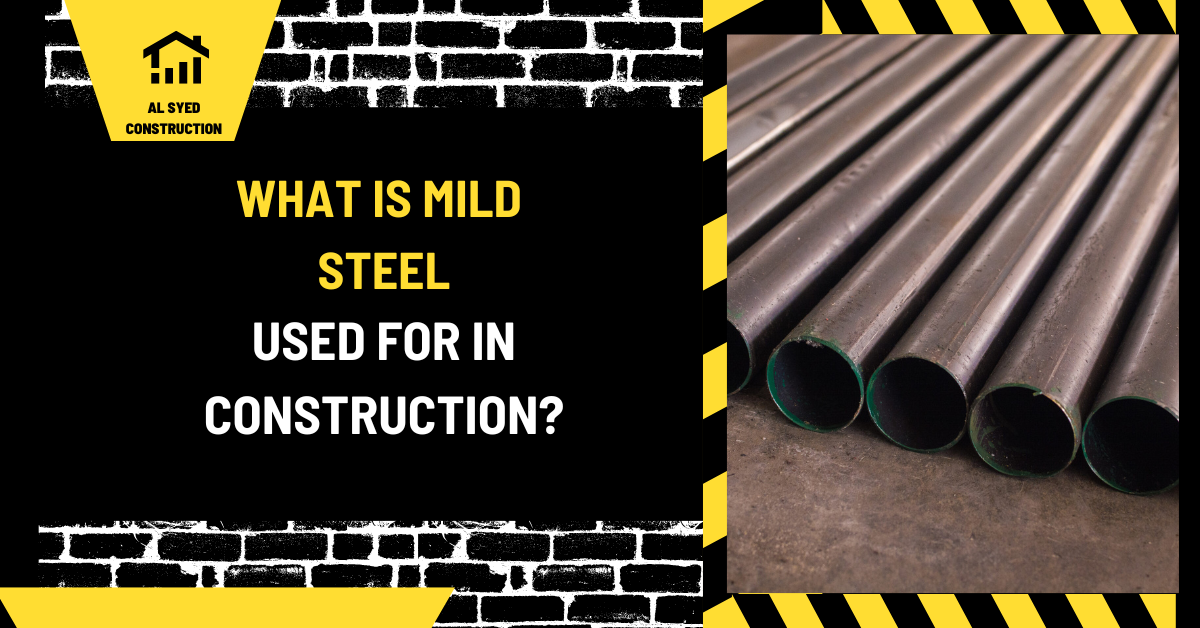
Mild Steel in Construction: Properties and Uses
In brief. Mild steel is a broad term commonly used for lower-carbon steel products. The grade, section, coating, fabrication, connection, and exposure determine whether a particular product is suitable for a fence, rail, or building detail.
Mild steel, known for its versatility and affordability, plays a crucial role in the construction industry. This article explores the numerous applications of mild steel in construction, highlighting its properties, benefits, and specific uses.
Understanding Mild Steel
Mild steel, also referred to as low-carbon steel, contains a carbon content of approximately 0.05% to 0.25%. This low carbon content gives it unique properties, making it an essential material in construction.
Properties of Mild Steel
**1. High Ductility
Mild steel is highly ductile, allowing it to be drawn into wires or rolled into thin sheets without breaking. This property makes it ideal for various construction applications where flexibility and shape adaptability are crucial.
**2. Good Weldability
The weldability of mild steel is one of its most significant advantages. Its ability to be easily welded ensures that it can be used in various structural applications, allowing for efficient assembly and repair.
**3. Cost-Effectiveness
Mild steel is relatively inexpensive compared to other types of steel, making it a cost-effective choice for large-scale construction projects. Its affordability combined with its properties makes it a popular material in the industry.
**4. Malleability
Mild steel’s malleability allows it to be shaped into various forms without cracking. This characteristic is particularly useful in applications requiring intricate shapes and structures.
Applications of Mild Steel in Construction
**1. Structural Framework
Mild steel is extensively used in structural frameworks of buildings and bridges. Its high tensile strength and ductility make it ideal for constructing beams, columns, and trusses that support the weight of the structure and resist external loads.
**2. Reinforced Concrete
In reinforced concrete, mild steel is used as reinforcing bars or rebars. These rebars provide additional strength and support to concrete structures, enhancing their durability and load-bearing capacity. The combination of concrete and mild steel helps in creating structures that can withstand various stresses and forces.
**3. Steel Plates and Sections
Steel plates and sections made from mild steel are commonly used in the construction of buildings and infrastructure. These components, such as channels, angles, and I-beams, are essential for creating load-bearing structures and frameworks.
**4. Construction Tools and Equipment
Mild steel is also utilized in the manufacturing of construction tools and equipment. Items such as scaffolding, supports, and various hand tools are often made from mild steel due to its strength and affordability.
**5. Fencing and Gates
Mild steel is frequently used for fencing and gates. Its durability and resistance to weathering make it suitable for outdoor applications, providing security and enclosure for properties.
**6. Pipes and Tubes
Pipes and tubes made from mild steel are used in construction for various purposes, including water supply and drainage systems. The steel’s strength and malleability make it a reliable choice for creating pipelines and conduits.
Advantages of Using Mild Steel in Construction
**1. Flexibility in Design
The flexibility of mild steel allows for a wide range of design options in construction projects. It can be easily shaped and assembled into complex structures, providing architects and engineers with creative freedom.
**2. Enhanced Safety
Mild steel’s ability to be easily welded and fabricated ensures that safety standards are met during construction. The material’s predictable behavior under stress makes it a reliable choice for ensuring structural integrity.
**3. Long-Term Durability
Despite its lower carbon content, mild steel provides substantial durability when properly coated or treated. Its resistance to various environmental factors ensures that structures remain stable and functional over time.
**4. Ease of Maintenance
Mild steel structures are relatively easy to maintain. Regular inspections and simple maintenance procedures, such as painting or galvanizing, can significantly extend the life of mild steel components.
| Review point | What to verify |
|---|---|
| Purpose | Define the component’s job and location. |
| Specification | Name material, connection, and interface. |
| Verification | Record what proves the detail is complete. |
Material claims should be checked against the actual assembly; compare wrought iron in construction and rot iron meaning before choosing the finish or connection.
Match the material to the exposure and connection
Mild steel is a broad term commonly used for lower-carbon steel products. The grade, section, coating, fabrication, connection, and exposure determine whether a particular product is suitable for a fence, rail, or building detail. Use the topic as a decision to verify on the actual site, not as a universal detail copied from an unrelated project.
Specify the product standard and grade, member dimensions, finish, connection method, and environmental exposure rather than relying on the generic material name. Write the assumption beside the measurement or drawing that supports it. This makes it easier for an owner, designer, installer, and inspector to see what has been decided and what still needs confirmation.
For material selection, verify the product identity, grade, dimensions, treatment or coating, fasteners, substrate, and exposure. Supplier labels can use familiar names broadly, so project documents should call for the performance and finish actually needed. Check how pieces meet, move, drain, and receive repairs over time.
Turn the plan into field checks
Start by recording the existing condition and the intended result. Compare the proposed work with the adjacent surface, support, opening, boundary, or drainage path. Confirm that the selected product and connection belong to the same system, then identify which work must be inspected before it is covered. These checks prevent a good-looking finish from hiding a weak interface or an unresolved water path.
| Review point | What to verify |
|---|---|
| Purpose | Define the component’s job and location. |
| Specification | Name material, connection, and interface. |
| Verification | Record what proves the detail is complete. |
Sequence the work around hold points
- Confirm the site measurements, existing material, and intended use before ordering or demolition.
- Resolve the structural, drainage, access, boundary, or code question that controls the layout.
- Check product instructions and approved drawings before cutting, fastening, placing concrete, or closing an enclosure.
- Inspect connections, edges, transitions, and water movement while each item remains visible.
- Record the final product, changes, approvals, and maintenance requirements for the next owner or contractor.
Failure pattern to prevent
Assuming all mild steel has the same strength or corrosion protection can lead to a mismatch between the detail and actual product supplied. A practical correction is to pause at the point where the condition becomes visible, document it with a measurement or photograph, and resolve the cause before adding more finish material. If the finding affects structure, fall protection, electrical work, or code approval, send it to the qualified designer or local authority rather than improvising a field change.
Example of a useful project note
For example, if a contractor proposes a change after opening the work area, note the original condition, the proposed detail, the product or drawing used to support it, and the person who approved the change. Then inspect the completed interface before trim, soil, siding, flooring, or stored items make it difficult to see. This record is more useful than a photo without a location or a verbal instruction that cannot be checked later.
Project-specific checks for mild steel in construction
Check more than the material name. Verify the grade, dimensions, coating, treatment, fastener, weld or joint, substrate, and maintenance instructions. Confirm that the supplier’s data describes the exact product being delivered. At transitions, consider dissimilar materials, water traps, cut edges, and future repairs; those details often control service life more than the broad material category.
What to verify before the work is concealed
Inspect the location and continuity of each connection, the fit at edges and corners, and any route for water, movement, or access. Confirm that the installed material matches the product data and approved scope. Where a detail is hidden later by trim, soil, a panel, a membrane, or stored contents, take a record before closing it and identify the inspection or approval that applies.
Specify the product standard and grade, member dimensions, finish, connection method, and environmental exposure rather than relying on the generic material name. Pair that information with the field condition rather than relying on a generic illustration. If the measured result differs from the plan, record the difference and get the responsible reviewer’s direction before work continues.
- Photograph the relevant interface with a location and date.
- Record the product, finish, and fastener actually installed.
- Note any deviation, approval, inspection, or repair still outstanding.
- Keep access open until the responsible reviewer accepts concealed work.
Records, follow-up, and maintenance
Closeout should capture the measurements, product names, drawings, approvals, inspection results, and any maintenance instructions that affect mild steel in construction. Keep the records together with photographs of concealed conditions and contact details for the installer or supplier. A clear record helps diagnose later movement, water entry, finish wear, or replacement needs without guessing how the original work was assembled.
Set a follow-up inspection based on exposure and use. After severe weather, seasonal movement, or a change in how the area is used, look again at the interface that carries the greatest risk. Correct loose, damaged, or blocked details early, and address the cause rather than covering the symptom with a new finish.
Common questions
What should be checked first for mild steel in construction?
Mild steel is a broad term commonly used for lower-carbon steel products. The grade, section, coating, fabrication, connection, and exposure determine whether a particular product is suitable for a fence, rail, or building detail. Then verify the controlling site measurement and the interface that will be hidden or loaded by the work.
Can one detail be used on every project?
No. Use the project’s actual substrate, exposure, intended use, approved design, product directions, and local requirements. A detail that works on one deck, porch, fence, or site condition may not transfer to another.
Conclusion
Mild steel remains a fundamental material in the construction industry due to its affordability, versatility, and beneficial properties. Its wide range of applications—from structural frameworks to reinforced concrete—demonstrates its importance in creating durable and reliable structures. By understanding the various uses and advantages of mild steel, professionals in the construction industry can make informed decisions that contribute to the success of their projects.


Leave a Reply
Want to join the discussion?Feel free to contribute!