
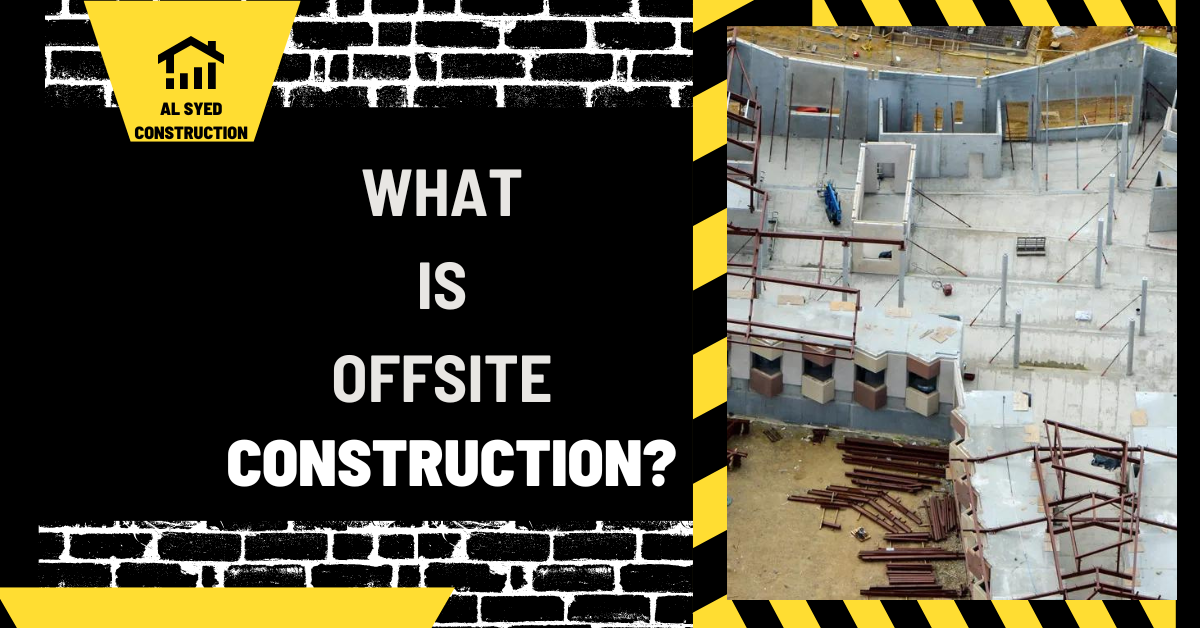
What Is Offsite Construction? Systems and Process
Offsite construction is a building process in which components or assemblies are made away from their final installation location and then transported to the project for assembly or integration. It can include structural panels, service racks, bathroom pods, and three-dimensional modules. A project can use offsite construction for selected packages without making the entire building modular.
The process changes where work happens and how teams coordinate it. It does not remove design, site preparation, approvals, installation, or testing. For U.S. owners and project teams, understanding those boundaries is the key to deciding whether an offsite approach fits a particular project.
What work can move offsite?
Offsite work can range from fabrication of individual components to assembly of substantially completed rooms. The appropriate level depends on the building design, supplier capabilities, transportation limits, and the surrounding construction. More factory completion is not automatically better if it creates difficult interfaces or handling requirements.
Examples include wall and roof panels, structural elements, mechanical service assemblies, bathroom pods, and volumetric modules. Some arrive as structural packages; others include services and finishes. Ask the supplier to describe the exact assembly and its delivery condition.
The prefabricated module guide explains larger assembled packages. Compare their included work with the field tasks needed to turn them into a functioning building.
Distinguish related terms
| Term | Useful meaning | What it does not establish |
|---|---|---|
| Offsite construction | Work performed away from the final installation location | The complete building scope or system |
| Prefabrication | Components or assemblies made before final installation | That every room is volumetric |
| Volumetric modular | Three-dimensional sections joined into a building | That all site work disappears |
| Panelized construction | Flat assemblies installed into the building | The amount of included service and finishing work |
| Design for manufacture and assembly | Design decisions coordinated with production and installation | A particular building product or supplier |
These terms overlap, but they are not complete substitutes. The modular construction definition describes one major approach within the broader offsite process. Use precise package descriptions when preparing contracts and comparisons.
How an offsite project moves from design to use
The team first defines the operating brief and selects potential offsite packages. Designers then coordinate those packages with structure, services, site conditions, and required approvals. Accepted information is released for procurement and fabrication through the project’s established process.
At the production location, materials and assemblies are made, inspected, and tested within the agreed scope. The site team prepares supports, access, utilities, and installation arrangements. Transport and field assembly connect the two workstreams.
After installation, the project completes joints, service connections, testing, inspections, corrections, and turnover. Factory completion, site delivery, and occupancy readiness are separate milestones. Keeping them distinct makes scope and progress understandable.
Why design decisions need earlier coordination
Fabrication depends on resolved dimensions, materials, equipment, and interfaces. A late room change can affect assemblies already being produced. Offsite work therefore benefits from a clear decision schedule and release process.
Review connections, tolerances, access for field work, maintenance, and handling as part of design. A detail that looks satisfactory in the final building may be difficult to manufacture, ship, or install. The design for manufacture and assembly guide explains how these practical needs influence design.
Control revisions after release. Evaluate the cost, schedule, technical, and approval effects before authorizing a change. Communicate accepted information to purchasing, production, field teams, and reviewing parties as appropriate.
What potential benefits should be tested?
A controlled production setting can support organized work, repeatable methods, inspection access, and material management. Selected factory and site tasks may also overlap. Whether these possibilities create a project benefit depends on the actual design and delivery arrangement.
Compare schedule outcomes using complete milestones. An assembly arriving early does not help if the site is unprepared or final service work is delayed. Compare cost outcomes using the same finished specification and scope, including transport, handling, and field completion.
Assess environmental claims with defined assumptions. Consider materials, waste, transport, energy performance, durability, and maintenance. The use of an offsite process alone does not establish lower environmental impact or lower operating energy.
What challenges remain?
Transportation and handling can limit assembly size and affect design. Site access, staging, lifting resources, and receiving conditions need early review. An efficient production process can still face delay when the final installation location is unsuitable or not ready.
Interfaces between suppliers and field trades are another major concern. Foundations, structural joints, envelope transitions, and service connections require coordinated information and responsibility. Leaving those boundaries undefined can create rework even when individual packages are correctly made.
Production capacity and procurement also matter. Confirm actual commitments, long-lead materials, and release prerequisites. Do not assume a factory has an available slot merely because its product is shown in a catalog.
Choose packages around a real project need
Identify the problem the package should solve: repeated work, a restricted site sequence, quality access, labor coordination, or another defined requirement. Compare the proposed package with a conventional approach at the same completed condition.
Evaluate repetition and variation. Repeated rooms or components can support a structured production process, but numerous unique variants need more design and coordination. Document those differences rather than describing the project as standard when many assemblies are exceptions.
Consider a hybrid strategy where it fits. A conventional frame might receive prefabricated panels or service packages. The prefab project planning guide explains how selected packages can be managed within a larger project.
Define responsibilities at the package boundaries
Record who designs, approves, manufactures, inspects, transports, installs, connects, tests, and accepts each package. Identify required information, receiving conditions, and correction procedures. Assign responsibility for whole-building coordination as well as individual assemblies.
State the delivery condition in the scope. Delivered to site, set in position, connected, and accepted are different conditions. Clarify included finishes, equipment, field work, and records. Marketing terms should not carry responsibilities that the written agreement does not define.
Review warranty and service arrangements across interfaces. A reported problem may need cooperation between manufacturer and site contractor. Establish the reporting route so the owner does not have to resolve technical responsibility before requesting help.
Inspect the factory and installed work
Agree inspection and test requirements before work starts. Identify hold points before concealed structure or services become inaccessible. Link records with assembly identifiers and accepted drawing revisions.
Check arrivals for damage, moisture, missing items, and discrepancies. Verify supports, alignment, connections, and interface details during installation. Protect exposed assemblies and investigate unsuitable conditions before concealment.
Complete tests that depend on field connections after assembly. Factory checks establish their recorded scope, while installed-system verification addresses the completed arrangement. Track defects and closure evidence through final acceptance.
Example: prefabricated wall panels in a small building
Consider a small project using factory-made wall panels while foundations, roof work, and interior services remain site-built. The team coordinates panel dimensions, openings, support connections, transport, lifting, and the sequence for making the building weather-protected.
Before production, it verifies window selections and service penetrations affecting the panels. The site contractor checks foundation dimensions and access before dispatch. The manufacturer supplies identified panels in an installation sequence that fits the field plan.
At arrival, the team inspects condition and compares identifiers with the placement drawings. After installation, it completes the approved joints, openings, and weather details, then coordinates remaining trades. The project uses offsite construction without receiving finished volumetric rooms.
This illustrative example shows why offsite is a broad delivery process. Its benefit depends on coordinated package boundaries and verified field completion, not on how much of the building can be described as factory-made.
Questions to ask before committing
- Which assemblies are supplied, and in what completed condition?
- What design decisions and approvals are required before release?
- Can the proposed assemblies travel and be installed at the site?
- Who coordinates supports, utilities, envelope joints, and service connections?
- What does the complete cost include, and which assumptions remain open?
- Which tests and records establish acceptance of the installed result?
Use written answers to compare alternatives and assign unresolved work. Review the decision when site findings or operating requirements change. A suitable offsite strategy should remain understandable to the owner, manufacturer, designers, and field team.
Recognize when an offsite package needs more study
An offsite proposal deserves further review when the room program is unsettled, the receiving site is poorly understood, or no party is managing interfaces. Moving work into production does not resolve those uncertainties. It can instead commit resources before the project has enough information to use the assemblies effectively.
Consider whether repeated late changes are likely. A project still deciding its equipment and operating requirements may need additional design work before a fabrication commitment is sensible. Establish a realistic decision sequence rather than forcing release to satisfy an attractive preliminary date.
Also review packages with difficult transport, uncommon handling, or extensive field alteration. The best option may be a smaller prefabricated assembly or a conventional solution for that part of the building. Selecting less offsite work can be a sound project decision when it addresses the actual constraints more clearly.
A package description should identify the construction assemblies it supplies, including the layers and components that work together. Describing a wall only as a panel leaves important questions about enclosure, services, interfaces, and finishing unanswered.
Offsite work is also discussed within the broader field of modern methods of construction. Compare the particular method and package rather than treating the umbrella term as a promise of speed, savings, or a single approval route.
Conclusion
Offsite construction moves selected fabrication and assembly away from the final building location. It includes components, panels, pods, modules, and hybrid approaches. Select packages for a defined need, coordinate design and responsibility, and verify the completed interfaces. The final measure of success is the accepted building, not factory output alone.


Leave a Reply
Want to join the discussion?Feel free to contribute!