
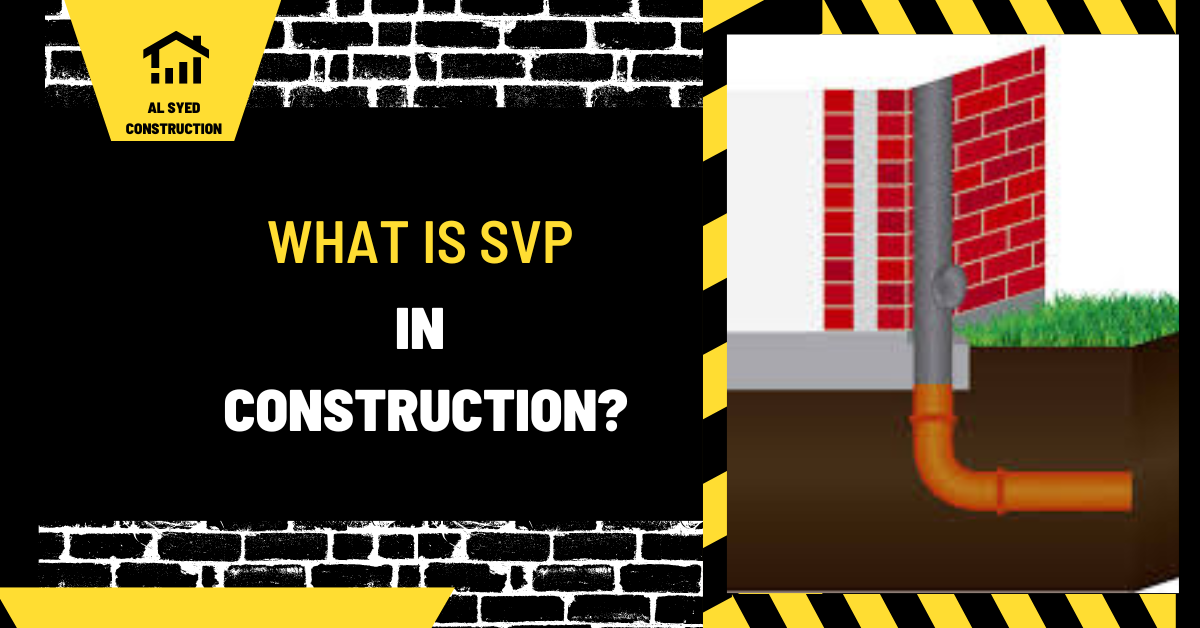
Soil Vent Pipe in Construction
Soil Vent Pipe in Construction
soil vent pipe in construction is a practical construction topic because its performance depends on planning, installation, inspection, and maintenance. This guide explains the term in project context, the decisions that shape a reliable result, and the records that help teams coordinate. Use current drawings, product data, and approvals for exact requirements; a general article cannot replace site-specific design or inspection.
Begin by identifying where soil vent pipe in construction appears: a drawing note, specification, schedule, existing condition, or field instruction. Confirm the discipline, service, location, and intended outcome. Similar names can describe different systems, while one assembly may combine several components. Clarifying scope early helps owners, designers, estimators, installers, inspectors, and maintenance staff discuss the same work.
Quick answer
Pipe selection is a system decision. Service, fluid, temperature, pressure, dimensions, joining method, supports, movement, exposure, water quality, access, and service life affect compatibility. Material names and nominal sizes do not establish a safe operating limit.
What soil vent pipe in construction means in construction
In a project setting, soil vent pipe in construction should be defined by its function and interfaces rather than its label alone. Identify what it receives, supports, controls, connects, or protects; where it begins and ends; and which assembly it serves. Check whether the term is a generic description, specified product, measurement, installation stage, or regional trade expression. That distinction affects procurement, detailing, inspection, and maintenance.
Identify whether a line serves potable water, drainage, fire protection, process work, or another service. Trace upstream and downstream connections, equipment, supports, penetrations, fire and water-control layers, and maintenance access before changing a route.
Purpose, applications, and system boundaries
The purpose of soil vent pipe in construction changes with the building, site, service, and users. Renovation, commercial construction, utility work, and civil projects may use related components under different conditions. Define normal and unusual operation, exposure, access, and consequences of failure. Mark the system boundary: upstream connection, downstream destination, adjacent structure, interfaces, and the party responsible for each connection.
A soil vent pipe is part of a drainage and vent arrangement that helps maintain intended air paths and fixture trap performance. Confirm its route, termination, connection, and separation using approved plumbing drawings and applicable project requirements.
Do not reuse a familiar detail without confirming that it matches the project. Existing buildings may contain undocumented alterations, unidentified materials, or hidden services. New work can have different performance requirements, rated assemblies, structural restraints, or inspection points. Survey actual conditions where needed and record any mismatch for review before removing, drilling, covering, or connecting components.
Key components and information to verify
A useful review of soil vent pipe in construction separates the visible component from what makes it function. Check the support, substrate, interfaces, connectors, protective layers, access, controls, and receiving system. Confirm product identity and approved designation, not only appearance. Where manufacturers or trades meet, verify that transitions are compatible and required documentation follows each product to its installed location.
Verify product designation, size basis, rating, joint system, support, exposure, and documentation against approved schedules. Check transitions between materials, valves, seals, and equipment. Regional abbreviations can differ, so confirm them in project documents.
Planning and selection before work begins
Collect project inputs before estimating or ordering. Missing information tends to become a field assumption, and assumptions are difficult to correct after materials arrive or work is concealed. Use the checklist as a starting point; contract documents and responsible design professionals determine which items apply.
- Identify the service, function, users, system limits, and design conditions.
- Confirm current drawings, revision, product designation, and approval status.
- Check dimensions, support, interfaces, clearance, and access before procurement.
- Review material compatibility, exposure, water or fire control, and maintenance.
- Assign installation, inspection, testing, acceptance, and record responsibilities.
- Plan protection, sequencing, safe access, and concealed-work documentation.
Verify product designation, size basis, rating, joint system, support, exposure, and documentation against approved schedules. Check transitions between materials, valves, seals, and equipment. Regional abbreviations can differ, so confirm them in project documents.
Introduction to SVP
In project discussions about soil vent pipe in construction, teams often need to clarify introduction to svp. Tie the answer to the exact location, approved product, current drawing, and acceptance criterion. Avoid applying a generic dimension or detail where this job uses another system. If the wording remains broad, record the interpretation and the evidence used to accept the installed work.
Compare alternatives on a like-for-like basis. State what is included and excluded, which interfaces are supplied, and how completion will be accepted. Consider durability, service access, cleaning or inspection effort, replacement parts, and failure consequences as well as initial price. Submit substitutions for review if they change geometry, load, water path, rating, or operating behavior.
Typical construction or installation sequence
The sequence should follow approved drawings, product instructions, safety planning, and required permit or inspection hold points. This overview supports coordination; it does not authorize work beyond the qualifications or scope of the people performing it.
- Review current drawings, specifications, submittals, scope, and equipment connections.
- Verify set-out, prerequisites, access, clearances, supports, and adjacent services.
- Inspect deliveries, protect materials, and confirm compatible components.
- Install in the approved order while preserving interfaces and service access.
- Inspect, test or commission as specified, then record and hand over the work.
Coordinate routes and penetrations before cutting or joining. Keep open ends clean, join components only by the approved product method, support without forcing alignment, preserve intended fall or level, and protect completed work. Follow product instructions for handling and curing.
Control the sequence around access and inspection. Keep the work area clean, protect open connections, and prevent other trades from loading, covering, or altering completed items. Record the condition before concealment, identify the person responsible for sign-off, and release the next activity only when required checks are complete. If a dimension, connection, or product differs from approved documents, obtain direction before making a permanent adjustment.
Inspection, testing, and quality records
Verify identity, size, rating, joint preparation, supports, alignment, restraint, access, and protection. Project and manufacturer instructions govern test medium, sequence, limits, and duration. Document test boundaries; pressure testing does not replace flushing, disinfection, balancing, or commissioning.
Before releasing the next trade, make sure the record identifies location and document revision. Photograph concealed interfaces with a reference point where useful and label test results with the equipment or circuit tested. Correct defects by an accepted method and reinspect the repair. A neat appearance is not a substitute for a functional test when the specification requires one.
Common problems and how to investigate them
Mismatched components, contaminated joints, hidden damage, inadequate support, poor transitions, trapped air, and blocked access can cause failure. A leak may involve movement or pressure as well as a joint. Isolate safely and find the source before closing a wall or adding an improvised seal.
- The installed condition for soil vent pipe in construction differs from current drawings or approved product data.
- A connection, support, outlet, access point, or protective layer is missing, damaged, blocked, or difficult to inspect.
- Water, movement, vibration, odor, noise, or performance changes appear after adjacent work.
- A repair treats a visible symptom without checking its source and effect on nearby assemblies.
- Records are incomplete, so future work cannot identify material, route, test status, or reviewer.
Investigate from known conditions toward the symptom. Review the last accepted inspection, recent changes, operating pattern, and nearby interfaces. Isolate a service only when safe and authorized. Protect occupants and adjacent work; obtain qualified help if the cause involves concealed damage, structural movement, water quality, a regulated system, or work outside the approved scope.
Maintenance, service life, and handover
Keep product, route, joint, test, isolation, and approved-change records together. Inspect accessible supports, corrosion protection, insulation, valves, and signs of moisture or vibration. Replace with documented compatible parts and update as-builts.
At handover, provide approved as-builts, product data, test and commissioning records, access locations, isolation points, warranties, cleaning guidance, and known limitations. Identify seasonal or post-event checks. Organize digital records by asset or location so future repairs do not require opening finishes simply to discover what was installed.
Coordination with other trades
Coordinate structure, finishes, waterproofing, fire stopping, equipment, and access. Agree who provides sleeves, hangers, insulation, labels, testing, and final connections. Resolve clashes before installation and keep required inspection points accessible.
Use a coordination drawing or marked-up plan when routes, openings, supports, clearances, or finish build-ups overlap. Assign sleeves, fire stopping, waterproofing, backing, access panels, labels, protection, and restoration. Sequence work so installers can reach joints and inspectors can see them before concealment. Obtain direction instead of making an undocumented field change when a clash cannot be resolved within the approved detail.
Cost, procurement, and lifecycle considerations
Compare fittings, supports, tools, inspection, testing, insulation, access, shutdown, replacement, and disposal as well as purchase price. Alternatives need documented suitability for the actual service and approval before procurement.
A useful estimate states quantity basis, unit, location, access assumptions, labor, temporary work, testing, disposal, restoration, delivery, and applicable taxes. Local prices and availability change; obtain current written quotations for the actual specification. For lifecycle decisions, include operating effort, downtime, and premature replacement. Keep allowances distinct from verified quantities.
Practical checklist for project teams
- Use one written definition and approved revision for soil vent pipe in construction.
- Confirm designer, installer, inspector, and long-term owner responsibilities.
- Resolve interfaces and access before ordering or concealing work.
- Use verified product data and current manufacturer instructions.
- Retain inspection, test, commissioning, and as-built evidence.
- Plan maintenance and keep service points accessible after completion.
Frequently asked questions
Does a pipe label tell the whole story?
No. Verify the product designation, service rating, dimensions, joining system, and operating conditions. A broad material name is only one specification element.
Can different pipe materials be connected?
Only with a designed transition compatible with the service and environment. Use the specified adapter and follow project and manufacturer requirements.
What should be recorded before a pipe is concealed?
Record route, elevation, product, joint type, supports, isolation points, inspections, tests, and approved deviations.
Why is commissioning needed after a pressure test?
A pressure test demonstrates one defined condition. Flushing, disinfection, balancing, and operational checks address other requirements.
When should a pipe repair be escalated?
Escalate if service is unknown, structure or electrical equipment is affected, the product is unidentified, or safe isolation is uncertain.
Related guides and tools
For related construction context or a project calculation, see CI Pipe in Construction in the USA: Comprehensive Guide to Cast Iron Piping, CIP Pipe in Construction: A Comprehensive Guide. These are resources from the same plumbing, drainage, and water-systems topic group; use them alongside approved documents and product instructions.
Conclusion
A reliable approach to soil vent pipe in construction starts with a clear definition, verified design and site inputs, compatible components, coordinated installation, and documented inspection. Keep access and maintenance in view from drawing review through handover. When conditions differ from the approved design or a safety, water-quality, structural, or code question arises, pause the affected decision and obtain qualified project-specific direction.


Leave a Reply
Want to join the discussion?Feel free to contribute!