
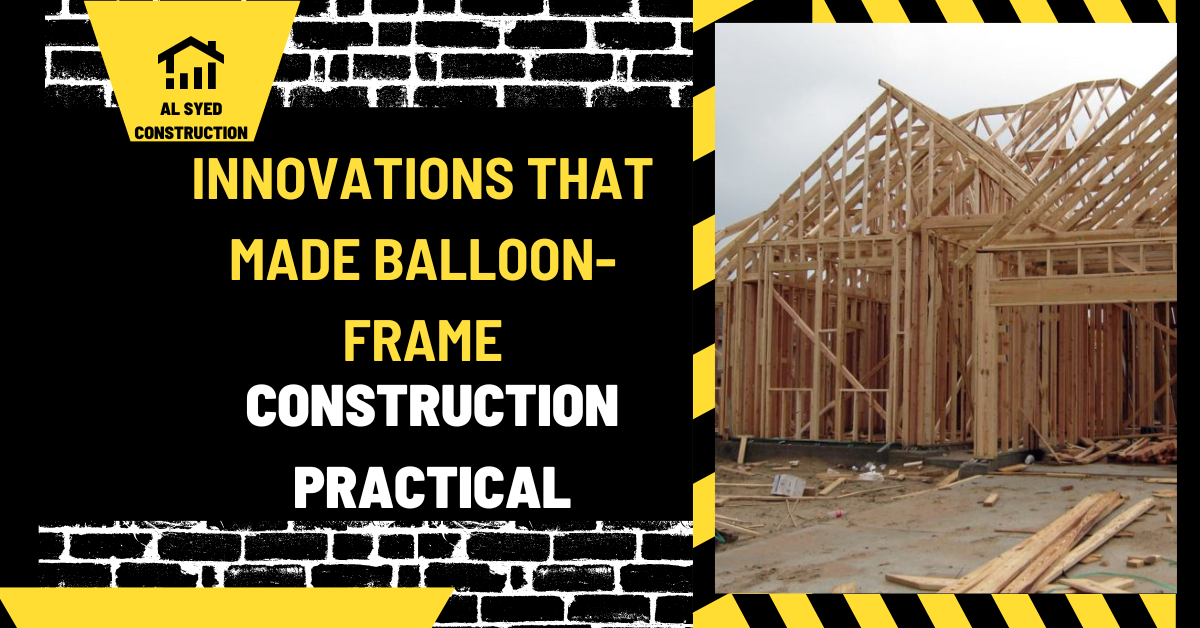
Innovations that Made Balloon-Frame Construction Practical
Quick answer: Construction history is best understood by connecting the building or method to its dates, location, materials, labor, technology, and economic setting.
This guide to innovations made balloon frame construction practical explains the decisions, records, and handoffs that make the subject useful in practice. It is written for owners, contractors, workers, and people exploring construction careers who need a clear explanation and concrete points to verify.
What Innovations Made Balloon Frame Construction Practical means on a project
Construction history is best explained by connecting a building or method to its date, location, materials, labor, technology, and social or economic setting. A single invention rarely explains a major change by itself. Confirm the applicable contract, employer policy, professional standard, and local rules before treating a general explanation as a project-specific instruction. Where a term or figure is ambiguous, record the definition and source being used.
Set the historical scope
The clearest starting point for innovations made balloon frame construction practical is to define exactly what the phrase covers and what it does not cover. Construction history is best explained by connecting a building or method to its date, location, materials, labor, technology, and social or economic setting. A single invention rarely explains a major change by itself. That distinction matters for innovations made balloon frame construction practical because responsibility, evidence, and acceptable results change with the actual scope. For innovations made balloon frame construction practical, write down the assumption being used and connect it to a drawing, estimate, rule, job description, or dated source where possible.
Materials, labor, and technology
On a real project, innovations made balloon frame construction practical sits among related work rather than operating by itself. Building practice develops through available materials, transport, codes, finance, craft knowledge, owner needs, and structural understanding. These factors vary across regions, so broad historical labels need careful boundaries. For example, a residential project, a public contract, and an industrial site may apply different procedures to innovations made balloon frame construction practical. The reader should be able to explain how innovations made balloon frame construction practical changes a project decision, not merely repeat a phrase from a glossary.
How to build a credible timeline
A repeatable process makes innovations made balloon frame construction practical easier to understand, estimate, supervise, or explain. Establish a timeline, distinguish documented facts from later interpretation, compare contemporary records with the surviving structure, and identify which construction techniques were available at the time. The best result is one that a field team can follow and a reviewer can later verify from the project record. Use the project’s current requirements to decide which parts of innovations made balloon frame construction practical apply; general examples do not replace approved direction.
Break the work into visible steps, give each step an owner, and confirm the handoff before the next activity depends on it. Useful evidence includes original drawings, photographs, contracts, permits, engineering reports, material tests, newspapers, and later conservation surveys. Note when a source is a retrospective account rather than a contemporary record. For example, a residential project, a public contract, and an industrial site may apply different procedures to innovations made balloon frame construction practical. Where information is incomplete, identify what is known, what remains open, who can resolve it, and when the answer is needed.
People behind the construction
The practical result of innovations made balloon frame construction practical depends on people knowing who provides information and who can make a decision. Architects, engineers, builders, tradespeople, suppliers, regulators, owners, and communities contribute to the built environment. Historical accounts that focus only on a designer can overlook labor and supply-chain contributions. That distinction matters for innovations made balloon frame construction practical because responsibility, evidence, and acceptable results change with the actual scope. For innovations made balloon frame construction practical, write down the assumption being used and connect it to a drawing, estimate, rule, job description, or dated source where possible.
Evidence and source records
Reliable decisions about innovations made balloon frame construction practical need records that can be traced to the current project and date. Useful evidence includes original drawings, photographs, contracts, permits, engineering reports, material tests, newspapers, and later conservation surveys. Note when a source is a retrospective account rather than a contemporary record. For example, a residential project, a public contract, and an industrial site may apply different procedures to innovations made balloon frame construction practical. The reader should be able to explain how innovations made balloon frame construction practical changes a project decision, not merely repeat a phrase from a glossary.
A useful record identifies the source, revision, responsible person, affected work, and follow-up action; it avoids conclusions that the evidence cannot support. Popular stories can simplify a complex project into one breakthrough or one individual. Dates may refer to design, groundbreaking, topping out, or completion; these are not interchangeable milestones. That distinction matters for innovations made balloon frame construction practical because responsibility, evidence, and acceptable results change with the actual scope. A short written check at the right handoff can prevent a small uncertainty about innovations made balloon frame construction practical from becoming rework.
Why the development mattered
The effect of innovations made balloon frame construction practical should be tested against the project’s cost, schedule, quality, safety, and operational requirements. Claims about speed, height, cost, or innovation need a clear comparison point. Ask what earlier method was replaced, what constraint changed, and whether the claimed result came from design, materials, organization, or several causes together. The best result is one that a field team can follow and a reviewer can later verify from the project record. Use the project’s current requirements to decide which parts of innovations made balloon frame construction practical apply; general examples do not replace approved direction.
Compare alternatives using the same scope and assumptions, and show which trade-off is being accepted instead of hiding it inside a single total. Use a precise chronology, name the location and phase, and qualify disputed interpretations. Separate a building’s original construction from later repairs, additions, and changes in use. For example, a residential project, a public contract, and an industrial site may apply different procedures to innovations made balloon frame construction practical. Where information is incomplete, identify what is known, what remains open, who can resolve it, and when the answer is needed.
Avoiding simplified historical claims
The most avoidable problems with innovations made balloon frame construction practical usually start with an unclear assumption or an incomplete handoff. Popular stories can simplify a complex project into one breakthrough or one individual. Dates may refer to design, groundbreaking, topping out, or completion; these are not interchangeable milestones. That distinction matters for innovations made balloon frame construction practical because responsibility, evidence, and acceptable results change with the actual scope. For innovations made balloon frame construction practical, write down the assumption being used and connect it to a drawing, estimate, rule, job description, or dated source where possible.
Look for missing scope, stale information, unverified figures, and decisions made outside the responsible person’s authority. A study of a historic tower can compare its structural frame, transport network, labor organization, building services, and urban demand. That explains why the form became practical instead of treating height as a standalone achievement. The best result is one that a field team can follow and a reviewer can later verify from the project record. This approach keeps innovations made balloon frame construction practical connected to a verifiable project outcome instead of treating it as an isolated search term.
A practical research checklist
A practical quality check for innovations made balloon frame construction practical asks whether the requirement, responsible person, evidence, and closeout step are all clear. Use a precise chronology, name the location and phase, and qualify disputed interpretations. Separate a building’s original construction from later repairs, additions, and changes in use. For example, a residential project, a public contract, and an industrial site may apply different procedures to innovations made balloon frame construction practical. The reader should be able to explain how innovations made balloon frame construction practical changes a project decision, not merely repeat a phrase from a glossary.
Example: examining a building milestone
Consider a project team dealing with innovations made balloon frame construction practical while a schedule, field condition, or customer requirement changes. A study of a historic tower can compare its structural frame, transport network, labor organization, building services, and urban demand. That explains why the form became practical instead of treating height as a standalone achievement. The best result is one that a field team can follow and a reviewer can later verify from the project record. Use the project’s current requirements to decide which parts of innovations made balloon frame construction practical apply; general examples do not replace approved direction.
Skills for historical analysis
People working with innovations made balloon frame construction practical benefit from technical knowledge and the ability to explain decisions in plain language. Historical analysis rewards source checking, material literacy, chronological reasoning, and clear explanation of uncertainty. Readers should be able to see which statements are documented and which are interpretation. That distinction matters for innovations made balloon frame construction practical because responsibility, evidence, and acceptable results change with the actual scope. For innovations made balloon frame construction practical, write down the assumption being used and connect it to a drawing, estimate, rule, job description, or dated source where possible.
Lessons for modern construction
Long-term value from innovations made balloon frame construction practical comes from applying it consistently and reviewing results after the work is complete. Historic methods remain relevant to preservation, adaptive reuse, resilient design, and material conservation. Their lessons are strongest when translated carefully rather than copied without regard to current codes and performance needs. For example, a residential project, a public contract, and an industrial site may apply different procedures to innovations made balloon frame construction practical. The reader should be able to explain how innovations made balloon frame construction practical changes a project decision, not merely repeat a phrase from a glossary.
Practical checklist
Before acting on innovations made balloon frame construction practical, confirm the exact scope and intended outcome; identify the person authorized to decide; check the latest project document or source; understand the effects on labor, materials, schedule, safety, and payment; and keep a dated record of the decision. If the work is regulated or contract-sensitive, check the current state and local requirements and ask a qualified professional for advice specific to the project.
| Question | Evidence to look for |
|---|---|
| When | Separate design, start, milestone, and completion dates |
| How | Drawings, materials, tools, labor, and construction sequence |
| Why | Economic, social, technical, and regulatory conditions |
| What changed | Later repairs, additions, use, and interpretation |
Frequently asked questions
What does innovations made balloon frame construction practical mean in construction?
It refers to the construction-specific concept described above. The exact meaning depends on the trade, project document, employer, and jurisdiction, so confirm context before relying on a general definition.
Why does innovations made balloon frame construction practical matter on a project?
It can affect scope, coordination, cost, schedule, safety, or career decisions. Clear definitions and responsibilities help the team apply it consistently and keep evidence of what was agreed.
What should I check first about innovations made balloon frame construction practical?
Start with current drawings, specifications, contract terms, job description, training rules, or dated public data—whichever controls the question. Identify the source and ask the responsible professional to resolve gaps.
Does one rule or number for innovations made balloon frame construction practical apply everywhere?
Usually not. State and local requirements, project type, trade, experience, accounting method, and contract language can change the answer. Use current local sources for decisions that affect compliance, pay, or pricing.
Related Articles
- The Empire State Building: A Marvel of Speedy Construction
- What Contributed to the Postwar Construction Boom?
- Timbering Building Construction Blend Tradition Innovation
Conclusion
A useful approach to innovations made balloon frame construction practical combines a clear definition, responsible ownership, current information, and a record that explains the decision. Apply the guidance to the actual project, confirm any jurisdiction-specific requirement, and revisit assumptions when the scope or conditions change.




Leave a Reply
Want to join the discussion?Feel free to contribute!