
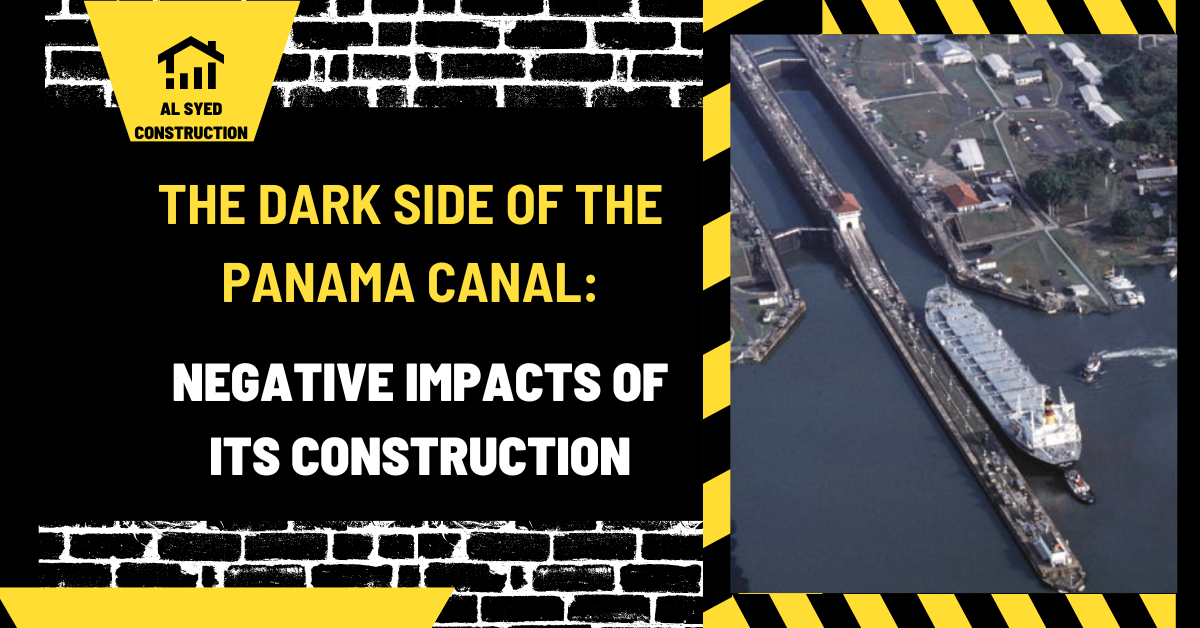
Panama Canal Construction: Human and Environmental Costs
The Panama Canal, an engineering marvel that revolutionized global maritime trade, also brought with it a host of negative consequences. While the canal’s construction was a monumental achievement, it was not without its drawbacks. This article explores the darker aspects of the Panama Canal’s construction, shedding light on the environmental, social, and health-related challenges that ensued.
Environmental Degradation
One of the most significant negative impacts of the Panama Canal’s construction was the environmental damage it caused. The extensive excavation and construction activities led to deforestation, soil erosion, and habitat destruction. The creation of the Gatun Lake, a vital component of the canal, resulted in the flooding of vast areas, disrupting ecosystems and leading to the loss of biodiversity.
Health Issues and Loss of Life
The construction of the Panama Canal was marred by a high human cost. The harsh working conditions, coupled with the tropical climate, led to outbreaks of diseases such as malaria and yellow fever. Despite efforts to control these diseases, thousands of workers, many of whom were Caribbean immigrants, lost their lives due to illness or accidents during the construction process.
Social and Economic Disruptions
The construction of the Panama Canal also had significant social and economic repercussions. The influx of workers and the establishment of construction zones disrupted local communities and led to social tensions. Additionally, the economic benefits of the canal were not evenly distributed, with much of the profits going to foreign investors and companies, leaving local populations with limited gains.
A major project with human and environmental costs
The Panama Canal transformed global shipping, but its construction also brought severe human and environmental consequences. The project crossed difficult terrain and reshaped rivers, forests, wetlands, and settlements. Workers faced disease, dangerous excavation, heavy machinery, landslides, and demanding living conditions. Local communities experienced displacement and changes to access, land use, and economic life. A balanced history must consider the benefits of the canal alongside these costs rather than treating the engineering achievement as the whole story.
Impacts varied across project periods and groups. The French effort in the late nineteenth century struggled with disease, financing, and engineering setbacks. The later U.S.-led construction period used different medical, administrative, and construction systems, yet still relied on a large labor force operating in hazardous conditions. Workers came from multiple countries and were often separated by pay, housing, and job classifications. These differences affected risk and opportunity, and the record cannot be reduced to a single worker experience.
Disease, labor, and safety
Yellow fever and malaria were major hazards in the early construction era, when the transmission of these diseases was not yet controlled through effective public-health measures. Disease contributed to illness and deaths among workers and undermined the French project. Later sanitation campaigns, mosquito control, medical facilities, and public-health administration reduced some risks. These interventions were significant, but they did not make the work safe: excavation, blasting, rail transport, crushing equipment, and unstable ground continued to expose workers to injury.
Labor arrangements also shaped health outcomes. Workers faced heat, humidity, fatigue, workplace hazards, and unequal treatment. Recruitment and working conditions differed among groups, and racialized labor hierarchies influenced wages, housing, and status. Historical accounts should distinguish documented policy from individual experience and avoid treating statistics as a complete description of suffering. Worker stories, burial records, administrative reports, and community memory together offer a fuller view of the human toll.
Displacement and social change
The canal zone and associated works changed where people could live, farm, travel, and conduct business. Land acquisition and project boundaries displaced some residents and restricted access for others. The scale and form of disruption differed by location, but the underlying pattern was that a strategic infrastructure project reorganized territory around its operational needs. Local residents did not all share equally in the gains created by shipping, construction, and later canal activity.
The canal also created migration and new urban communities. Workers brought languages, religions, skills, and family networks from the Caribbean, the United States, and elsewhere. New settlements and service economies emerged, while older patterns of land use changed. Those social effects lasted beyond the construction period. The companion article on [who benefited from canal construction](https://alsyedconstruction.com/who-benefited-most-from-the-construction-of-the-panama-canal/) considers distributions of economic and strategic gains; understanding benefits alongside harms helps avoid a one-sided verdict.
Landscape and ecological change
Building and operating the canal required large-scale excavation and control of water. Dams and reservoirs flooded valleys to create navigable channels and reliable water storage. Forests and farms were submerged or altered, habitats were fragmented, and river systems were reorganized. Excavated material had to be moved and deposited, changing landscapes around work sites. These were not temporary construction scars alone; the canal’s operating system continues to shape water flows and land use.
The watershed is central to canal function because locks depend on freshwater. Deforestation, erosion, sedimentation, and changing rainfall patterns can affect water availability and quality. Construction-era interventions should be distinguished from later operational and development impacts, but the historical project established a system that requires continuous environmental management. Responsible analysis asks how the project altered habitats, who was affected, what mitigation occurred, and how present-day management responds to long-term ecological pressures.
Economic benefits and unequal distribution
The canal shortened shipping routes and became a strategic asset for commerce and naval movement. Those gains accrued to shipping companies, governments, ports, and businesses connected to the new trade routes. Panama also gained employment, infrastructure, and revenue over time, especially as control and benefits shifted. Yet the distribution was uneven: many workers bore immediate risks while much of the strategic value initially accrued to outside powers and commercial interests.
A full accounting compares direct construction costs, worker compensation, public-health costs, displacement, environmental change, and long-term economic gains. It should also distinguish the canal’s construction from its subsequent operation and political history. Large infrastructure can create broad benefits while placing localized burdens on nearby communities. This pattern is relevant beyond Panama: historical structures from monumental dams to ports can be celebrated for engineering while still requiring clear reporting of affected people and ecosystems.
How to evaluate historical claims
When reading a claim about canal deaths, displacement, or environmental damage, check which construction period and group it refers to. French and U.S.-era records use different categories and administrative systems. “Worker” may include skilled laborers, excavation crews, transport crews, medical staff, or people who supported construction indirectly. A claim should identify its source, dates, geography, and definition before being repeated as a precise total.
Look for evidence from the Panama Canal Authority, historical archives, public-health records, labor histories, and environmental studies. Compare official records with scholarship that examines race, class, migration, and local land use. Treat a dramatic number without method or context cautiously. The engineering scale is well documented, but a credible account of consequences requires careful attention to whose experience was recorded, whose was omitted, and how later interpretations have changed.
Questions readers ask
What was one major negative result of canal construction? There was no single effect: disease and workplace danger harmed workers, communities experienced land and access changes, and construction altered ecosystems and waterways. Did later medical measures solve worker risk? They controlled some infectious disease risks, but did not eliminate accidents, exhausting labor, or inequality. Did local people benefit? Panama and its residents received benefits in different periods, yet gains and burdens were distributed unevenly.
Was environmental impact only temporary? No. The canal relies on an engineered watershed and reservoirs, so land and water changes continue to matter. How should the project be remembered? As a major feat of engineering and a project with human and ecological costs. Treating both dimensions together produces a more accurate history and offers lessons for planning modern infrastructure with stronger community consultation, worker protections, and long-term environmental monitoring.
Remembering workers and separating historical periods
The human record of canal construction includes workers who became ill, were injured, or died, as well as families whose lives were reorganized around recruitment and the canal zone. Numbers are difficult to compare when records cover different years, diseases, occupations, or national groups. A credible article states the source and definition behind any total and avoids presenting a single figure as if it captured every loss.
The French effort and the later U.S.-led project differed in leadership, engineering strategy, medical knowledge, and labor administration. Public-health improvements reduced mosquito-borne disease, but they were not the only reason later construction proceeded. Work organization, mechanization, excavation planning, and financing also changed. Keeping the periods distinct helps explain both the failures of the earlier effort and the scale of the later one.
Historical interpretation should include the unequal conditions under which labor was recruited and housed. Separate pay scales and social systems shaped who had access to safer jobs and services. Workers were not merely inputs to an engineering story; their expertise, migration, and risk were central to the canal’s construction. Archival records should be read alongside labor histories and community memory.
Related architectural context
For a related perspective, see Panama Canal construction benefits and how it connects to this topic.
Conclusion
The construction of the Panama Canal was a double-edged sword. While it stands as a testament to human ingenuity and has contributed immensely to global trade, it also serves as a reminder of the environmental, health, and social costs that can accompany such grand endeavors. Understanding these negative impacts is crucial for future infrastructure projects, ensuring that they are carried out with a greater emphasis on sustainability and human welfare.



Leave a Reply
Want to join the discussion?Feel free to contribute!