
Panama Canal Construction: Who Benefited?
Introduction
The Panama Canal, completed in 1914, stands as one of the most significant engineering feats of the 20th century. It not only revolutionized global maritime trade by drastically reducing travel time between the Atlantic and Pacific Oceans but also had profound impacts on various stakeholders. This article will explore which groups of people likely benefited the most from the construction of the Panama Canal.
Major Beneficiaries of the Panama Canal
Shipping Companies and Global Trade
Shipping companies were among the primary beneficiaries of the Panama Canal. By providing a shortcut between the two oceans, the canal significantly reduced fuel costs, voyage time, and risks associated with long sea journeys, thereby increasing profitability and efficiency in global trade.
United States Military and Economic Interests
The United States, which undertook the construction and initially controlled the canal, greatly benefited in terms of military strategy and economic influence. The canal allowed for quicker naval deployment between oceans and solidified the U.S.’s position as a dominant global power.
Panamanian Economy and Infrastructure
Although Panama’s relationship with the canal was complex due to issues of sovereignty, the country eventually benefited from increased revenue, improved infrastructure, and enhanced international stature after gaining control of the canal in 1999.
Lesser-Known Beneficiaries
Agriculture and Commodity Markets
The canal facilitated the faster and more cost-effective transport of agricultural and commodity goods, such as grain from North America and minerals from South America, to global markets, benefiting producers and consumers alike.
Tourism and Cultural Exchange
The Panama Canal also spurred tourism and cultural exchange, as it became a significant attraction and facilitated easier travel and interaction between people from different regions.
Who benefited from the Panama Canal?
The answer depends on what “benefited most” means. The canal created major strategic and commercial advantages for the United States and transformed shipping routes between the Atlantic and Pacific. Global maritime trade also benefited from a shorter route for many voyages. Panama gained a world-important waterway and, over time, economic activity, revenue, and national significance from its operation. Workers and local communities contributed to the project, but the distribution of benefits was unequal and involved serious costs.
During the U.S.-led construction period, the United States gained control over the Canal Zone and used the canal for trade, naval movement, and broader geopolitical influence. The canal shortened some shipping routes, reducing time and distance for vessels that would otherwise travel around South America. Those advantages accrued to shipping firms, U.S. strategic interests, and trading networks. The canal was a state-backed infrastructure project as well as a commercial passage.
Benefits to shipping and commerce
For shipping companies, the canal offered an alternative to long ocean routes. The value of transit depended on vessel size, cargo, destination, tolls, and time saved. Businesses in ports connected to canal routes could gain from faster access to markets. Consumers and producers could benefit indirectly when transport became more efficient, though the effect varied by commodity and route. Not every ship or trade flow gained equally.
The canal also reshaped maritime geography. Ports and logistics networks adapted around the new passage, while canal operations created demand for pilots, maintenance, locks, dredging, administration, and supporting services. These recurring functions continued after construction ended. A careful analysis separates the immediate construction boom from long-term operating benefits and distinguishes private commercial gains from public or national benefits.
| Group | Potential benefit | Important qualification |
|---|---|---|
| United States government | Strategic mobility and geopolitical influence | Early control involved unequal political arrangements |
| Shipping firms and traders | Shorter routes and access between oceans | Savings varied by route, vessel, toll, and cargo |
| Panama | Canal operations, revenue, employment, and global visibility | Benefits changed over time and required national control |
| Construction workers | Wages and employment during the project | Work was dangerous and organized through unequal labor systems |
| Global commerce | Expanded route options for ocean transport | Not every region or trade benefited equally |
Panama’s benefits and the question of sovereignty
Panama’s relationship with the canal changed over time. The project was built during a period when the United States exercised extensive authority in the Canal Zone. That arrangement created economic activity but also constrained Panamanian sovereignty and generated political conflict. Later treaties transferred control of the canal to Panama, and the waterway became a central national asset administered by the Panama Canal Authority. Any claim about Panama’s benefit must distinguish the construction era from the canal’s later operation under Panamanian control.
Canal operations support employment, technical expertise, public revenue, and services connected to shipping. The canal also influences the country’s international standing and infrastructure planning. These gains are not automatic or evenly distributed. Communities near the waterway experience environmental, land-use, and economic effects, and national benefit depends on how revenue and opportunities are governed. The strongest answer is not that one group received every benefit, but that the canal’s ownership and operating framework shaped who could capture its value.
Workers and the human cost
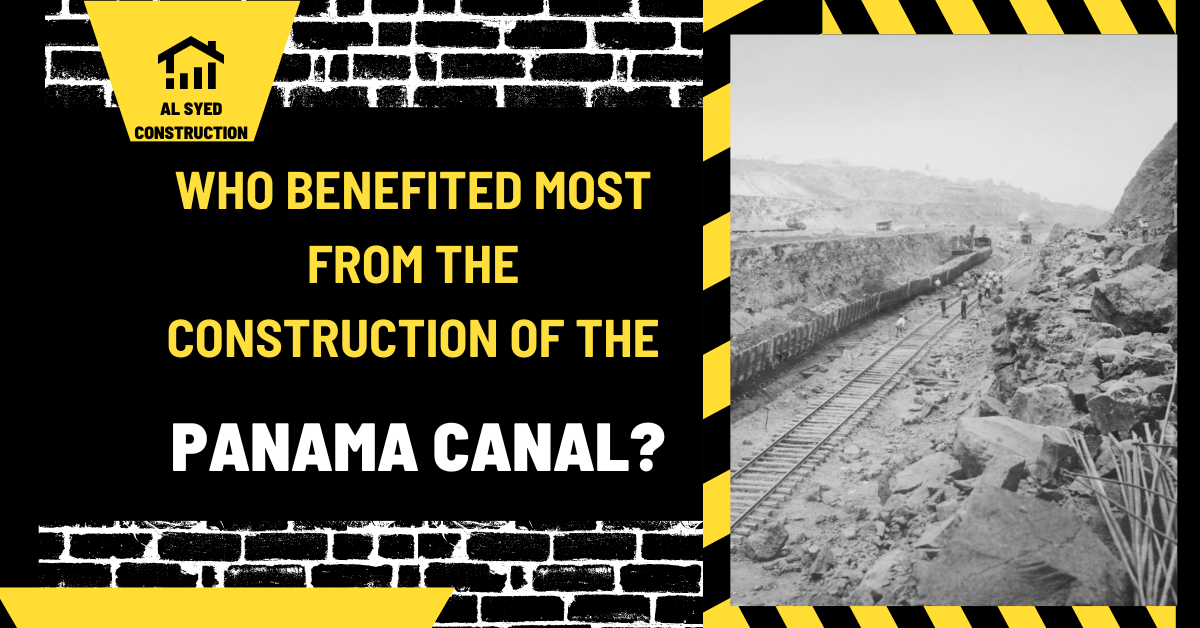
Thousands of workers from different regions helped build the canal. They performed excavation, rail transport, lock construction, concrete work, sanitation, maintenance, and other tasks. The project relied heavily on labor recruited from the Caribbean and elsewhere, alongside U.S. workers. Employment provided wages and, in some cases, opportunities unavailable at home, but it also involved dangerous conditions, disease, unequal pay structures, separation from families, and a rigid workforce hierarchy.
Historical accounts should not reduce workers to a labor statistic or treat the engineering achievement as separate from the people who made it possible. The Panama Canal Authority’s historical materials document the composition and organization of the workforce. Mortality estimates and categories can vary by source and construction period, so use carefully attributed figures rather than a single unsourced number. Recognizing labor contributions gives a fuller answer to who benefited and who bore the risk.
Balancing the gains and costs
The canal delivered significant strategic and economic value, but it also changed land use, communities, ecosystems, and political relationships. Construction required excavation across difficult terrain and altered watersheds through reservoirs and locks. The disease-control work and health systems were crucial to construction, but the human toll remained substantial. Benefits and costs reached different people in different ways and at different times.
For a related account of environmental and social impacts, read the site’s separate article on negative results of canal construction. The history of the canal as a public work also connects to U.S. construction policy in the 1930s, though the two projects belong to different political and economic periods.
Questions readers ask
Who benefited strategically? The United States gained major strategic advantages during the period when it controlled the Canal Zone.
Did Panama benefit? Panama gained from canal operations and national control after the transfer, but the construction-era arrangement limited sovereignty and the benefits evolved over time.
Did workers benefit? Workers received employment and wages, but faced unequal conditions, health risks, and dangerous work.
Did global trade benefit? The canal shortened some routes and expanded shipping options, though benefits depended on the ship, cargo, tolls, and destination.
Who gained from the Panama Canal?
The canal generated benefits at several scales. Shipping companies gained a shorter route between oceans, reducing travel time for many voyages. Ports, insurers, logistics firms, and canal-related businesses gained from predictable passage and support services. Governments gained strategic mobility and influence over a major trade corridor. Panama’s economy also benefited from employment, infrastructure, and revenue, though the size and distribution of those gains changed over time.
The United States initially held extensive control over the Canal Zone and benefited strategically and commercially from the route. Panamanian sovereignty and the distribution of canal revenue changed through later political agreements, culminating in the transfer of control to Panama in 1999. Historical analysis must distinguish construction-era control from later operation and ownership; treating them as one unchanging arrangement obscures important political change.
Workers and local communities received jobs and new economic activity, but they also bore risks and disruptions. Pay and status differed across labor groups, and project boundaries altered access to land and settlements. Benefits should therefore be measured not only by aggregate trade volume but also by who earned wages, who carried health and safety risks, and who had decision-making power.
A fair evaluation compares short-term construction employment with long-term revenue, public services, environmental changes, and the distribution of costs. It asks which groups benefited at each stage and who was excluded. The companion article on the [negative consequences of canal construction](https://alsyedconstruction.com/which-of-these-was-a-negative-result-of-the-construction-of-the-panama-canal/) covers worker, community, and ecological harms; reading both perspectives gives a fuller account.
Additional practical context
The beneficiaries changed with time. Construction contracts and wages created immediate income, while the operating canal later generated fees and supporting business. Strategic access benefited governments differently from ordinary residents, and regional ports experienced gains or competition depending on shipping patterns. Separating construction, early operation, and Panamanian administration makes it easier to explain which group benefited in each period. It also avoids suggesting that a single outcome applied equally to workers, shippers, communities, and the state.
Conclusion
While the construction of the Panama Canal had far-reaching impacts, shipping companies and global trade likely benefited the most, closely followed by the strategic and economic interests of the United States. The canal also brought significant advantages to Panama and contributed to the growth of agriculture, commodity markets, tourism, and cultural exchange. The Panama Canal remains a testament to human ingenuity and a vital artery in the global economy, continuing to benefit various stakeholders more than a century after its completion.




Leave a Reply
Want to join the discussion?Feel free to contribute!