
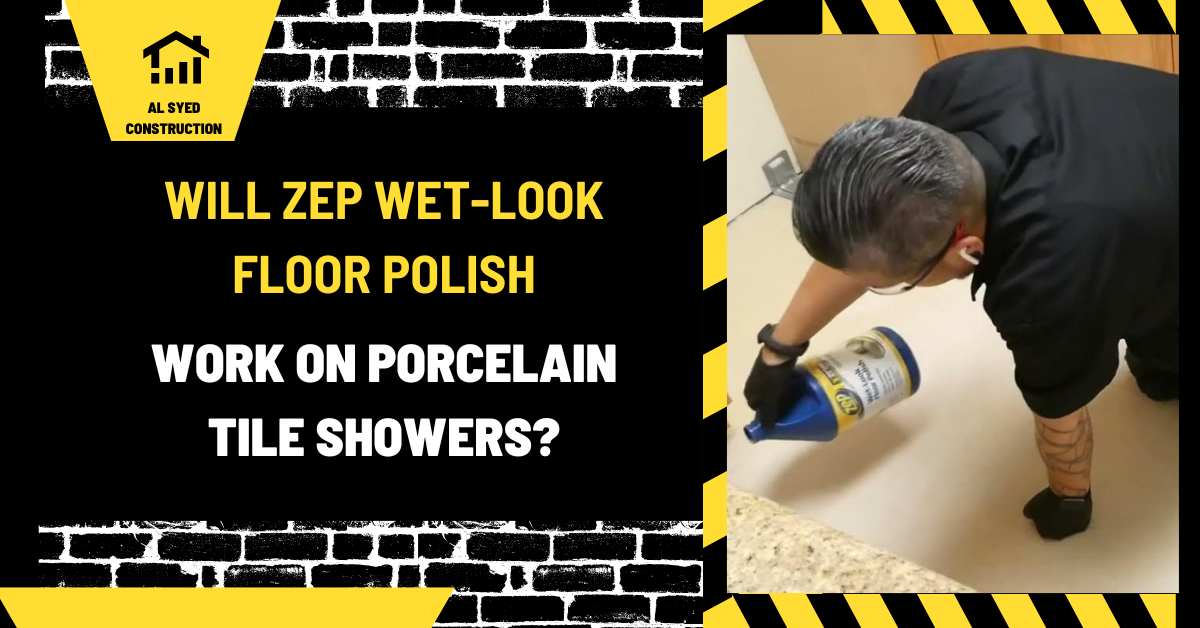
Can Zep Wet-Look Polish Be Used on Porcelain Showers?
What Zep Wet-Look Floor Polish is designed for
Zep Wet-Look Floor Polish is a floor finish marketed for hard interior floors such as vinyl composition tile, sealed concrete, rubber, asphalt, and tile floors. The manufacturer describes a high-gloss coating for high-traffic areas that are routinely maintained. That broad floor description does not automatically mean the product is appropriate for a shower floor that is repeatedly wet, sloped, and walked on barefoot. Check the exact current product label and technical information before applying it to any bathroom surface.
Why a shower floor is a special case
A shower floor is exposed to water, soap, shampoo, cleaning agents, and repeated wet-dry cycles. Its slope and grout joints are designed to direct water to a drain. A topical polish can change the surface finish, alter traction, or collect wear unevenly. A coating that performs on a dry commercial floor may not perform the same way in a shower. The floor also needs to remain easy to clean and safe for users. Do not assume that a product’s general claim of slip resistance under specified conditions proves safety when wet in a residential shower.
Can it be used on porcelain tile?
The product may list tile among suitable hard floor types, but porcelain tile showers are not the same exposure as ordinary interior floors. Unless the current label explicitly allows use on shower floors or continuously wet areas, avoid applying the polish there. If the label is unclear, contact the manufacturer with the exact tile, grout, and shower conditions. Never apply a floor finish over a shower membrane or grout system without confirming compatibility. A test patch can show appearance, but it cannot establish long-term slip performance or waterproofing.
Risks of coating a wet-area surface
A coating can change friction, create a slick feeling when wet, discolor grout, leave buildup, or peel if water reaches the film. It may also complicate future cleaning or repairs. In a shower, a film can wear unevenly at high-use areas and become difficult to remove without damaging tile or grout. Do not use the product to seal the shower or correct leaking grout; it is not a waterproofing membrane. If the shower surface is dull or stained, first determine whether the cause is mineral deposits, soap residue, etching, or a damaged finish.
Safer way to evaluate the product
Read the label for permitted surfaces, exclusions, preparation, number of coats, dry time, and maintenance. Ask the manufacturer specifically whether the product is approved for a shower floor, not only for porcelain tile. Confirm whether the coating requires a dry, sealed substrate and what slip test applies. If approval is unavailable, select a cleaner or sealer specifically intended for the tile material and wet area. The site’s guide to sealing tile floors covers general selection questions, but product-specific shower guidance should control.
Clean the tile before choosing a coating
Many apparent finish problems come from soap film, hard-water deposits, grout haze, or residue. Identify the tile and grout and use a compatible cleaner in a small test area. Avoid acidic cleaners on acid-sensitive stone and do not mix cleaning chemicals. Rinse thoroughly and allow the floor to dry. If the glaze is intact, routine cleaning may restore its appearance without adding a coating. For more frequent care, see the site’s washroom tile cleaning guide.
If the floor is slippery or damaged
If a shower floor feels slippery, stop adding polish and investigate the surface, soap buildup, drain slope, and tile texture. A qualified tile or stone professional can assess whether the surface needs cleaning, repair, or replacement. Do not apply a roughening chemical or abrasive method without checking the tile manufacturer’s guidance. If the tile is loose, grout is missing, or water appears outside the shower, have the waterproofing assembly inspected. Surface coatings cannot repair a failed installation.
Application outside a shower
On a suitable dry interior floor, follow the current product label exactly. The manufacturer’s directions may require stripping old finish, preparing or sealing the floor, applying several thin coats, and maintaining the surface with specified cleaners. Test an inconspicuous area, keep the room ventilated, and prevent traffic until the finish is fully dry. Use the product only on listed surfaces. A shower should be treated as a separate application unless the label specifically approves it.
Frequently asked questions
Does the word “tile” on the label include shower floors? Not necessarily. Check whether the label addresses continuously wet or shower-floor use.
Will the polish waterproof grout? No. It is a surface finish, not a shower waterproofing system.
Can it make a shower floor shine? It may change gloss, but safety, adhesion, buildup, and compatibility matter more than shine.
What should I use instead? A cleaner or treatment approved for the exact porcelain, grout, and wet-area use.
Practical conclusion
Treat the shower floor as a wet-area assembly, not a standard commercial floor. Unless the current Zep label or manufacturer explicitly approves use in shower floors, do not apply Wet-Look Floor Polish there. Start with compatible cleaning and seek tile-specific guidance if the surface needs treatment. Preserve traction and waterproofing, and avoid unapproved coatings that can make future maintenance harder.
Read the exact product label and SDS
Product names can cover several formulas and packaging sizes. Confirm the exact SKU and current label, not just an online description or an older article. Read surface approvals, exclusions, preparation, cure time, ventilation, protective equipment, and stripping instructions. The safety data sheet explains handling and exposure precautions but does not expand permitted uses. If the label says interior floors and does not specify shower floors, treat a shower as outside the approved use until the manufacturer confirms otherwise.
Slip resistance claims need context
A product may be described as slip-resistant under a test method or for a particular floor-maintenance program. That does not establish traction on a soapy, wet, sloped shower floor. A shower surface is exposed to water and personal-care products that change friction. Do not use a gloss coating as a substitute for tile selected for wet use. If slip performance is a concern, consult a tile professional about the existing floor, surface texture, drainage, and approved treatment.
Why commercial floor polish differs from shower sealer
Commercial floor polish is generally designed as a sacrificial coating that can be stripped, burnished, and reapplied on compatible floors. A shower sealer or tile treatment has a different purpose and must be suitable for the specific stone, grout, and water exposure. Do not confuse a floor polish with a penetrating sealer or waterproof membrane. The site’s article on construction material terminology is unrelated; better use the tile-care guide for appropriate context and product labels for selection.
Avoid applying over grout or wet joints
If a coating is applied over damp grout, soap residue, or mineral deposits, it may haze, peel, or trap contamination. A shower must be fully dry and the surface prepared according to the product instructions before any approved treatment. Do not coat movement joints or flexible sealant. If the product requires a maintenance program involving stripping, consider whether that is practical in a residential shower. Coatings can also collect residue in grout texture and make future cleaning more difficult.
If polish has already been applied
Stop using the shower if the floor feels slippery, tacky, or shows uneven film. Check the product label for removal instructions and contact the manufacturer before using a stripper or solvent. Some removal chemicals can damage grout, stone, fixtures, or waterproofing. Do not scrape aggressively or use a high-speed floor machine in a shower. A qualified tile-care professional can identify the coating and remove it with a compatible method. Test any approved product in a small area first.
Safer alternatives for a dull shower
Start by identifying whether the issue is soap film, hard-water scale, grout haze, etching, or surface wear. Use a cleaner made for the exact tile and grout. For porcelain, a compatible neutral or manufacturer-approved cleaner may restore appearance without a coating. If the tile is etched or damaged, consult a tile or stone specialist. Avoid adding polish simply to make the floor look wet; the original surface and slip performance should guide care.
Manufacturer confirmation
When the intended use is uncertain, send the manufacturer the exact product code, tile type, grout, shower use, and cleaning routine. Ask whether the coating is explicitly approved for a shower floor and whether wet slip performance is tested for that application. Keep the response with the maintenance file. If approval is not clear in writing, do not apply the product in the shower. This is safer than relying on broad descriptions of “tile floors.”
How to decide before applying anything
Start with the exact container, product name, current label, and safety data sheet. Similar products can have different directions, and online descriptions may not cover every surface or wet-use location. Confirm whether the label specifically permits the intended porcelain surface and shower-floor use, and whether it calls for a particular cleaning, dilution, applicator, or number of coats. If shower floors are not explicitly listed, contact the manufacturer with the product’s full name and the tile and grout details. A general statement that a polish works on hard floors is not enough to establish suitability for a frequently wet, sloped shower.
Test any approved product in a hidden area and let it cure for the full time stated on the label. Inspect it under dry and damp conditions, because appearance, traction, residue, and water behavior can change after curing. Do not use a small test spot as proof of long-term performance, but treat haze, tackiness, whitening, peeling, or a slick feel as a reason to stop. Keep the shower out of service during application and curing, and ventilate the room according to the safety directions.
What to do if polish is already on the tile
If the surface has already been coated, avoid adding another layer, abrasive powder, acid, or an unapproved stripper. First identify the coating and follow its removal instructions. Some finishes can be softened or damaged by cleaners that are safe for glazed porcelain, while aggressive scraping can scratch the tile or cut grout. Try only a label-approved method in a discreet location. If the film is sticky, cloudy, or difficult to remove, ask the product manufacturer or a tile-care professional to inspect a sample rather than combining chemicals.
After removal, clean and rinse as directed, then let the floor dry fully. Check grout joints, drain edges, and corners for trapped residue. A coating can leave a different sheen between the field and perimeter, so inspect the entire shower in consistent light. Do not resume use until the floor is clean, dry, and the manufacturer’s instructions permit foot traffic and water exposure.
Better care choices for a shower floor
Routine shower care generally focuses on removing soap film, body oils, and mineral deposits with a cleaner approved for the tile and grout. Use a soft brush or non-scratch pad and rinse away cleaner so residue does not accumulate. Improve ventilation and allow the surface to dry between uses. If grout is deteriorating or water is escaping the shower, a surface polish is not a repair; the assembly needs inspection for the actual cause.
For traction concerns, do not assume a gloss coating will help. Ask a tile professional about the tile’s intended use, surface texture, and an appropriate maintenance plan. Any traction treatment must be compatible with the tile, grout, and cleaning routine, and it should be tested because treatments may alter appearance. The safest answer to “will it work?” is conditional: use a floor polish on a shower floor only when the exact manufacturer label expressly approves that application and the cured surface performs acceptably under wet conditions.


Leave a Reply
Want to join the discussion?Feel free to contribute!