
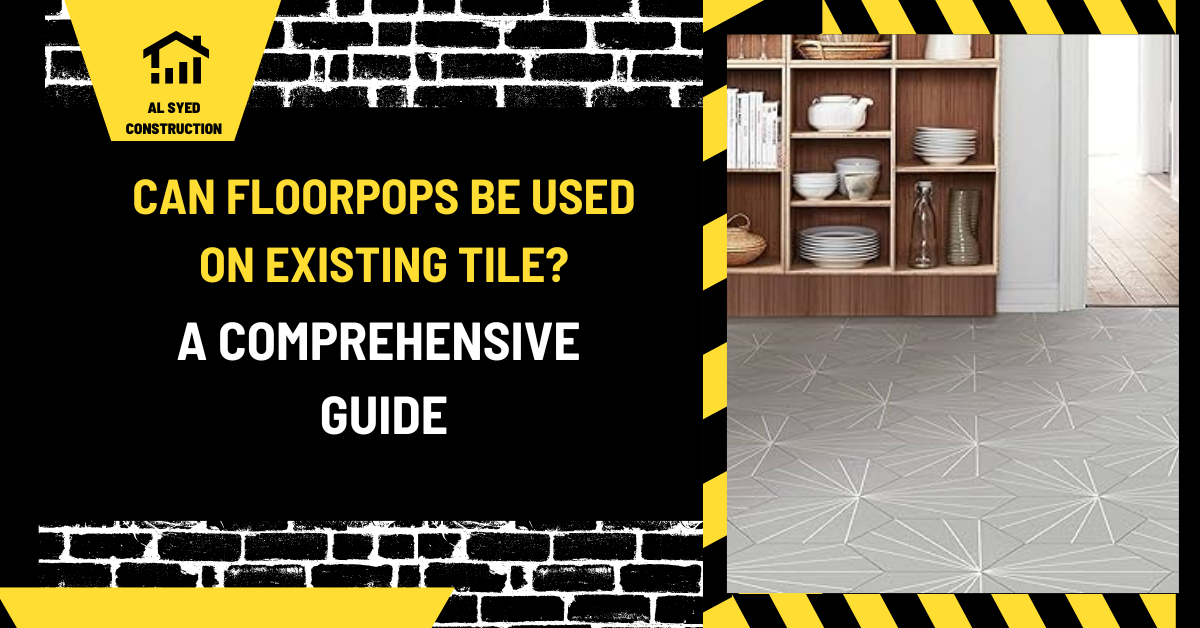
Can FloorPops Go Over Existing Tile?
FloorPops peel-and-stick floor tiles may be installed over some existing ceramic tile, but the surface must first be made suitable and the current product instructions must be followed. WallPops, the manufacturer, says it does not recommend installation over grouted tile as-is. If an installer chooses to cover ceramic or grouted tile, the grout lines should be filled with thin-set tile mortar to create a flat, smooth surface. The existing floor also needs to be firmly bonded, clean, dry, and free of uneven areas. Covering a damaged floor does not repair it.
Start by checking the exact floor and product
Confirm that the floor tiles are ceramic or another substrate explicitly allowed by the current FloorPops directions. Do not assume that all hard floors are acceptable. Loose or uneven flooring is excluded in the manufacturer’s guidance, as are heavily textured surfaces and radiant heated floors. Existing floating laminate and linoleum are also listed as unsuitable. If the flooring type is unknown, identify it before applying an adhesive-backed finish.
Inspect the entire area under good lighting. Look for cracked or hollow tiles, loose grout, lifted edges, height differences, wax, grease, old polish, sealers, cleaning residue, or moisture. Press on questionable areas and listen for movement. Repair or remove failed material using an appropriate method before considering an overlay. If the floor has active water intrusion, resolve the moisture source first; a thin vinyl tile is not a waterproofing repair.
Check the transition height at doorways, stairs, cabinets, appliances, and adjacent rooms. FloorPops are thin, but every added layer changes the elevation and may create a visible edge. Make sure doors can swing freely and that the transition will not create a trip point. Plan the layout around room geometry and fixed features before opening the adhesive backing.
Why grout lines need attention
Grout joints create recesses between the existing tiles. A thin peel-and-stick tile can bridge some shallow changes initially, but the joints may show through or interrupt full adhesive contact over time. The manufacturer’s guidance for installing over ceramic or grouted tile is to fill all grout lines with thin-set tile mortar to form a flat, smooth surface. This preparation should produce a continuous plane, not merely a narrow skim over the center of each joint.
Use a mortar compatible with the tile surface and intended floor covering, and follow its mixing, application, and cure instructions. Glazed ceramic can be difficult for some materials to bond to; follow the selected product’s surface-preparation directions and confirm suitability. Do not apply mortar over loose grout, soap residue, polish, or a wet surface. After it cures, remove ridges and high spots by a safe approved method and vacuum dust. The final surface should be smooth enough that bumps cannot be felt through the thin finish.
Do not replace this step with ordinary wall spackle or a random patching compound. Fillers vary in hardness, bond, shrinkage, and compatibility with vinyl flooring adhesives. Use a floor-grade product appropriate to the surface and the final covering. If the package instructions or local conditions differ, contact the manufacturer before proceeding.
Cleaning and surface preparation
After any repair compound is fully cured, clean the floor so it is free from dirt, grease, wax, dust, and other oils. Use a cleaner that leaves no film and is safe for the existing tile and grout. Rinse if the cleaner requires it and let the surface dry completely. Residue from soap or household cleaner can weaken the adhesive even when the floor appears clean. Avoid applying FloorPops to a damp floor or in a room where the temperature conditions fall outside the product directions.
The manufacturer’s current instructions call for the package to lie flat and acclimate for 48 hours in a room at least 65°F (18°C). The instructions also state that the floor should be clean, smooth, flat, and dry, and identify application temperature limits. Check the current package because instructions can change by product line. Do not install over a radiant-heated floor, on a heavily textured floor, or in an outdoor location such as a porch or garage when the product is not intended for those conditions.
Some FloorPops guidance recommends its peel-and-stick primer, or a similar bond-enhancing primer, for additional adhesive strength. Use primer only as allowed by the current instructions and only after confirming its compatibility with the prepared surface. Do not add an extra adhesive; the manufacturer specifically says not to use additional adhesives. More adhesive is not automatically a stronger or more reliable installation.
Plan the layout before peeling
Measure the room and mark perpendicular centerlines. A chalk line can help establish a straight guide. Dry-lay several tiles with their protective liners in place, starting from the center, to see where the pattern and perimeter cuts land. Adjust the layout so the walls do not end with very narrow slivers and so the pattern looks balanced at the main entrance. Check the pattern direction; some designs should be rotated to achieve the best visual match.
Work in manageable sections and keep the first course aligned with the guide. Peel the backing only when ready to set each tile. Avoid touching the adhesive, because dust, dirt, and skin oils can affect its bond. Press the tile firmly into place and fit adjacent edges closely without forcing a distorted piece. Recheck alignment often; a small error near the center can become more visible at the far wall.
Use a sharp utility knife and straightedge for straight cuts, following safe cutting practices. Make templates for irregular corners and around pipes. Do not trim in a way that damages finished cabinets, plumbing, or the substrate. Keep offcuts and packaging until the installation is complete so that product information and lot details remain available.
Installation sequence and curing
Apply tiles in a consistent sequence, rotating pieces when needed for the pattern. Keep the work area clean as you go. If a tile is placed crooked, correct it immediately according to the product’s removal guidance; adhesive strength can make later repositioning difficult. Do not use an unapproved heat source or solvent to soften the adhesive. Confirm that the substrate preparation compound has cured before covering it, and do not trap moisture beneath the floor.
Protect the new floor from heavy traffic, rolling loads, water, and cleaning until the product’s directions permit use. The manufacturer’s care guidance says to wait five days after installation before cleaning, then use a vinyl floor cleaner and avoid excessive water. Let the installation settle and inspect edges, seams, and transitions before returning furniture. Use protective pads when moving furniture rather than dragging it across the surface.
FloorPops are described as water resistant, not as a complete waterproof flooring system. Avoid using them in locations where standing water, repeated flooding, or wet-area waterproofing is required. A bathroom floor may have different exposure from a shower floor, and product suitability should be checked for the exact room. Do not infer that a water-resistant surface protects the subfloor or the building below.
Common reasons a tile overlay fails
Peeling edges can result from a dirty or damp surface, poor temperature conditions, insufficient rolling or pressing, or incompatible old coatings. Visible grout lines may indicate inadequate filling or a surface that was not smooth. A tile can lift over a loose base because the adhesive bond is only as dependable as the layer below it. If several pieces fail, stop and investigate the substrate rather than replacing tiles one at a time without correcting the cause.
Moisture-related discoloration or odor suggests that water may be trapped or entering from below. Do not cover the area again until the source is identified. If an older floor may contain hazardous material, do not sand, scrape, or break it during preparation until it has been assessed. Ask a qualified flooring professional for help when the substrate is unstable or the product instructions do not cover the condition.
Keep spare tiles from the same product and lot where possible, because patterns and colors can vary. Store them flat, in a dry place, and retain the original installation documents. If a replacement is needed later, verify that it has the same thickness and pattern scale so the patch does not create a raised edge.
Estimating materials and care
Calculate the floor area and add an allowance for perimeter cuts, closets, pattern matching, and any damaged tiles that may need future replacement. The number of packages should be based on the product’s coverage, not merely a count of room dimensions rounded down. Include mortar for the grout-line preparation, primer if permitted, cleaning supplies, and a sharp blade. A floor tile pattern calculator can help plan a visual layout, while the product package remains the source for FloorPops coverage and installation directions.
After the stated wait period, sweep or vacuum regularly and clean with a vinyl-safe product using limited water. Wipe spills promptly, especially near seams. Avoid harsh solvents, abrasive pads, steam cleaning, and excessive water unless the product manufacturer expressly allows them. Put mats at entry points to reduce grit, and lift furniture when repositioning it.
Frequently asked questions
Can FloorPops go directly over grout lines?
The manufacturer does not recommend an unprepared grouted surface. If covering ceramic or grouted tile, fill the grout lines with thin-set mortar to create a flat, smooth base.
Can I use extra glue to make the tiles stick?
No. The manufacturer’s instructions say not to use additional adhesives. Prepare the surface and use only an approved primer if directed.
Are FloorPops suitable for a shower floor?
They are water resistant, but that does not make them a shower waterproofing system. Check the exact product’s intended-use instructions and do not install them where the surface needs a listed wet-area assembly.
How long before I can clean the floor?
Current manufacturer care guidance says to wait five days after installation before cleaning. Confirm the label for your exact product and avoid excessive water.


Leave a Reply
Want to join the discussion?Feel free to contribute!