
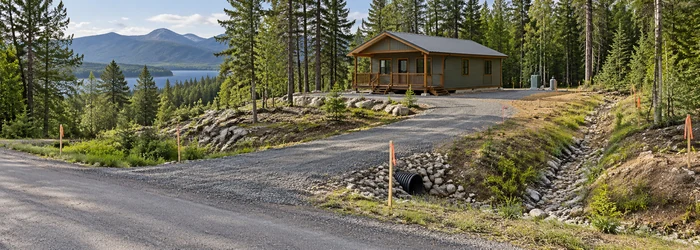
Can You Build a House on Recreational Land?
Overview
Build A House On Recreational Land should be understood through its purpose, project setting, controlling documents, and the work it affects. This guide connects the topic to planning, design or scope decisions, coordination, construction checks, and handover rather than treating a label or estimate as a complete answer.
Use the source article's topic details with current project information. Local approvals, safety requirements, engineering decisions, and financial or legal treatment depend on the facts and responsible authority.
When it comes to purchasing land for recreational purposes, many people wonder if they can build a house on it. The answer to this question is not always straightforward, as it depends on various factors such as zoning regulations, environmental restrictions, and the intended use of the land. In this article, we will explore the considerations involved in building a house on recreational land and provide you with the information you need to make an informed decision.
- Understanding Zoning Regulations
- Environmental Considerations
- Intended Use of the Land
- Conclusion
Understanding Zoning Regulations
Zoning regulations play a crucial role in determining whether you can build a house on recreational land. Zoning laws are established by local governments to regulate land use and development. Different areas are zoned for specific purposes, such as residential, commercial, agricultural, and recreational use. Before purchasing land for recreational purposes, it is essential to check the zoning regulations in the area to determine if residential construction is allowed.
If the land is zoned for recreational use only, you may not be able to build a permanent residence on it. However, some areas allow for temporary structures, such as cabins or tiny homes, for recreational purposes. It is important to consult with local authorities to understand the specific zoning regulations that apply to the land you are interested in.
Environmental Considerations
In addition to zoning regulations, environmental considerations also play a significant role in determining whether you can build a house on recreational land. Some areas may be subject to environmental restrictions due to their ecological significance or susceptibility to natural disasters. Before building on recreational land, it is important to conduct a thorough environmental assessment to identify any potential issues and ensure compliance with local regulations.
Intended Use of the Land
The intended use of the land is another critical factor to consider when deciding whether to build a house on recreational land. If the primary purpose of the land is for recreational activities such as hunting, fishing, or camping, building a permanent residence may not be necessary or feasible. However, if you plan to use the land for extended periods or as a vacation home, building a house may be a viable option.
Conclusion
In conclusion, whether you can build a house on recreational land depends on various factors such as zoning regulations, environmental considerations, and the intended use of the land. Before purchasing land for recreational purposes, it is essential to research and understand the regulations that apply to the area. Consulting with local authorities and conducting a thorough environmental assessment can help you determine if building a house on recreational land is possible. Ultimately, the decision to build a house on recreational land should be based on careful consideration of these factors to ensure compliance with regulations and suitability for your intended use.
Scope and meaning
A cost, tax, financing, depreciation, or legal question about build a house on recreational land cannot be answered from a headline alone. Define transaction, location, date, parties, asset or work, contract, and purpose. Distinguish budget from bid, tax treatment from project cost, and underwriting from estimate. This is planning guidance, not legal, tax, or loan advice.
Planning inputs to confirm
Gather contract, invoices, plans, changes, payment records, asset descriptions, financing terms, permits, and dated quotes. Identify jurisdiction and who interprets it. Separate labor, materials, equipment, land, fees, services, and improvements where records allow. Mixed new work, repair, tenant work, or personal use needs documented boundaries.
Design choices and trade-offs
Build an auditable comparison from consistent assumptions. For an estimate, show quantity, unit, specification, delivery basis, date, and exclusions. For accounting or tax review, preserve source records and explain classification for qualified review. For financing, distinguish equity, draws, fees, interest, reserves, valuation, and conversion terms.
A practical project sequence
Define the question, identify governing documents and jurisdiction, collect dated evidence, separate facts from assumptions, compare equivalent scenarios, seek qualified interpretation, and record conclusion with date and scope. Preserve earlier versions when rules, contracts, designs, prices, or asset status change.
Coordination and responsibilities
Coordinate owner, contractor, lender, accountant, adviser, designer, and authority responsibilities. Assign who collects evidence and who makes each determination. Link amounts to invoices, quantities, drawings, payments, or assumptions. Keep allowances, contingency, claims, taxes, fees, and approved changes separate.
Cost and schedule considerations
Compare budgets on the same area, scope, design stage, region, schedule, finish, utilities, and site conditions. Include design, testing, approvals, external work, temporary work, finance, and closeout where relevant. A calculator can organize inputs but cannot inspect a parcel or confirm a current local quote.
Quality checks
Check that amount, date, unit, parties, project, classification, and approval agree across estimates, invoices, contracts, draw applications, and closeout. Reconcile totals. Retain the applicable interpretation. If evidence is incomplete, label the result provisional and state the next action.
Risk and long-term use
Retain the final determination with supporting records, method, source date, approvals, and revisions. Reconcile commitments, payments, changes, allowances, and remaining work. General information frames the issue; current official requirements and project facts control the final decision.
Topic-specific questions
The source outline surfaces points to verify against current project information:
- Understanding Zoning Regulations. Check the exact location, source revision, reviewer, and whether the point is a definition, design intent, measurement, requirement, or example. Record the answer before procurement or installation if it changes scope, sequence, or acceptance.
- Environmental Considerations. Check the exact location, source revision, reviewer, and whether the point is a definition, design intent, measurement, requirement, or example. Record the answer before procurement or installation if it changes scope, sequence, or acceptance.
- Intended Use of the Land. Check the exact location, source revision, reviewer, and whether the point is a definition, design intent, measurement, requirement, or example. Record the answer before procurement or installation if it changes scope, sequence, or acceptance.
Project checklist
Before committing to a decision about build a house on recreational land, work through these checks:
- Record location, purpose, project phase, date, and controlling revision.
- Separate verified conditions from assumptions, open questions, allowances, and exclusions.
- Confirm scope, measurement, product or system, interfaces, access, and responsibility.
- Agree who reviews the work, which evidence is required, and when inspection must occur.
- Document approved changes with location, cost or schedule effect, owner, date, and closure.
- Keep tests, photographs, record information, warranties, and maintenance instructions for handover.
Common mistakes to avoid
Do not rely on a broad label, old drawing, generic figure, or verbal field decision when the actual scope can be checked. Confirm the basis, location, version, and reviewer before work is committed. When evidence is incomplete, mark the conclusion provisional and name the next action instead of presenting an assumption as fact.
Frequently asked questions
Can one universal number answer this?
No. Location, date, contract, scope, parties, asset, and calculation purpose matter.
What records should be collected?
Contracts, invoices, plans, quantities, changes, payments, financing terms, permits, and dated quotes.
Can a calculator replace a quote or adviser?
No. It organizes assumptions but cannot inspect or decide current legal, tax, accounting, or lending treatment.
How should estimates be compared?
Use the same scope, units, specification, location, date, schedule, inclusions, and exclusions.
When is professional advice needed?
When a result affects a filing, payment right, contract, loan, tax position, permit, or substantial investment.
Related Building Design resources
Continue with How to Build a House on CRP Land, Building a House on Agricultural Land, Building a House on Conservation Land in Georgia. Apply each resource only to its scope and verify project decisions against approved records.
Conclusion
A reliable result for build a house on recreational land comes from clear scope, current evidence, coordinated decisions, and documented checks. Obtain qualified review where safety or compliance is involved, and keep the approved record available for construction and future maintenance.
Additional practical considerations
Keep a dated assumption register beside each calculation: source, unit, location, inclusions, exclusions, reviewer, and uncertainty. Refresh results when contract, design, rule, price, financing, or asset status changes.
Convert build a house on recreational land into a decision that can be reviewed. State the question, location, project phase, controlling document, required outcome, and person who can approve it. Separate what is known from what still needs measurement, testing, or interpretation. For a financial or regulatory question, preserve jurisdiction, date, parties, transaction scope, source, and qualified review. This makes the next action clear and keeps a broad topic from becoming an unrecorded field assumption.
Build an evidence trail for build a house on recreational land from the current source material. Keep drawing and specification revisions, dated site information, product data, quantities, approvals, meeting decisions, and photographs tied to a location. If two records disagree, retain both references and obtain a written resolution. A clean record lets another reviewer understand why a choice was made without relying on memory or a generic example.
Review interfaces before work is released. Check what touches the topic: structure, enclosure, utilities, access, adjacent trades, temporary conditions, inspection points, and maintenance space. Name who provides each connection and who verifies it. For a financial or regulatory question, preserve jurisdiction, date, parties, transaction scope, source, and qualified review. Resolve the detail in the documents before procurement or concealment; an instruction to coordinate later does not explain scope or acceptance.
Compare options using the same basis. State dimensions, performance, material, finish, delivery, access, schedule, exclusions, and required testing. Explain the trade-off rather than presenting one option as universally best. Record any effect on cost, durability, operation, or future repair. Where a value depends on site or jurisdiction, identify the facts that must be checked instead of implying a fixed result.
At handover, preserve the final approved decision for build a house on recreational land. Include the installed configuration, approved changes, product or source information, inspection and test evidence, open items, maintenance steps, and responsible contact. Mark superseded documents and keep the final revision accessible. This closes the gap between planning and use, and gives future owners a reliable basis for repair or alteration.



Leave a Reply
Want to join the discussion?Feel free to contribute!