
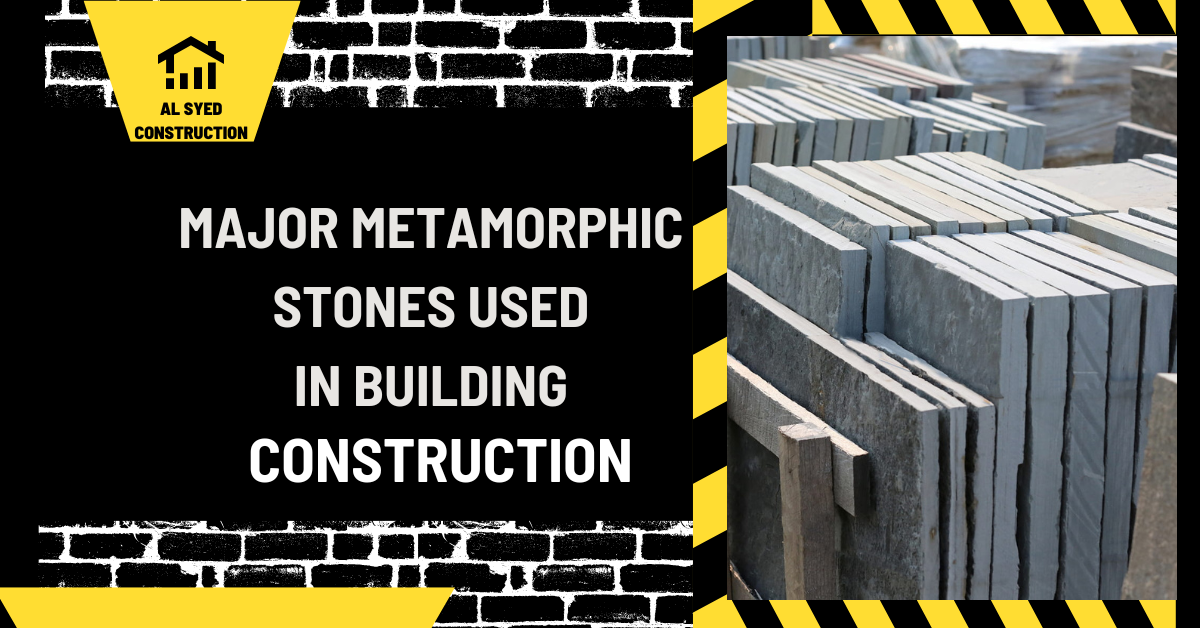
Metamorphic Stones Used in Building Construction
Metamorphic stones used in building construction include marble, slate, quartzite, gneiss, and soapstone. These rocks form when existing rock changes under heat, pressure, or chemically active fluids without fully melting. The resulting stone may have new minerals, bands, foliation, or a distinctive texture. Each type behaves differently in fabrication, weather exposure, flooring, cladding, countertops, and maintenance.
A stone’s name does not guarantee its suitability for a specific building use. Quarry source, mineral composition, fissures, absorption, strength, finish, thickness, support, and climate all matter. Review the product data, samples, and installation details before specifying. Natural stone should be selected as part of a complete assembly rather than by appearance alone.
How metamorphic stone forms
Metamorphism changes an existing rock through heat, pressure, and fluids. Limestone can recrystallize into marble. Shale or mudstone can transform into slate or other foliated rocks. Sandstone made primarily of quartz grains can recrystallize into quartzite. The degree and direction of pressure affect mineral alignment, grain size, and visible banding.
These geological changes produce a broad range of building products. Some stones split into thin sheets, while others are hard and dense. Some have directional planes that influence how they should be cut or installed. Fabricators and designers need to understand the stone’s structure, not just its trade name.
Quarry names and commercial labels may not always match strict geological classifications. Ask the supplier for the stone’s technical information, finish, and recommended uses. For a large project, approve a representative sample panel from the actual material lot.
Marble
Marble forms when limestone or dolostone recrystallizes under heat and pressure. It often has a crystalline texture and visible veining. Marble is used for floors, wall panels, stairs, vanity tops, fireplace surrounds, and decorative details. It can be polished, honed, brushed, or given other finishes that change appearance and maintenance needs.
Calcite-rich marble can be etched by acids such as vinegar, citrus juice, and some cleaners. It may scratch or stain depending on mineral composition and finish. Sealer can reduce absorption but does not make the stone impervious. Use a stone-safe cleaner and follow the supplier’s care instructions.
Marble selection should consider the exact location. A stone that works well on an interior wall may be less suitable for a heavily used floor or exterior freeze-thaw exposure. Confirm thickness, support, anchorage, edge profile, and finish. Inspect veining and fissures before fabrication.
Slate
Slate forms from fine-grained sedimentary rock, often shale, under low-grade metamorphism. It develops a planar cleavage that allows it to split into sheets. Slate is used for roofing, flooring, steps, wall cladding, and landscape paving. Colors include gray, green, purple, black, and other regional variations.
Slate’s cleavage is useful but can also create layers that need evaluation. Thickness and surface texture may vary between pieces. For roofing, confirm the product’s grade, thickness, fastening, roof slope, and underlayment system. For flooring and exterior paving, check slip characteristics, absorption, and suitability for climate.
Slate may shed small flakes or require periodic care depending on quarry and finish. Clean with a product approved for the stone and avoid acids or abrasive tools. Review a sample installed under real lighting because natural color variation can be significant.
Quartzite
Quartzite forms when quartz-rich sandstone recrystallizes under heat and pressure. It is often hard and durable, with a granular or crystalline appearance. Quartzite may be used for countertops, flooring, wall cladding, steps, and exterior paving. It can resemble marble in veining, but its mineral makeup and performance differ.
Trade labels can be confusing; some stones marketed as quartzite may contain minerals that affect acid sensitivity or fabrication behavior. Confirm the exact slab with the supplier and fabricator. Test samples when appearance and care are critical. Hard stone can be demanding to cut and may need specialized blades and support.
For exterior use, assess absorption, freeze-thaw performance, finish, and anchorage. For countertops, discuss seam placement, edge profiles, overhang support, and sealing. A stone’s hardness does not eliminate the need for proper installation.
Gneiss
Gneiss is a coarse-grained metamorphic rock with visible mineral bands or layers. It can form from several parent rocks and often contains quartz, feldspar, and mica. Its banded appearance makes it attractive for architectural stone, cladding, paving, and landscape features.
Mineral bands may create directional variation and influence how slabs should be cut or oriented. Review full-size slabs or a mockup before fabrication. Inspect for fissures and weak planes, especially at unsupported edges or around cutouts. The installer should follow the supplier’s recommendations for anchorage and movement joints.
Gneiss varies widely in composition and performance. A product name alone is not a test report. Use the exact stone’s technical data for the intended use and exposure.
Soapstone and other metamorphic options
Soapstone is a metamorphic rock rich in talc and other minerals. It is used for countertops, hearths, sinks, and some laboratory surfaces. Its softness can make it easier to shape, but it can scratch or dent. Some owners apply mineral oil or a compatible treatment to deepen its color; care should follow the supplier’s instructions.
Other metamorphic materials may include serpentinite and schist. Their performance varies considerably by mineral composition, foliation, and quarry. Some may be suitable for decorative cladding or countertops, while others require special support or limited use. Obtain test data and fabrication advice.
Do not assume every stone marketed as “marble,” “quartzite,” or “soapstone” has the same mineral composition. Ask the supplier how the material was classified and what uses it supports.
Choosing stone for a building application
Start with function: floor, wall, countertop, stair, roof, facade, or landscape. Consider abrasion, slip resistance, water absorption, weathering, thermal changes, chemical exposure, cleaning, and expected traffic. A polished surface may be attractive but slippery when wet; a textured finish may improve traction while collecting soil.
For floors, check substrate stiffness, tile or slab thickness, setting material, joint layout, and movement details. For cladding, consider dead load, wind, anchors, drainage, and flashing. For countertops, confirm support, cutouts, seams, and maintenance. Outdoor stone needs frost and moisture suitability for the climate.
Ask for samples, technical data, and recommended installation systems. Approve the acceptable range of color, veining, and texture. Natural variation is part of the material, so the mockup should represent the lot that will be installed.
Fabrication and installation
Stone fabrication uses saws, grinders, polishers, and water or dust controls appropriate to the material. Cutting can create respirable silica dust, especially in quartz-rich stone. Fabricators should use effective engineering controls and follow workplace safety requirements. Homeowners should not dry-grind stone during a casual repair.
Installation requires a stable substrate and support. Heavy slabs need mechanical handling and sometimes engineered anchors. Mortar, adhesive, and sealant must be compatible with the stone and backing. Some stones can warp, stain, or react to moisture during installation; follow fabricator and manufacturer guidance.
Inspect edges, corners, seams, and transitions before final acceptance. Keep spare stone or product information when possible. Photograph concealed anchors and waterproofing details for future maintenance.
Care and maintenance
Use a cleaner approved for the stone type and finish. Acidic products can etch calcite-bearing marble; abrasive powders can dull polished surfaces; some sealers can change color or sheen. Test cleaners in an inconspicuous area and follow dilution instructions. Wipe spills promptly and use mats where grit may be tracked.
Sealing frequency depends on the stone and product; there is no universal schedule. A sealer reduces absorption for some materials but does not prevent scratching, etching, or all stains. Ask the supplier whether sealing is recommended and what product is compatible.
Inspect exterior stone for loose anchors, cracked joints, efflorescence, and water entry. Correct flashing or drainage problems before replacing surface material. A recurring stain may indicate moisture behind the stone.
Frequently asked questions
Which metamorphic stone is strongest?
Strength varies by quarry, mineral composition, fissures, and test results. Select for the application rather than relying on a general ranking.
Is marble suitable for a bathroom floor?
It can be, when the stone finish, traction, substrate, and maintenance are appropriate. Avoid acid cleaners and confirm wet-area performance.
Is quartzite the same as engineered quartz?
No. Quartzite is a natural metamorphic rock. Engineered quartz is a manufactured surface made with mineral particles and binders.
Does slate need sealing?
It depends on the slate, finish, and use. Follow the quarry or supplier’s care guidance and test any sealer first.
Testing and specifying natural stone
Technical testing helps determine whether a stone is suitable for a particular use. Depending on the project, the design team may review absorption, flexural strength, compressive strength, abrasion, freeze-thaw durability, slip behavior, and anchorage. The relevant properties differ between a countertop, floor, roof, and exterior wall. Request data for the actual quarry product and finish rather than a generic stone family.
Specify stone by trade name, quarry or source when known, thickness, finish, edge treatment, acceptable variation, and location. For cladding, show anchor type and support. For flooring, define joint width, setting material, and movement details. For roofing slate, follow the system’s attachment and slope requirements. A representative mockup should include joints and adjacent materials.
Natural stone is quarried and transported, and its environmental impacts depend on extraction, processing, shipping, waste, and service life. Ask suppliers about sourcing and reuse options. Durable stone that suits its exposure can provide long service, while a poorly selected stone may need early replacement.
Handling and storage
Stone slabs and crates are heavy and can tip. Use trained handlers, suitable lifting equipment, stable storage racks, and clear exclusion zones. Protect corners and finished faces during transport. Do not stack slabs against an unsupported wall or store tile where moisture can damage packaging.
Before installation, inspect each slab or tile for cracks, fissures, warping, chips, and color differences. Dry-lay the material and approve the sequence. Mark orientation so directional veining or foliation remains consistent. Keep a record of lot and bundle numbers for future maintenance.





Leave a Reply
Want to join the discussion?Feel free to contribute!