
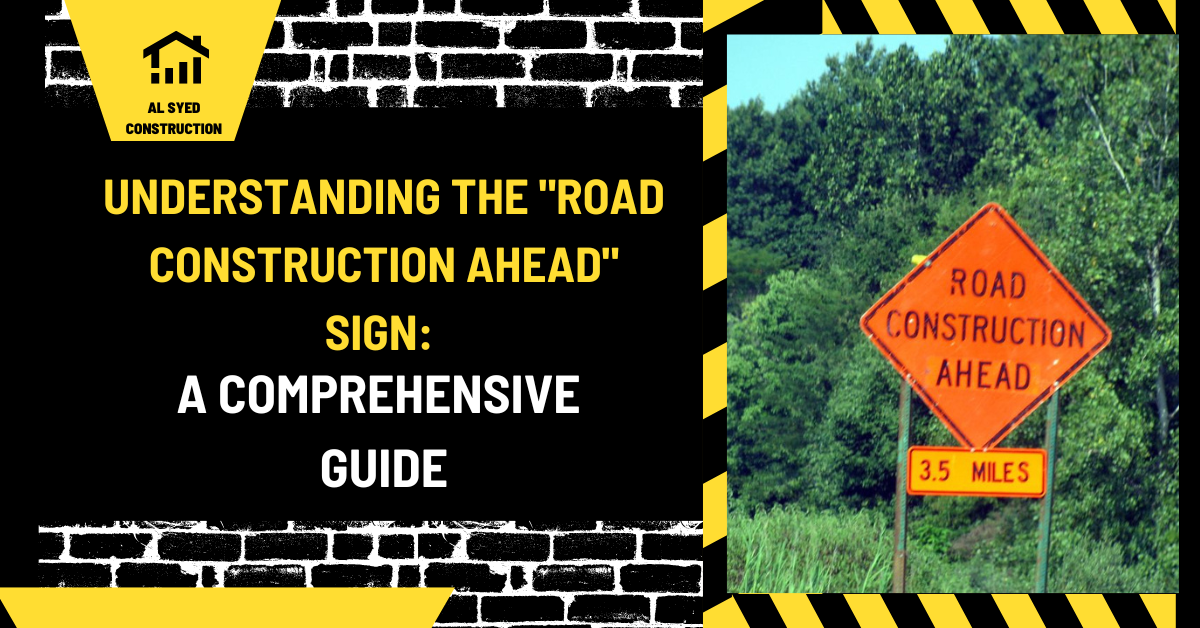
Understanding the “Road Construction Ahead” Sign
This article focuses on "road construction ahead" sign. The practical guidance explains how the topic affects scope, materials, field coordination, quality checks, and maintenance. Decisions depend on the site, intended use, approved documents, adjacent features, and the people responsible for design and construction. Confirm project-specific engineering, contract, and current local requirements with the responsible professional.
1. What Does the “Road Construction Ahead” Sign Indicate?
**1.1 Sign Description and Purpose
The “Road Construction Ahead” sign is a standard traffic control device used to alert drivers of upcoming construction activities on the roadway. It typically features a diamond-shaped yellow background with black text or symbols. The primary purpose of this sign is to provide advance warning to drivers, allowing them to prepare for potential changes in driving conditions, such as lane closures, reduced speed limits, or detours.
**1.2 Common Variations
- Construction Zone Ahead: This variant may include additional details such as the length of the construction zone or specific instructions for drivers.
- Road Work Ahead: Used interchangeably with “Road Construction Ahead,” this sign signifies that roadwork is imminent and may include details about the type of work being performed.
2. Why is the “Road Construction Ahead” Sign Important?
**2.1 Enhancing Driver Safety
The “Road Construction Ahead” sign is essential for enhancing driver safety. By alerting drivers to upcoming construction zones, the sign helps to:
- Prepare Drivers: Allows drivers to adjust their speed and be cautious about potential hazards.
- Prevent Accidents: Reduces the likelihood of accidents by providing advance notice of changes in road conditions.
- Facilitate Smooth Traffic Flow: Helps manage traffic flow through construction zones, minimizing delays and disruptions.
**2.2 Improving Construction Efficiency
In addition to promoting safety, the sign also contributes to the efficiency of road construction projects. By informing drivers in advance, the sign helps:
- Minimize Congestion: Reduces the likelihood of traffic jams by preparing drivers for altered conditions.
- Optimize Construction Scheduling: Allows construction crews to work more effectively by managing traffic flow around their work areas.
3. Key Elements of the “Road Construction Ahead” Sign
**3.1 Design and Visibility
The design of the “Road Construction Ahead” sign is crucial for ensuring visibility and effectiveness. Key elements include:
- Shape and Color: The diamond shape and yellow color are standardized to ensure high visibility and recognition.
- Text and Symbols: Clear, bold text or symbols are used to convey the message quickly and effectively.
- Reflective Materials: Many signs use reflective materials to enhance visibility in low-light conditions.
**3.2 Placement and Location
Proper placement of the “Road Construction Ahead” sign is critical for its effectiveness. Signs are typically placed at strategic locations, including:
- Before the Construction Zone: To give drivers ample warning before they reach the work area.
- At Intersections and Exits: To guide drivers who may need to take alternative routes.
- Along the Construction Zone: To provide continuous reminders as drivers approach and navigate the area.
4. What to Expect When You See the “Road Construction Ahead” Sign
**4.1 Possible Changes in Road Conditions
When approaching a construction zone, drivers can expect various changes in road conditions, including:
- Reduced Speed Limits: Lower speed limits may be imposed to ensure safety in the construction area.
- Lane Closures and Detours: Certain lanes may be closed, and detours may be in place to redirect traffic.
- Increased Traffic: Construction zones may attract additional traffic, leading to congestion.
**4.2 Safety Tips for Drivers
To navigate construction zones safely, drivers should follow these tips:
- Observe Posted Signs: Follow all signs and instructions provided within the construction zone.
- Maintain Safe Following Distances: Keep a safe distance from other vehicles to allow for sudden stops or changes in traffic flow.
- Be Cautious of Workers and Equipment: Stay alert for construction workers and heavy machinery in the area.
5. The Role of the “Road Construction Ahead” Sign in Road Safety Management
**5.1 Regulatory Standards and Guidelines
The placement and usage of the “Road Construction Ahead” sign are governed by regulatory standards and guidelines, including:
- Manual on Uniform Traffic Control Devices (MUTCD): This guide provides standards for traffic control devices, including construction signs.
- Local Traffic Regulations: Local jurisdictions may have additional regulations or guidelines for sign placement and usage.
**5.2 Integration with Traffic Management Systems
The “Road Construction Ahead” sign is often integrated with broader traffic management systems, including:
- Variable Message Signs (VMS): Electronic signs that can display real-time information about road conditions and construction activities.
- Traffic Signal Control: Adjustments to traffic signals may be made to accommodate changes in traffic flow due to construction.
6. The Impact of the “Road Construction Ahead” Sign on Urban and Rural Areas
**6.1 Urban Areas
In urban areas, the “Road Construction Ahead” sign plays a vital role in managing the complexities of high traffic volumes and multiple construction projects. Key considerations include:
- Increased Traffic Management: Enhanced coordination is required to manage congestion and minimize disruptions.
- Community Impact: Effective signage helps reduce the impact of construction on local businesses and residents.
**6.2 Rural Areas
In rural areas, the “Road Construction Ahead” sign helps manage less frequent but potentially more disruptive construction activities. Key considerations include:
- Longer Construction Zones: Rural construction projects may cover larger areas, requiring clear and frequent signage.
- Fewer Alternative Routes: Limited alternative routes necessitate effective signage to guide drivers through detours.
Conclusion
The “Road Construction Ahead” sign is a critical component of road safety and traffic management. By providing advance warning of upcoming construction activities, this sign helps to enhance driver safety, improve construction efficiency, and manage traffic flow effectively. Understanding the significance and implications of this sign is essential for both drivers and construction professionals.
Define the scope and expected result
Begin with the actual question behind “road construction ahead” sign. Identify whether the work is new construction, repair, measurement, status checking, service planning, or maintenance. State the location, limits, intended use, and expected result in plain language. This distinction matters because a general definition cannot approve a site detail, a rough estimate cannot replace a written scope, and a map observation cannot confirm the status of every work zone.
For the work zone, task, equipment path, traffic interface, and public route, mark what is included, what remains in place, and where another owner or trade takes over. Capture the condition before work, note access that must remain available, and identify open decisions. Where a boundary, elevation, term, or responsibility is uncertain, record the question and obtain direction before ordering material or changing the field condition.
Confirm the controlling information
Before selecting a method, review approved traffic plan, shift briefing, visibility, access, hazards, equipment, and responsible supervisor. Check that the plans, quantities, and communications refer to the same revision and location. Record the source and date of information that can change, such as a field measurement, traffic condition, service request, or local requirement. Separate verified facts from assumptions so a later decision can be traced to its basis.
Use a site walk to compare the documents with actual conditions. Photograph interfaces, identify nearby utilities and drainage features, and note constraints on equipment, storage, work hours, and public access. If the information is incomplete, determine whether a survey, test, agency response, or qualified design review is needed. Do not make an unapproved substitution simply because a detail is difficult to build as drawn.
Compare options as complete systems
Evaluate the approved separation, signs, barriers, communication, trained assignments, and stop-work response. Compare function, supporting layers, edges, interfaces, drainage, installation method, inspection, and maintenance together. Product labels and familiar field terms do not establish that two assemblies are equivalent. Check approved submittals and product instructions, then ask the responsible professional to review a proposed alternative that could affect design intent, performance, appearance, or acceptance.
For the work zone, task, equipment path, traffic interface, and public route, weigh the site conditions and owner needs rather than choosing only by appearance or a headline estimate. Consider traffic, weather, water, access, maintenance capacity, and future work. If a product is unavailable or a method changes, document the replacement, its compatibility, and any revised inspection or schedule requirement. This gives the owner a reasoned comparison without assuming that the most expensive option is automatically best.
Plan the work sequence and handoffs
Build the sequence around brief, inspect, establish controls, separate people and equipment, monitor changes, and secure the site. Identify prerequisites, access, equipment, materials, inspection hold points, and the person responsible for each handoff. Schedule work that will be concealed for review before the next operation begins. Tell the next trade what has been completed and what must remain protected. A coordinated sequence reduces rework and makes it easier to identify the source of a defect.
Allow the plan to respond to real conditions without losing control of the change. Weather, deliveries, utilities, ground conditions, public access, and approvals may shift the sequence. When that happens, protect the area, record the impact, obtain authorized direction, update the work record, and notify every affected crew. Do not leave a critical change in a text message or verbal conversation that the following shift cannot find.
Inspect work against observable criteria
Use the relevant documents to check device placement, visibility, stable transitions, equipment condition, exclusion area, and overnight protection. Confirm the measurement point, unit, test method, acceptance limit, and responsible reviewer before work begins. Tie each observation to a location, date, drawing revision, and material lot where applicable. A visual review is useful, but it cannot replace a specified test or approval. List each open item with an owner and a due date.
Inspect interfaces as carefully as the central surface or component. Edges, transitions, drains, covers, joints, access points, and adjacent materials often reveal whether the assembly is working as intended. Photograph defects with enough context to relocate them. If a result will soon be covered, pause and complete the required review first; otherwise, the team may lose the evidence needed to accept or correct the work.
Diagnose issues before choosing a repair
When a problem appears, describe its location, shape, extent, date, weather, traffic, and nearby construction activity. For the work zone, task, equipment path, traffic interface, and public route, investigate symptoms such as moved controls, blind reversing, unclear pedestrian detours, obsolete signs, and unreported near misses. Check whether the issue follows a joint, trench, edge, water path, material change, or work boundary. A symptom can have more than one cause, so avoid treating the visible mark as a complete diagnosis.
Compare the condition with survey data, inspection notes, service logs, and earlier repairs. Determine whether the issue is limited to a surface layer or may involve support, drainage, material compatibility, operation, or an unrecorded change. Use qualified engineering, geotechnical, materials, legal, or safety support where the decision requires it. Record the cause considered and why the repair selected matches that cause.
Coordinate people, access, and safety
Include hazard review, trained roles, communication, protective equipment, access separation, and changing conditions in the work plan. Identify who controls the area, how others are kept out of moving equipment or restricted routes, and how a person reports an unsafe change. Use the approved site, traffic, or employer safety plan and confirm that assigned personnel have the required training. A sign, barrier, or item of protective equipment does not replace the complete plan.
Give affected people clear information about timing, alternate access, restricted areas, and the contact for questions. Check the route from the user’s point of view, not only from the crew’s setup position. Reinspect after a shift change, equipment move, weather event, or new work phase. If the approved controls no longer fit, pause the affected task and get direction before continuing.
Manage cost, timing, and lifecycle effects
The result can depend on work phase, exposure, traffic, weather, public behavior, equipment, and corrective-action history. Record quantities, expected duration, inspection needs, access restrictions, material lead times, and maintenance responsibilities before making a budget or schedule commitment. For cost questions, compare current local proposals against the same written scope; broad online averages are not a reliable price for a particular site. For status or employment questions, confirm changing information with the responsible current source.
Plan for the work after installation or service, not only the initial activity. Identify routine inspections, cleaning, repair, seasonal preparation, and the party responsible for them. A lower initial cost can carry more maintenance or disruption, while a premium option may exceed the actual need. State the assumptions behind any lifecycle comparison and revisit them if use, traffic, climate, or ownership changes.
Prepare a useful handover record
Keep briefings, inspections, training, traffic changes, near misses, corrective actions, and handover notes together with the final work package. Make the record searchable by location and date, and label the revision, responsible person, and open item. Include approved changes and explain any temporary limitation. A folder of unlabelled photographs or duplicate drawings is difficult to use when a future crew needs to find a buried feature, verify a surface, answer a resident, or check an invoice.
At closeout, walk the work with the responsible party, confirm access and maintenance instructions, and assign unresolved items. Record the actual condition rather than copying the original plan as if nothing changed. Future repairs should use these records to understand the assembly and avoid incompatible work. A clear handover is part of the project result, not an administrative task to leave until after the crew has departed.
Frequently asked questions
What should be checked first for "road construction ahead" sign?
Start with the current project documents, exact location, existing conditions, intended use, and responsible decision-maker. Confirm unresolved measurements, access, utilities, drainage, approvals, or service triggers before work or a public update proceeds.
What should happen if the field condition differs from the plan?
Document the location and condition, protect the affected area, notify the authorized professional, and obtain written direction before changing the work.
Related posts in Driveways, Roads & Paving
Continue with End Road Work Sign: Meaning and Use, and Road Construction Sign Holder Pay, and Annual Fatalities in Road Construction for connected guidance within the same category.


Leave a Reply
Want to join the discussion?Feel free to contribute!