
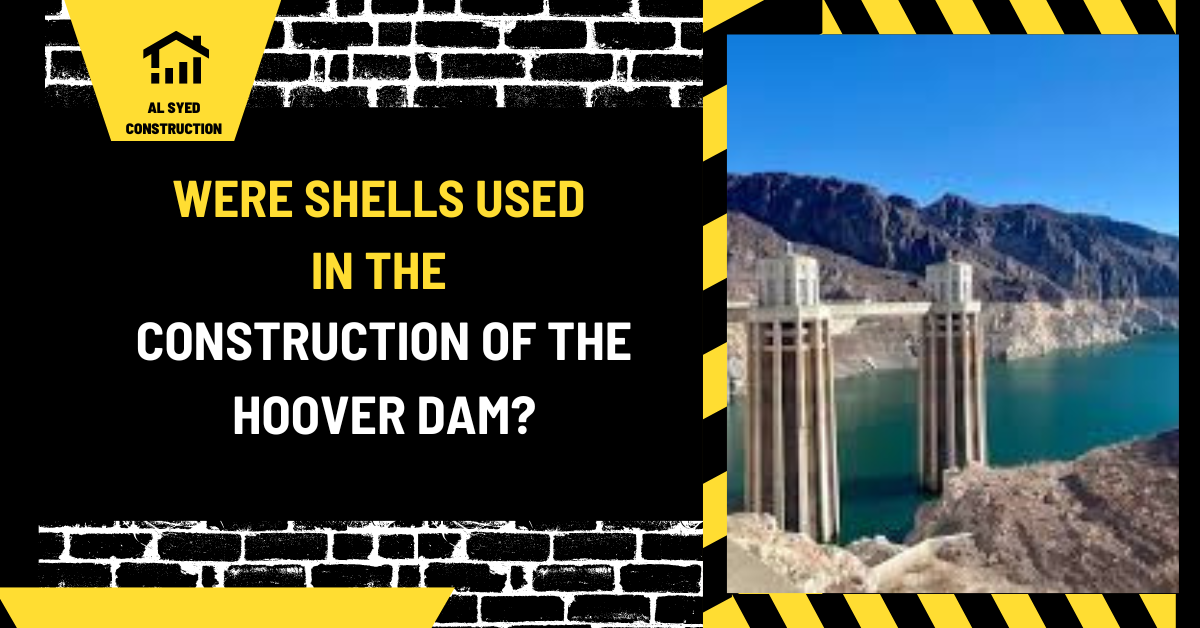
Were Shells Used in Hoover Dam Concrete?
There is no reliable evidence that seashells were used as a construction ingredient in Hoover Dam’s concrete. Reclamation’s historical descriptions identify concrete as the central material and document the dam’s construction process, but they do not report seashells as part of the aggregate or binder. The accurate answer is therefore no documented use of shells, rather than a claim that every grain of material has been chemically identified.
The question may arise because concrete can contain many kinds of aggregate and because shells have been used in some other building materials. That does not mean Hoover Dam included them. The dam’s concrete was an engineered mixture of cementitious material, water, and graded aggregate placed in large blocks and cooled through an extensive construction process. This article explains the distinction between cement and aggregate, why shells are not required, and how to evaluate the claim without repeating a myth.
The direct answer and what the record supports
Available Bureau of Reclamation histories and descriptions of Hoover Dam do not identify seashells as an ingredient. They describe a major concrete construction program, aggregate production, concrete placement in blocks, and cooling measures. If a source claims that shells were used, it should provide a primary historical record, construction specification, or material report supporting that statement. A repeated claim without documentation is not evidence.
It is more precise to say “there is no documented use of seashells in Hoover Dam’s concrete” than to claim absolute proof that no shell fragment could ever have appeared in a natural aggregate source. Aggregate is mined or processed material and may contain trace mineral or fossil material depending on its geology. That possibility is very different from intentionally adding seashells as a specified ingredient.
The project’s official records matter because the dam was built on an enormous scale, with materials prepared and placed under a formal construction program. A claim about a special ingredient should be traceable to that program. The fact that shells can be used in some modern or traditional products does not establish their use in a particular dam.
What concrete is made from
Concrete is made from cementitious binder, water, fine aggregate such as sand, and coarse aggregate such as gravel or crushed stone. Cement reacts with water and binds the aggregate as the mixture hardens. The aggregate provides much of the volume and influences strength, stiffness, shrinkage, workability, and durability. Admixtures or supplementary cementitious materials may be included if the mix design requires them.
Cement and concrete are not interchangeable words. Cement is a powder component; concrete is the combined, proportioned mixture. A question about “shells in the cement” may therefore mean one of several things: shells intentionally used as aggregate, finely ground shell material used in a binder, or trace shell fragments naturally present in a source. Those are different claims and require different evidence.
For a massive concrete dam, material selection considers strength, heat generation, aggregate reactivity, water tightness, and long-term exposure. The guide to cement in dam construction explains why engineers specify a project-specific binder and mix rather than relying on a single ingredient name.
Why aggregate selection matters in a dam
Aggregate must be suitable for the design and compatible with the binder. The engineering team evaluates grading, strength, durability, cleanliness, moisture, and possible chemical reactions. Poorly selected aggregate can affect concrete performance even if the cement itself meets its specification. The source is tested and processed so the final mixture has controlled proportions and characteristics.
Large concrete structures also manage heat from hydration. The interior of a thick block retains heat more than the surface, and uneven cooling can contribute to cracking. The dam’s mixture and placement sequence, block size, curing, and cooling plan work together. A special shell addition would have to be specified, tested, and justified; it is not needed simply because the project is near a river or reservoir.
Shells are mainly calcium carbonate and can vary in shape, porosity, salt content, and strength. They may be crushed for use in some products or studies, but their suitability depends on application and testing. Unprocessed shells can create quality, grading, and durability concerns. A historical claim about Hoover Dam should not be inferred from research on shell aggregate used in another region or type of concrete.
How Hoover Dam concrete was placed
Hoover Dam’s concrete was placed in a series of blocks rather than as one uninterrupted monolith. This construction strategy allowed crews to manage placement, joints, temperature, and the immense geometry. Embedded cooling pipes circulated water to help remove heat from the mass concrete, and later the pipes and joints were treated as part of the completed structure. The scale of this work is one reason the dam’s material records and construction procedures are well documented.
Aggregate and concrete production required crushing, screening, batching, transport, and controlled placement. Workers and engineers had to coordinate material quality with the pace of construction. The project used purpose-built facilities and equipment rather than relying on an improvised mixture. That production history does not support a shell ingredient claim; it underscores why a specified material would have been recorded and tested.
Concrete quality was important to strength and water control. The project needed durable material in a structure exposed to water pressure, temperature variation, and long service. Mix design, block placement, cooling, and joint treatment together determined performance. Aggregate was not a decorative filler: it was a controlled part of the dam’s structural concrete.
Shells in other construction uses do not prove Hoover Dam used them
Shell material has appeared in some construction contexts. Crushed shells may be used in landscaping, road base, some masonry or lime products, and experimental or region-specific concrete mixtures. Oyster-shell aggregate, for example, is sometimes studied where shells are locally abundant. Those uses have their own specifications and environmental considerations.
The presence of shells in another project does not show that they were used at Hoover Dam. Materials vary by location and era. A modern experimental mixture may use processed shell as partial aggregate replacement, while a 1930s mass-concrete dam followed different project specifications. The evidence needed is a dam-specific source, not a general article about shells in concrete.
Similarly, fossils or marine deposits in a natural rock source are not the same as intentionally adding seashells. Geological aggregate can contain mineral traces without being described as shell aggregate. A useful account distinguishes intentional material selection from incidental composition of a raw source.
How to check a claim about historical materials
Start with the original source. Look for Bureau of Reclamation histories, project specifications, material reports, engineering records, or contemporary construction documents. A source should identify the material and where it was used. If an article states only “shells were used” without a citation, method, or record, do not repeat it as fact.
Check whether the claim confuses different dams, different concrete applications, or different meanings of “shell.” A dam may have structural shells or facings, and those terms do not refer to seashells. The word may also appear in a reference to shell limestone, shell aggregate, or a mechanical casing. Context matters.
Use qualified language when documentation is incomplete. “No documented use of seashells has been identified in Reclamation’s descriptions” accurately reflects the available record. It avoids overstating that every aggregate grain has been individually examined while still answering the question clearly.
| Claim wording | What it could mean | Evidence needed |
|---|---|---|
| “Seashells were added to the concrete” | Intentional aggregate or binder ingredient | Project specification or material record |
| “The aggregate contained shell fragments” | Natural particles in the source material | Quarry or aggregate testing records |
| “Shells were found near the dam” | Nearby geology or shoreline debris | Does not establish concrete composition |
| “A shell was used in construction” | Could mean a structural shell element | Clarify the technical meaning of “shell” |
Why the myth may sound plausible
Hoover Dam is so large that readers often wonder whether unusual materials were needed. Its concrete contains a very large volume of aggregate, and the site’s proximity to the Colorado River may lead people to imagine riverbed shells being mixed in. But material choices were controlled by engineering requirements and available sources, not by a simple assumption that local natural material was suitable.
Another source of confusion is the use of “aggregate” as a broad term. Aggregate can come from different geological sources and can include a range of mineral material. That does not make every object or deposit near a waterway a concrete ingredient. Only the approved, tested material placed in the batch belongs in the construction account.
The dam’s cooling system can also be confused with material composition. Cooling pipes helped manage heat in the concrete; they did not involve shell additions. These systems address different engineering problems. Understanding the dam’s actual construction methods makes unsupported ingredient claims less likely to be repeated.
Questions readers ask
Were seashells added to Hoover Dam concrete?
No documented historical source identified here shows intentional seashell use. The careful answer is that Reclamation’s published history does not report shells as an ingredient in the dam’s concrete.
Could shell fragments have been in natural aggregate?
That would depend on the geology of a source, but it is different from intentionally specifying seashells. A project-specific aggregate report would be needed to establish any trace material in a particular batch.
What materials were used in Hoover Dam concrete?
Concrete uses cementitious binder, water, sand, and coarse aggregate, with project-specific proportions and controls. Hoover Dam records describe a large concrete placement and cooling program; claims about a special ingredient need direct documentation.
Are shells ever used in concrete?
Shells may be processed for some construction products or research mixtures, but use depends on testing and local specifications. Their use elsewhere does not show they were used in Hoover Dam.
Why did the dam need cooling pipes?
Mass concrete generates heat as it hardens. Cooling measures helped manage temperature in the large blocks and reduce harmful temperature differences. This is separate from aggregate composition.
The supported conclusion
The responsible conclusion is that Hoover Dam’s documented concrete construction does not include seashells as a specified ingredient. The dam relied on engineered concrete materials, controlled aggregate production, block-by-block placement, and temperature management. If a source claims shells were used, it should identify a dam-specific historical record. Until then, the claim should be treated as unsupported rather than repeated as a fact.




Leave a Reply
Want to join the discussion?Feel free to contribute!