
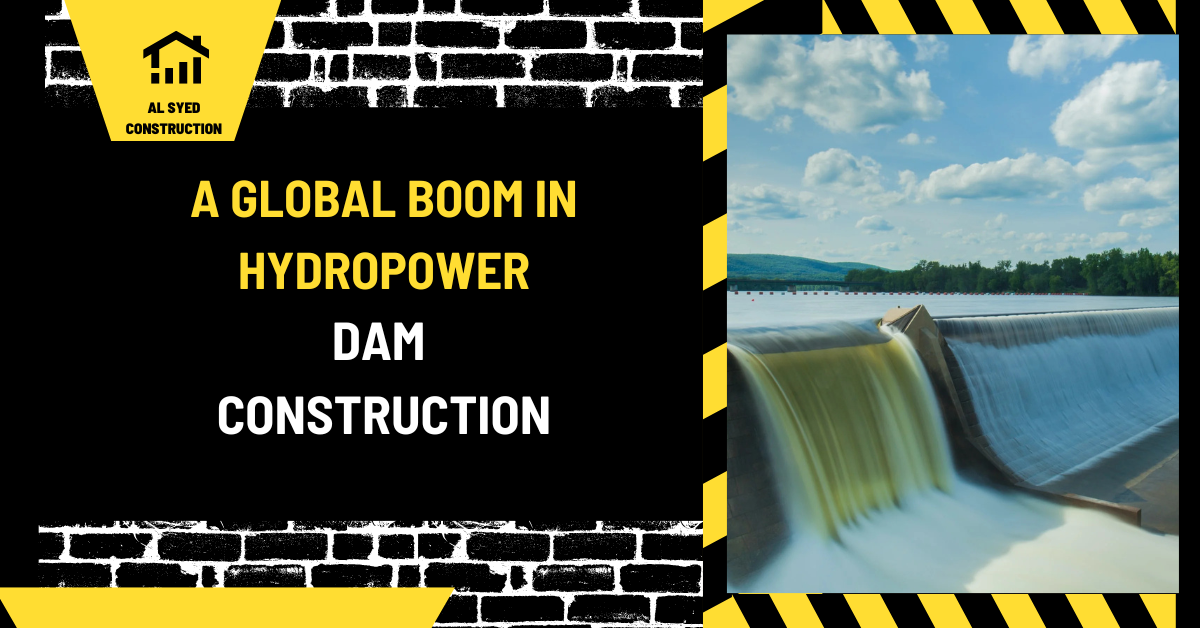
Global Hydropower Growth: Dams & Pumped Storage
Hydropower is expanding in parts of the world, but “a global boom in dam construction” needs careful definition. New capacity can come from conventional river dams, upgrades to existing plants, and pumped-storage projects. Those are different kinds of development. The International Hydropower Association’s 2026 World Hydropower Outlook reports that global hydropower capacity grew by 28 gigawatts in 2025, including a record 11.7 gigawatts of pumped storage.
Those figures describe installed generating capacity added during a year; they do not mean that 28 gigawatts of new river dams were built. The same outlook reports a large global development pipeline, much of it at different stages from early proposal to construction. This article explains the trend, why pumped storage is growing, how regional development differs, and what technical, environmental, and financial questions shape the next projects.
What the latest capacity figures mean
Hydropower capacity is the maximum generating capability of plants, usually measured in megawatts or gigawatts. A capacity addition is not the same as annual electricity generation, which depends on water availability, operating conditions, maintenance, and demand. It is also not the same as the number or height of dams. A small number of large projects can add substantial capacity, while many smaller upgrades may add less.
The 2026 World Hydropower Outlook reports approximately 1,469 gigawatts of installed hydropower capacity globally at the end of 2025, after 28 gigawatts of new capacity was added during the year. It attributes 11.7 gigawatts of the 2025 addition to pumped storage, a record for that category. These are IHA-reported global figures, not a count of dam walls constructed.
The outlook also describes a development pipeline of more than one terawatt across projects at varying stages. A pipeline includes proposed, planned, approved, and sometimes under-construction projects; it should not be read as guaranteed future capacity. Projects can change, be delayed, lose funding, or be canceled. The pipeline is an indicator of interest and potential, not a promise that all listed capacity will be commissioned.
| Indicator reported in the 2026 outlook | Approximate value | How to interpret it |
|---|---|---|
| Global installed hydropower capacity at end of 2025 | 1,469 GW | Existing generating capability |
| Capacity added during 2025 | 28 GW | Annual addition; not a dam count |
| Pumped-storage capacity added in 2025 | 11.7 GW | Record annual addition for this category |
| Development pipeline | 1,127 GW | Projects at different stages, not all committed |
Conventional hydropower and pumped storage are different
Conventional hydropower generates electricity as water flows through turbines, often from a reservoir or run-of-river system. A new conventional project may require a dam, diversion works, powerhouse, transmission connection, roads, and a large operating plan for water releases. Its generation depends on river flow, storage, turbine design, and operating rules.
Pumped-storage hydropower moves water between upper and lower reservoirs. During periods of lower-cost or surplus electricity, pumps move water uphill; during high demand, water flows back downhill through turbines to generate power. Pumped storage functions as a form of grid storage and flexibility, not a primary net source of water energy in the same way as a river inflow plant. Some projects use existing reservoirs; others build new reservoirs, and some are designed as closed-loop systems with limited connection to natural river flows.
Because pumped storage can be located and operated differently, its development does not always mean a new conventional dam across a major river. It still requires geotechnical, water, environmental, and grid analysis. The project must establish reliable reservoir levels, power connections, operating efficiency, and acceptable ecological effects.
Why utilities and governments are investing
Wind and solar generation vary with weather and time of day. Hydropower plants with reservoirs can adjust output more flexibly than many generators, and pumped storage can shift electricity across time. As power systems add more variable renewables, grid operators may value dispatchable generation, reserve capacity, frequency support, and long-duration storage.
Electricity demand is also rising in many regions because of urban growth, industry, electrification, and data centers. Hydropower can support energy security and regional development, but project benefits depend on costs, transmission, water availability, construction timelines, and the energy alternatives available. A dam that produces electricity may also provide water supply, flood management, irrigation, navigation, or recreation, but those objectives can conflict over reservoir levels and releases.
Some governments are investing in new plants; others are upgrading existing facilities. Modernizing turbines, generators, controls, and transmission can improve performance without building a new dam. Rehabilitation may also address safety, sediment, fish passage, and environmental-flow requirements. A capacity report can include such upgrades, so readers should not equate every added gigawatt with new inundated land.
Regional patterns and project differences
The IHA’s 2026 outlook identifies China as the largest hydropower market in 2025, accounting for more than 40 percent of global capacity additions. It also describes a large development pipeline in South and Central Asia, continued conventional hydropower additions in parts of Africa, and growing pumped-storage investment in Europe. These patterns reflect different energy needs, geography, regulation, financing, and grid conditions.
The United States has an extensive existing hydropower fleet, and future activity includes upgrades, relicensing, pumped storage, and selected new projects. New large conventional dams face significant siting, environmental, community, and permitting considerations. A global trend cannot be applied to one country without checking its project pipeline and policy conditions.
Project type and social context vary substantially by region. A high-head mountain project differs from a low-head river plant, an off-stream pumped-storage facility, or a rehabilitation project at an existing dam. Financial terms, local participation, resettlement, indigenous rights, construction capacity, and climate risk influence whether projects proceed.
Engineering demands for new hydropower dams
A hydropower dam integrates an embankment or concrete structure, spillways, intakes, gates, turbines, generators, powerhouses, transmission, and river operations. Geotechnical conditions determine foundation treatment and stability. Hydraulic design evaluates floods, sediment, water levels, and release capacity. Seismic demand and emergency action planning are considered for the site.
Concrete structures need project-specific material and temperature control. Thick mass-concrete placements generate heat; mix design, staged placement, cooling, and monitoring help manage cracking risk. The dam cement guide explains why the binder and construction method are selected for the project rather than by a one-size-fits-all cement type.
Sediment can reduce reservoir capacity and alter downstream channels. Intake and turbine systems need to manage debris, abrasion, cavitation, and changing water levels. Construction sequencing may require river diversion, cofferdams, temporary access, and work through multiple seasons. The final energy output depends on both the structure and the long-term water operating rules.
Environmental and community tradeoffs
New reservoirs can inundate land, fragment habitat, displace communities, affect cultural resources, trap sediment, and change downstream flow and temperature. Fish passage, environmental flows, sediment management, water quality, and reservoir greenhouse-gas emissions require site-specific analysis. Mitigation can reduce some impacts, but it does not automatically eliminate them.
Pumped storage may use upper and lower reservoirs and can be designed to limit interaction with natural rivers, but it still uses land, water, tunnels, power lines, and construction access. Closed-loop designs can reduce some river-flow effects compared with open-loop systems, while introducing other land and water constraints. The project’s actual design determines its environmental profile.
Climate change affects hydropower through changing runoff, drought, floods, evaporation, snowpack, and water temperature. A plant that relies on historical inflows may face lower or more variable output. Conversely, reservoirs can help manage some water variability but must balance energy, supply, flood, and ecological needs. The article on dam impacts to ecosystems explains these pathways in more detail.
Financing, construction time, and project risk
Hydropower projects often require large upfront investment and long development periods. Developers need to fund surveys, design, land acquisition, permits, transmission, construction, and environmental measures before generating revenue. Changes in interest rates, material costs, political support, water forecasts, and construction conditions can affect financial viability.
Schedule risk is high where projects depend on remote access, complex foundations, large tunnels, specialized equipment, or multiple permits. A delayed transmission connection can leave a completed plant unable to deliver power. The project’s benefit analysis should include realistic contingency, operating costs, maintenance, and end-of-life obligations.
The pipeline reported by international associations needs careful reading. A project in early planning is not equivalent to a project with permits, financing, and construction contracts. For a specific proposal, verify its latest environmental approvals, water rights, funding, contract, and actual construction status. The example of Sites Reservoir in Northern California is a water-storage project and should not automatically be counted as new hydropower capacity.
What future growth may look like
Future hydropower development may combine new plants, upgrades, pumped storage, digital controls, and improved environmental operation. Pumped storage is likely to remain important where grids need long-duration flexibility and suitable elevation, water, and transmission exist. Conventional dam construction will depend on whether projects can meet demand while addressing ecological and community impacts.
Modernization of existing dams may be a faster way to add or preserve capacity than building new reservoirs in some markets. Upgrades can improve turbine efficiency, control systems, dam safety, fish passage, and operational flexibility. But not every site is technically or economically suitable, and environmental requirements can change the scope.
The “boom” framing is therefore partial. Capacity growth and project pipelines are substantial, but projects differ in maturity, technology, geography, and impact. A balanced outlook follows verified project milestones, distinguishes pumped storage from conventional dams, and weighs electricity system value against the local consequences of construction and operation.
Common questions
Is hydropower dam construction booming globally?
Global capacity and project pipelines are growing in some regions, but that does not mean every pipeline project will be built or that every added gigawatt comes from a new river dam. Pumped storage and plant upgrades are important parts of the picture.
How much hydropower capacity was added in 2025?
The International Hydropower Association’s 2026 outlook reports 28 gigawatts of global hydropower capacity additions in 2025, including 11.7 gigawatts of pumped storage. These figures describe generating capacity, not the number of dams.
Is pumped storage the same as conventional hydropower?
No. Pumped storage moves water between reservoirs to store and later generate electricity. Conventional hydropower generates from natural river flow or reservoir releases. They have different operating and energy-system roles.
Does every new hydropower plant need a new dam?
No. New capacity can come from upgrades to existing plants, adding generation to existing infrastructure, run-of-river projects, or pumped-storage systems. Project design determines whether a new dam or reservoir is needed.
What is the largest concern for future hydropower projects?
There is no single concern. Financing, construction time, climate-driven water variability, ecological impacts, community effects, transmission, and permitting can all determine whether a project is viable.
A more precise view of the global trend
The latest data support growth in hydropower capacity and a large pipeline of possible projects, especially in pumped storage. They do not support treating every gigawatt as a newly built river dam or every planned project as certain. For an accurate analysis, separate operating capacity, annual additions, upgrades, conventional plants, pumped storage, and projects at each development stage, then evaluate the environmental and financial conditions for the specific site.


Leave a Reply
Want to join the discussion?Feel free to contribute!