
2×10 Actual Size: True Dimensions, Width & Thickness
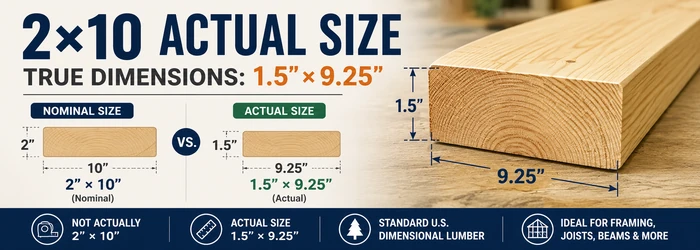
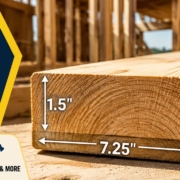
A 2×10 is not actually 2 inches by 10 inches once it reaches the lumber yard. In modern U.S. construction, a standard surfaced 2×10 typically measures approximately 1.5 inches thick by 9.25 inches wide.
The term “2×10” refers to the board’s nominal size, not its finished dimensions.
For contractors, framers, DIYers, estimators, and homeowners, knowing the actual size of a 2×10 is important when calculating floor depths, framing dimensions, material quantities, clearances, and connections.
Quick Answer: What Is the Actual Size of a 2×10?
A standard modern 2×10 typically has these dimensions:
| Measurement | Nominal Size | Actual Size |
|---|---|---|
| Thickness | 2 inches | 1.5 inches |
| Width / Depth | 10 inches | 9.25 inches |
| Metric equivalent | — | Approx. 38 × 235 mm |
So:
Nominal 2×10 → Actual 1.5″ × 9.25″
The board has not necessarily been incorrectly manufactured. The difference exists because nominal lumber dimensions are based on the size designation used in the lumber industry, while the finished board is smaller after processing.
What Does 2×10 Mean?
The term 2×10 is a nominal lumber designation.
Traditionally, lumber was initially cut closer to its nominal dimensions. During modern lumber production, boards are dried and surfaced to create more consistent finished dimensions.
As a result, the board sold as a 2×10 is smaller than the numbers in its name.
For most standard surfaced dimensional lumber used in modern U.S. construction:
- Nominal thickness: 2 inches
- Nominal width: 10 inches
- Actual thickness: approximately 1.5 inches
- Actual width: approximately 9.25 inches
This distinction between nominal size and actual size applies to many common dimensional lumber sizes.
Why Is a 2×10 Actually 1.5″ × 9.25″?
A common question is:
Why isn’t a 2×10 actually 2 inches by 10 inches?
The answer comes from how dimensional lumber is manufactured.
A board begins larger than its final finished dimensions. During production, moisture content changes and the surfaces are finished to produce a more uniform product.
The resulting board is smaller than its nominal designation.
Therefore, the familiar lumber name remains 2×10, while its typical finished dimensions are approximately:
1.5″ × 9.25″
The same basic nominal-versus-actual principle applies to other common dimensional lumber.
2×10 Actual Width
The actual width of a standard 2×10 is approximately 9.25 inches.
Here, “width” can sometimes cause confusion because the orientation of the board matters.
When a 2×10 is installed on edge, as it commonly is when used as a joist, the 9.25-inch dimension becomes the vertical depth of the member.
Therefore:
2×10 actual width/depth = 9.25 inches
This dimension is especially important when determining framing depth or coordinating structural framing with other building components.
2×10 Actual Thickness
The actual thickness of a standard 2×10 is approximately 1.5 inches.
Therefore:
2×10 actual thickness = 1.5 inches
When multiple boards are installed side by side, this dimension becomes important.
For example:
- One 2×10 = 1.5″ thick
- Two 2×10s side by side = approximately 3″ total thickness
- Three 2×10s side by side = approximately 4.5″ total thickness
These are dimensional calculations only. Combining boards does not automatically establish the structural capacity of a built-up beam or header; connections, species, grade, span, loading, and design requirements still matter.
Nominal 2×10 vs Actual 2×10 Size
The easiest way to understand the difference is to compare the two directly.
| Dimension | Nominal | Typical Actual |
|---|---|---|
| Thickness | 2″ | 1.5″ |
| Width | 10″ | 9.25″ |
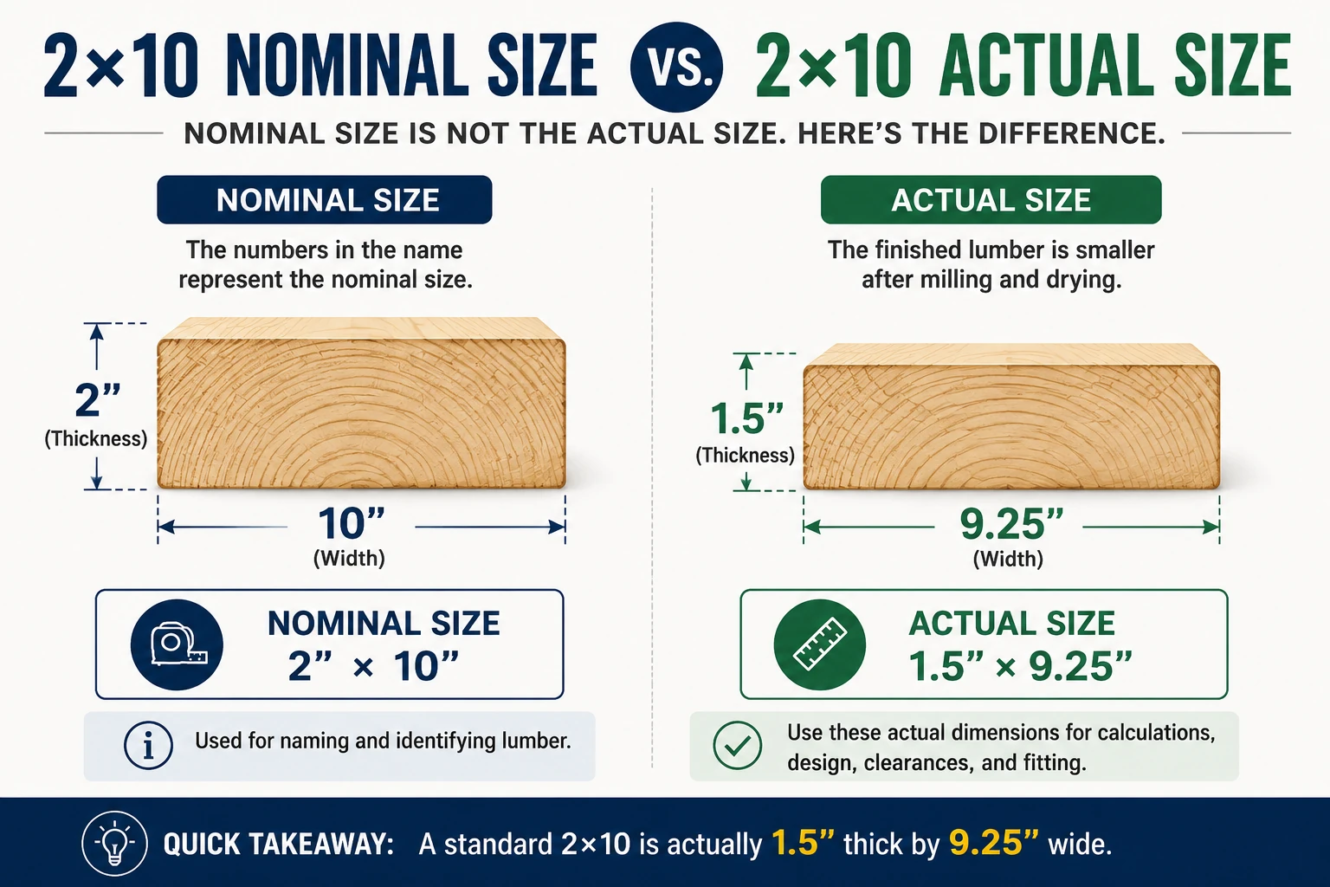
The nominal dimensions are used to identify the lumber.
The actual dimensions describe the physical finished board.
For layout, detailing, clearances, and many material calculations, the actual dimensions are what matter.
2×10 Dimensions in Millimeters
A typical 1.5″ × 9.25″ 2×10 is approximately:
38 mm × 235 mm
The conversion is approximately:
- 1.5 inches = 38.1 mm
- 9.25 inches = 234.95 mm
So the practical metric equivalent is commonly rounded to:
38 × 235 mm
However, metric-market lumber products may use different standardized dimensions. A metric board with similar dimensions should not automatically be assumed to be identical to a North American nominal 2×10.
Common 2× Lumber Actual Dimensions
Understanding nearby lumber sizes makes the 2×10 dimensions easier to remember.
| Nominal Lumber Size | Typical Actual Size |
|---|---|
| 2×4 | 1.5″ × 3.5″ |
| 2×6 | 1.5″ × 5.5″ |
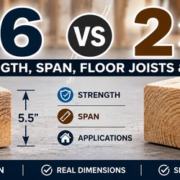
| 2×8 | 1.5″ × 7.25″ |
| 2×10 | 1.5″ × 9.25″ |
| 2×12 | 1.5″ × 11.25″ |
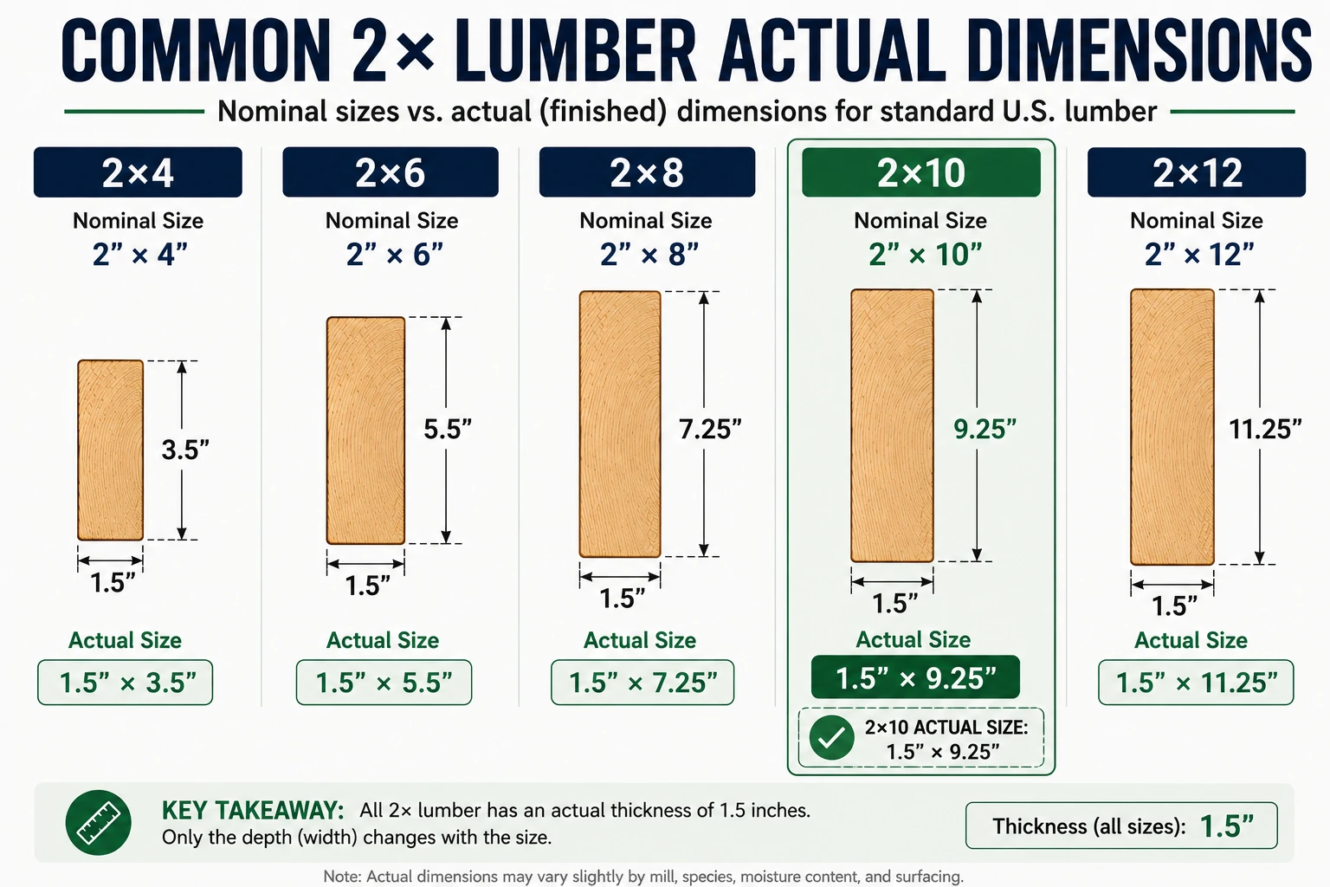
Notice that the actual thickness remains approximately 1.5 inches across these common 2× sizes, while the actual depth increases.
How Wide Is a 2×10?
A standard surfaced 2×10 is typically:
9.25 inches wide
—not 10 inches.
This means that if your project requires an exact 10-inch finished dimension, a standard 2×10 should not be assumed to provide it.
Always design and measure using the actual dimensions when physical fit matters.
How Thick Is a 2×10?
A standard 2×10 is typically:
1.5 inches thick
—not 2 inches.
This dimension matters when determining:
- built-up member thickness
- framing alignment
- connection geometry
- blocking dimensions
- hardware fit
- wall or beam assembly dimensions
Using the nominal 2-inch dimension in a physical layout can introduce measurement errors.
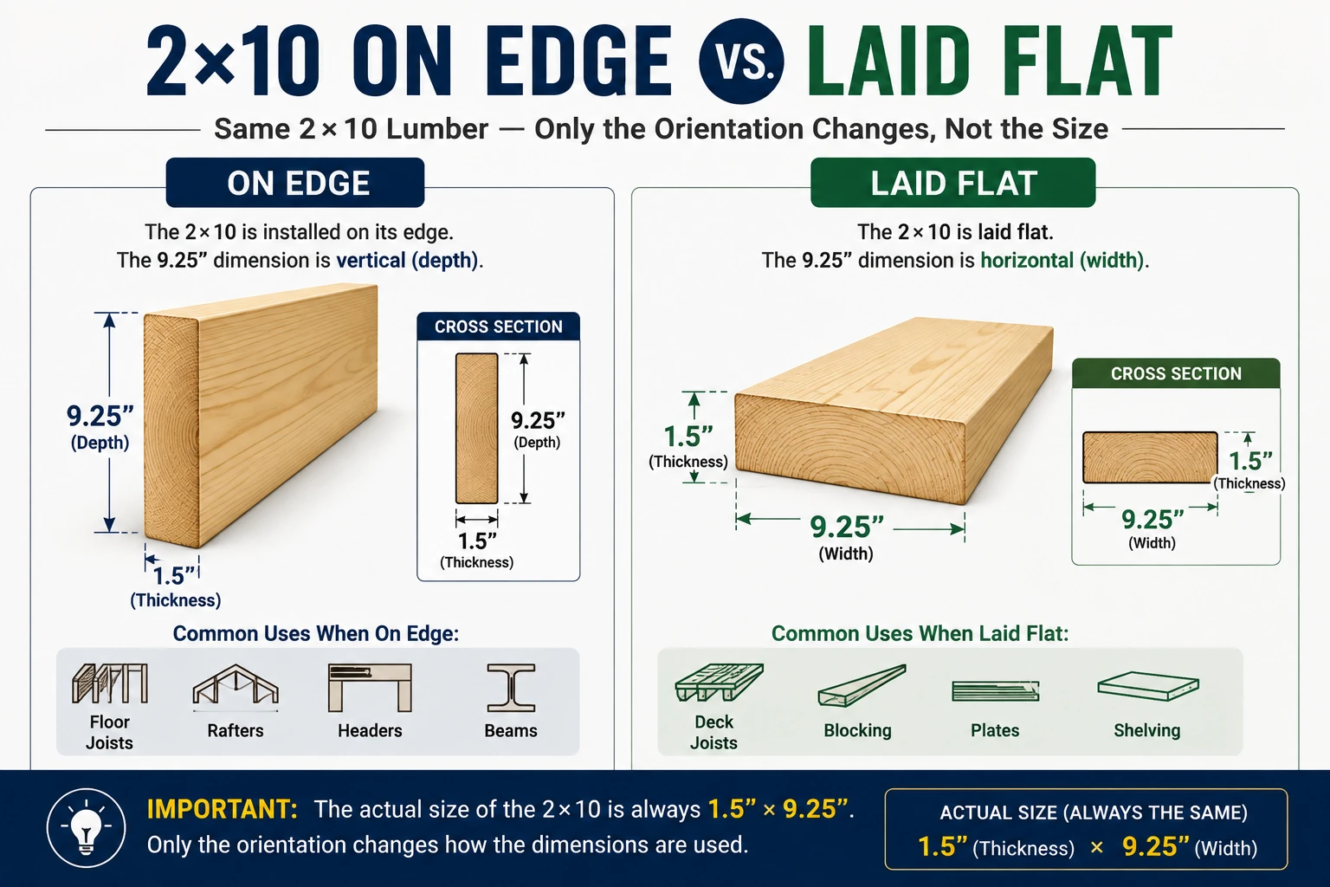
What Are the Dimensions of a 2×10 on Edge?
When a 2×10 is installed on edge, its cross section is approximately:
- 1.5 inches horizontally
- 9.25 inches vertically
The board itself has not changed size. Only its orientation has changed.
This orientation is common when dimensional lumber is used as floor joists, rafters, headers, beams, or similar framing members where appropriate.
The deeper 9.25-inch dimension is oriented vertically.
What Are the Dimensions of a 2×10 Laid Flat?
When the same 2×10 is laid flat, its cross section becomes:
- 9.25 inches horizontally
- 1.5 inches vertically
Again, the actual lumber dimensions remain:
1.5″ × 9.25″
Only the orientation changes.
This distinction is important because orientation can dramatically affect how a lumber member behaves structurally.
Common Uses of 2×10 Lumber
Because a 2×10 is relatively deep compared with smaller dimensional lumber, it may be used in several framing applications.
Common examples include:
Floor Joists
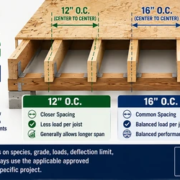
2×10 lumber may be used as floor joists where the required span, loads, species, grade, spacing, and applicable design requirements permit it.
Deck Joists
2×10s are commonly considered for deck framing, particularly where greater joist depth is needed than smaller dimensional lumber provides.
Rafters
Depending on the roof design and structural requirements, 2×10 lumber may be used for roof rafters.
Headers
Multiple 2×10 members may form part of a built-up header assembly when properly designed.
Beams
Built-up 2×10 members can also be used in some beam applications, but structural capacity should not be determined simply from the board dimensions.
Stair Framing
2×10 lumber may appear in certain stair-framing applications, depending on the design.
Actual structural suitability depends on the project rather than lumber size alone.
Is Every 2×10 Exactly 1.5″ × 9.25″?
Not necessarily.
1.5″ × 9.25″ is the typical finished dimension for standard modern surfaced 2×10 dimensional lumber in the United States, but you should not assume every board called a 2×10 has exactly those measurements.
Differences can occur with:
- rough-sawn lumber
- older or historic lumber
- reclaimed lumber
- specialty products
- locally manufactured lumber
- different surfacing conditions
- products manufactured under different dimensional standards
If exact dimensions matter for your project, physically measure the lumber you intend to use.
Rough-Sawn 2×10 vs Finished 2×10
Rough-sawn lumber can differ from standard surfaced dimensional lumber.
A rough-sawn board may retain dimensions closer to its nominal size because it has not undergone the same level of surfacing as typical finished dimensional lumber.
Therefore, you should not automatically apply the standard 1.5″ × 9.25″ measurement to every rough-sawn product labeled or described as a 2×10.
For restoration work or projects involving sawmill lumber, measure the actual board.
Old 2×10 Lumber May Be Larger
Older buildings can contain dimensional lumber that is larger than modern surfaced lumber bearing the same nominal designation.
For example, an older member referred to as a 2×10 may not match the typical modern 1.5″ × 9.25″ cross section.
This can matter during:
- renovations
- additions
- joist replacement
- sistering
- structural repairs
- floor leveling
- historic restoration
If new 2×10 lumber is installed beside an older member, their edges may not align because their actual depths may differ.
Measure existing framing before purchasing replacement material.
2×10 Lengths
The term 2×10 describes the nominal cross-sectional size, not the board’s length.
2×10 lumber can be sold in various lengths.
For example, depending on supplier and product availability, you may encounter lengths such as:
- 8 ft
- 10 ft
- 12 ft
- 14 ft
- 16 ft
- longer specialty lengths
A “2×10×12,” for example, generally identifies a board by nominal cross section and nominal length:
2 × 10 × 12 ft
Its cross section would typically still be approximately:
1.5″ × 9.25″
Do not confuse the board’s length with its actual cross-sectional dimensions.
Does 2×10 Actual Size Determine Its Strength?
No.
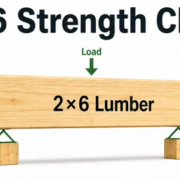
The actual dimensions are an important structural factor, but size alone does not tell you how much weight a 2×10 can support or how far it can span.
Structural performance can depend on factors such as:
- species
- grade
- span
- spacing
- orientation
- support conditions
- load type
- load duration
- moisture conditions
- defects
- connections
- deflection requirements
Two boards with the same 1.5″ × 9.25″ dimensions can have different structural properties.
That is why 2×10 actual size, 2×10 strength, 2×10 load capacity, and 2×10 span should be treated as related but different questions.
2×10 vs 2×8 Actual Size
A standard 2×8 typically measures approximately:
1.5″ × 7.25″
A standard 2×10 typically measures approximately:
1.5″ × 9.25″
| Lumber | Actual Thickness | Actual Depth |
|---|---|---|
| 2×8 | 1.5″ | 7.25″ |
| 2×10 | 1.5″ | 9.25″ |
The typical difference in depth is:
2 inches
Both boards usually have the same approximately 1.5-inch finished thickness.
However, this dimensional comparison should not be interpreted as a direct structural-capacity comparison.
2×10 vs 2×12 Actual Size
A standard 2×12 typically measures approximately:
1.5″ × 11.25″
Compared with a 2×10:
| Lumber | Actual Thickness | Actual Depth |
|---|---|---|
| 2×10 | 1.5″ | 9.25″ |
| 2×12 | 1.5″ | 11.25″ |
Again, the typical difference in depth is approximately 2 inches.
How to Measure a 2×10 Correctly
If you want to confirm the size yourself, use a tape measure or caliper.
Measure across the narrow face to determine the thickness.
For standard surfaced 2×10 lumber, you should typically find approximately:
1.5 inches
Then measure across the wider face.
You should typically find approximately:
9.25 inches
For existing construction, measuring the actual member is particularly useful because older, rough-sawn, or specialty lumber may differ from modern standard dimensions.
Why Actual 2×10 Dimensions Matter in Construction
Using nominal dimensions instead of actual dimensions can create errors during planning and construction.
Suppose someone assumes a 2×10 joist is exactly 10 inches deep. The actual modern member is typically only about 9.25 inches deep.
That’s a difference of approximately:
0.75 inch
That difference can affect:
- floor assembly depth
- framing alignment
- elevations
- blocking
- connections
- clearances
- renovation matching
- quantity calculations
- detailing around openings
For rough estimates, nominal names are convenient.
For physical construction dimensions, actual measurements matter.
Common Mistakes With 2×10 Dimensions
One of the most common mistakes is assuming that the numbers printed in the lumber designation are its finished dimensions.
Remember:
2×10 is the nominal size.
1.5″ × 9.25″ is the typical actual size of modern surfaced U.S. 2×10 dimensional lumber.
Another mistake is confusing width, depth, and thickness.
When installed on edge:
- 1.5″ = thickness
- 9.25″ = vertical depth
When laid flat:
- 9.25″ = horizontal width
- 1.5″ = vertical thickness
The physical dimensions remain unchanged.
Frequently Asked Questions
What is the actual size of a 2×10?
A standard modern surfaced 2×10 in the U.S. typically measures approximately 1.5 inches × 9.25 inches.
Is a 2×10 really 10 inches wide?
No. A standard surfaced 2×10 is typically approximately 9.25 inches wide, despite its nominal 10-inch designation.
How thick is a 2×10?
A typical modern 2×10 is approximately 1.5 inches thick.
Why is a 2×10 only 9.25 inches wide?
The 2×10 designation is a nominal lumber size. After drying and surfacing during manufacturing, the finished board is smaller than its nominal dimensions.
What is the metric size of a 2×10?
A typical U.S. 2×10 measuring 1.5″ × 9.25″ is approximately 38 × 235 mm.
Is a rough-sawn 2×10 the same size?
Not necessarily. Rough-sawn lumber can have different finished dimensions and may be closer to nominal dimensions. Measure the actual product.
Are old 2×10 boards larger?
They can be. Historic lumber dimensions may differ from today’s standard surfaced dimensional lumber, so existing members should be measured during renovation work.
Is a 2×10 stronger than a 2×8?
The 2×10 has a deeper cross section, but structural capacity cannot be determined from nominal size alone. Species, grade, span, spacing, orientation, loads, and other design factors also matter.
Final Takeaway
For standard modern U.S. surfaced dimensional lumber, remember this simple relationship:
Nominal size: 2″ × 10″
Typical actual size: 1.5″ × 9.25″
The 2×10 name is a nominal designation rather than a literal measurement of the finished board.
When estimating framing depth, fitting connections, matching existing construction, or preparing detailed layouts, use the actual 2×10 dimensions of approximately 1.5″ × 9.25″ and verify the physical lumber when exact dimensions are important.



Leave a Reply
Want to join the discussion?Feel free to contribute!