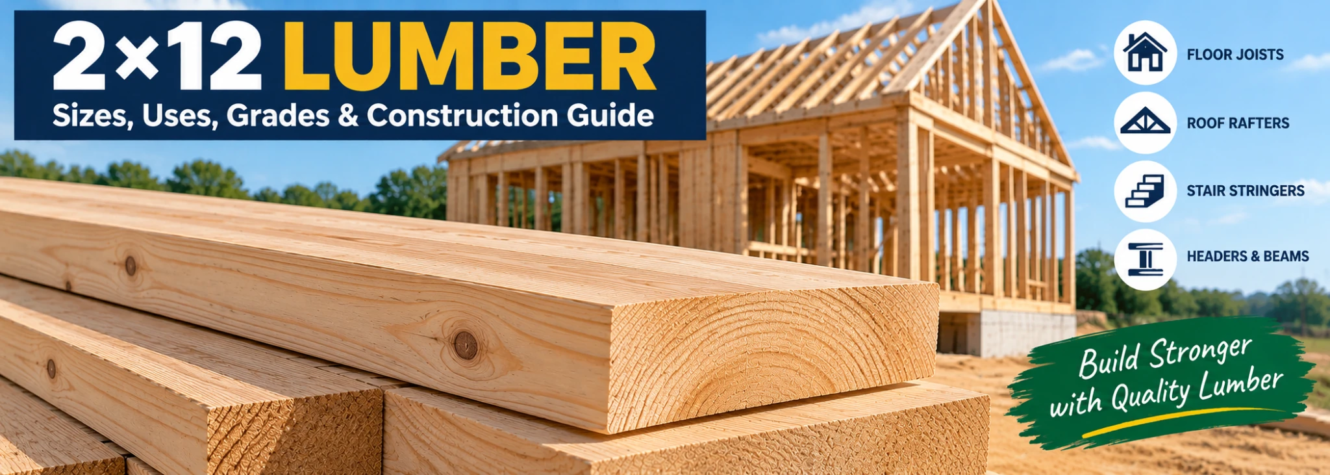
2×12 Lumber: Sizes, Uses, Grades & Construction Guide
2×12 lumber is one of the larger standard dimensional lumber sizes used in residential and light-frame construction in the United States. Its relatively deep profile makes it useful for applications where builders need more structural depth than smaller boards such as 2×6, 2×8, or 2×10 lumber can provide.
A 2×12 may be used for floor and roof framing, stair components, headers, beams, blocking, and other structural or nonstructural applications depending on the design. However, simply calling a board a “2×12” does not tell you how much weight it can carry or how far it can span. Species, grade, spacing, support conditions, moisture, loading, and applicable building-code requirements all matter.
This guide explains what 2×12 lumber is, its common sizes and lengths, popular wood species and grades, typical construction uses, and the key factors to consider before selecting it for a project.
What Is 2×12 Lumber?
A 2×12 is a piece of dimensional lumber identified by its nominal size of 2 inches by 12 inches.
The term nominal refers to the size designation used in the lumber industry rather than the finished dimensions of the board. After lumber is dried, planed, and surfaced, its actual dimensions are smaller than its nominal dimensions.
For standard surfaced dimensional lumber commonly sold in the United States, a nominal 2×12 typically measures approximately:
| Measurement | Nominal Size | Typical Actual Size |
|---|---|---|
| Thickness | 2 in. | 1.5 in. |
| Width/Depth | 12 in. | 11.25 in. |
| Cross section | 2 × 12 in. | 1.5 × 11.25 in. |
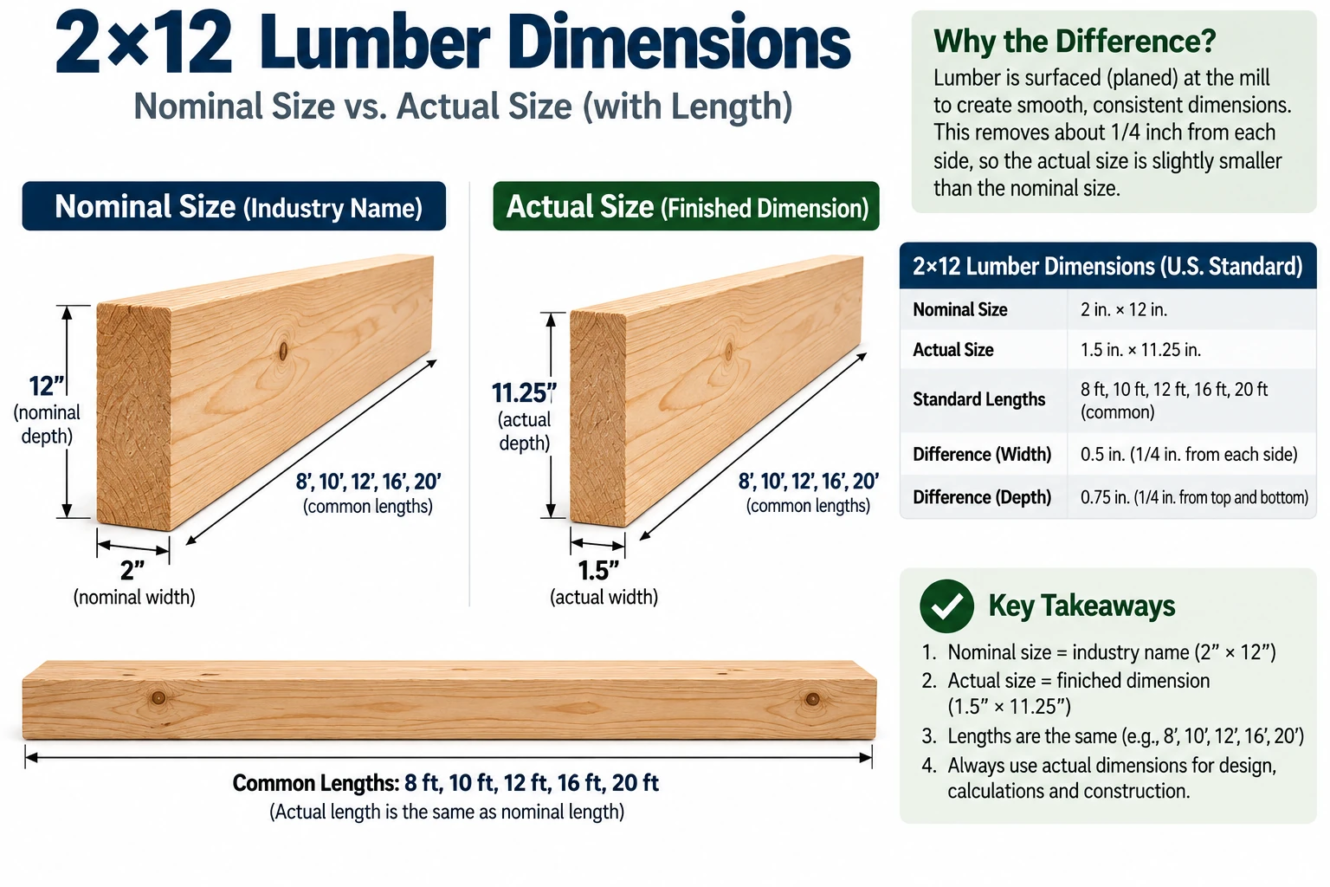
These actual dimensions are important when calculating framing elevations, clearances, material quantities, connections, and structural properties.
Is a 2×12 Really 12 Inches Wide?
No. A standard finished 2×12 used in modern U.S. construction is normally about 11.25 inches wide and 1.5 inches thick, not a full 12 inches by 2 inches.
The larger 2-inch-by-12-inch designation originates from the nominal dimensions associated with lumber before finishing. Modern dimensional lumber is surfaced to produce more uniform and manageable finished boards.
This difference may seem small, but it becomes important when planning joist systems, stairs, framing connections, and other assemblies where fractions of an inch can affect the finished construction.
Common 2×12 Lumber Lengths
2×12 boards are available in multiple lengths. Exact availability depends on the lumber species, grade, treatment, supplier, and local market.
Common lengths may include:
- 8 ft.
- 10 ft.
- 12 ft.
- 14 ft.
- 16 ft.
- 18 ft.
- 20 ft.
Some suppliers and specialty lumber yards may carry longer boards.
The longest available board should not automatically be assumed to be suitable for the longest structural span. Board length and allowable span are two different things.
For example, a 20-foot-long 2×12 being available for purchase does not necessarily mean that it can safely span 20 feet between supports. Structural span depends on engineering properties and loading conditions.
Common Wood Species Used for 2×12 Lumber
The species or species group can significantly affect the structural properties of a 2×12.
Common options in the United States include:
Southern Pine
Southern Pine is widely used for structural framing and is known for relatively high strength properties in suitable grades. It is commonly available in many parts of the United States and may be used for joists, rafters, beams, headers, and treated exterior applications where appropriate.
Douglas Fir-Larch
Douglas Fir-Larch is another important structural lumber species group. It is frequently used for framing applications where strength and stiffness are important.
Hem-Fir
Hem-Fir includes western hemlock and certain true fir species grouped for lumber grading purposes. It is used in a variety of residential and light-commercial framing applications.
Spruce-Pine-Fir (SPF)
SPF is a common species grouping used for dimensional framing lumber. Depending on grade and design requirements, 2×12 SPF may be used for joists, rafters, and other framing components.
The species name alone should not be used to determine allowable load or span. The grade of the lumber must also be considered.
Understanding 2×12 Lumber Grades
Structural lumber is graded according to characteristics that can affect its strength and usability.
Depending on the species and grading system, commonly encountered grades may include:
- Select Structural
- No. 1
- No. 2
- No. 3
- Construction or Standard grades in certain product categories
Knots, slope of grain, splits, checks, wane, and other characteristics can influence the assigned grade.
For structural applications, builders should use the species and grade specified by the project documents, approved span tables, applicable building code, or structural engineer.
Two boards that both measure 1.5 × 11.25 inches can have significantly different structural capacities if their species or grades differ.
What Is 2×12 Lumber Used For?
The depth of a 2×12 makes it useful in several construction applications.
Typical uses may include:
| Application | Why 2×12 May Be Used |
|---|---|
| Floor joists | Greater depth can provide increased stiffness and span capability |
| Roof rafters | Useful where design loads and spans require deeper framing |
| Stair stringers | Provides enough depth for cutting typical stair profiles |
| Stair treads | Sometimes used where a wide solid-wood tread is appropriate |
| Headers | May form part of a built-up header when properly designed |
| Beams | Multiple members may be combined in engineered built-up assemblies |
| Blocking | Can match the depth of 2×12 joists or rafters |
| Deck framing | Pressure-treated 2×12 may be used where the design requires it |
| Heavy framing | Useful for applications requiring deeper dimensional lumber |
Whether a 2×12 is appropriate for any specific structural application must be determined from the actual design conditions.
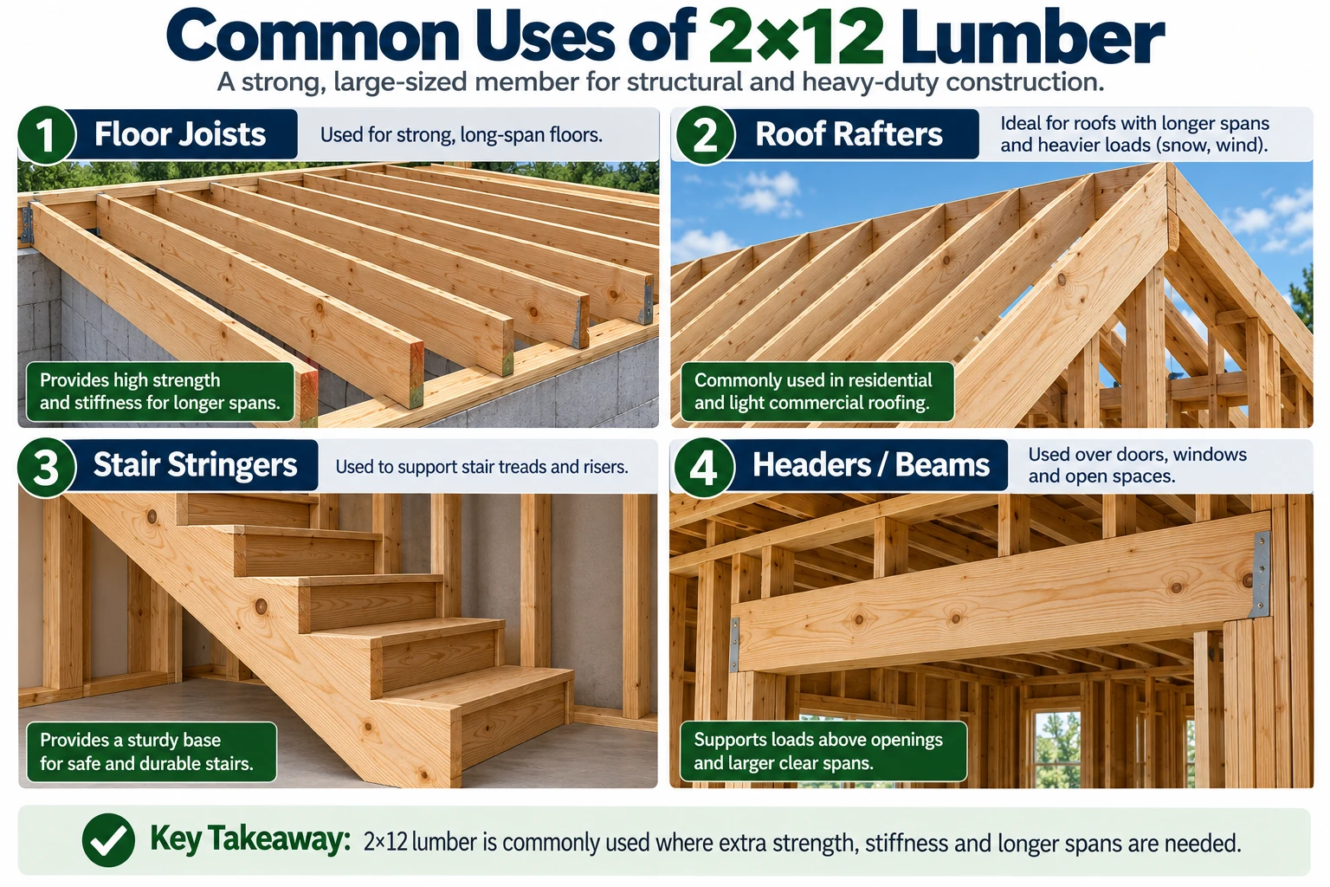
2×12 Lumber for Floor Joists
Floor framing is one of the applications commonly associated with 2×12 lumber.
Compared with shallower dimensional lumber, the greater depth of a 2×12 can provide considerably greater bending stiffness when the member is installed on edge. This can make 2×12 joists useful where the floor system needs to cover relatively large distances or support specified loads.
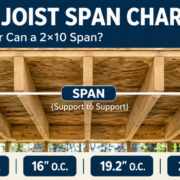
However, there is no single universal span for every 2×12 floor joist.
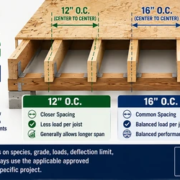
Allowable span can change according to:
- Lumber species
- Lumber grade
- Joist spacing
- Dead load
- Live load
- Deflection limit
- Bearing conditions
- Repetitive-member assumptions
- Applicable building code
For this reason, use an appropriate span table or engineered design rather than selecting a joist solely because it is a 2×12.
2×12 Lumber for Roof Rafters
2×12 lumber may also be specified for roof rafters where the required span, spacing, roof loading, or design geometry calls for deeper framing.
Roof design can be affected by factors such as:
- Roof pitch
- Rafter spacing
- Dead load
- Snow load
- Wind conditions
- Ceiling attachment
- Species and grade
- Support configuration
A rafter application therefore requires its own design evaluation. Floor-joist span values should not automatically be applied to roof rafters.
2×12 Lumber for Stair Stringers
2×12 lumber is commonly associated with cut stair stringers because its depth provides room for laying out the rise and run of individual steps while retaining material below the cutouts.
However, cutting notches into a stringer removes part of its cross section. The remaining material, stair width, number of stringers, attachment details, and local code requirements all affect the completed stair.
Straight, sound lumber is especially desirable for stringers because excessive warp or major defects can make accurate stair construction difficult.
Can a 2×12 Be Used for Stair Treads?
A 2×12 can also be used in certain stair-tread applications, but tread design is a separate issue from using a 2×12 as a stringer.
The actual width of a standard 2×12 is approximately 11.25 inches, which can make it suitable for some tread configurations. Nevertheless, required tread depth, nosing, support spacing, lumber condition, fastening, and applicable stair-code provisions should all be considered.
Using 2×12 Lumber for Headers
2×12 boards may be incorporated into built-up headers over doors, windows, and other openings.
A common misconception is that choosing a deeper board automatically makes a header adequate. Header sizing actually depends on factors such as:
- Opening width
- Number of stories supported
- Roof and floor loads
- Building width
- Snow load
- Lumber species and grade
- Number of plies
- Bearing length
A built-up header might consist of two or more dimensional-lumber members connected according to an approved design, but the required configuration varies considerably.
Use prescriptive header tables where applicable or obtain an engineered design for conditions outside prescriptive limits.
Can 2×12 Lumber Be Used as a Beam?
Yes, 2×12 lumber can be used as part of certain beam assemblies, but a single 2×12 should not automatically be treated as a beam suitable for any span or load.
Built-up beams may combine multiple 2×12 members. Their capacity depends on the number of plies, species, grade, connection between members, span, loading, bearing, lateral restraint, and other design factors.
Engineered wood products such as LVL, glulam, or other structural members may be more appropriate when higher capacities or longer spans are required.
Pressure-Treated 2×12 Lumber
Pressure-treated 2×12 lumber is available for applications where increased resistance to decay and insects is required.
Depending on the treatment category and applicable requirements, treated lumber may be used for:
- Deck framing
- Exterior stairs
- Outdoor structural components
- Locations exposed to weather
- Certain applications near or in contact with the ground
Not every pressure-treated product is rated for every exposure condition. Check the treatment label or end tag to verify the intended use.
Fasteners and connectors must also be compatible with the treatment chemicals and exposure environment.
2×12 Lumber Weight
The weight of a 2×12 board is not fixed.
It varies with:
- Species
- Length
- Moisture content
- Treatment
- Density
- Individual board characteristics
A freshly pressure-treated board, for example, may weigh noticeably more than a dry untreated board of the same dimensions and length.
When estimating transportation, handling, or total material weight, use the actual product specifications whenever possible rather than assuming that every 2×12 weighs the same.
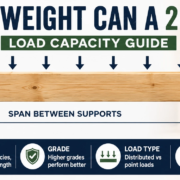
How Much Weight Can a 2×12 Hold?
There is no reliable single answer such as “a 2×12 holds X pounds.”
Structural capacity depends on how the member is installed and loaded.
Important variables include:
- Span between supports
- Species and grade
- Orientation
- Number of members
- Load location
- Distributed versus concentrated loading
- Duration of load
- Lateral restraint
- Bearing
- Deflection requirements
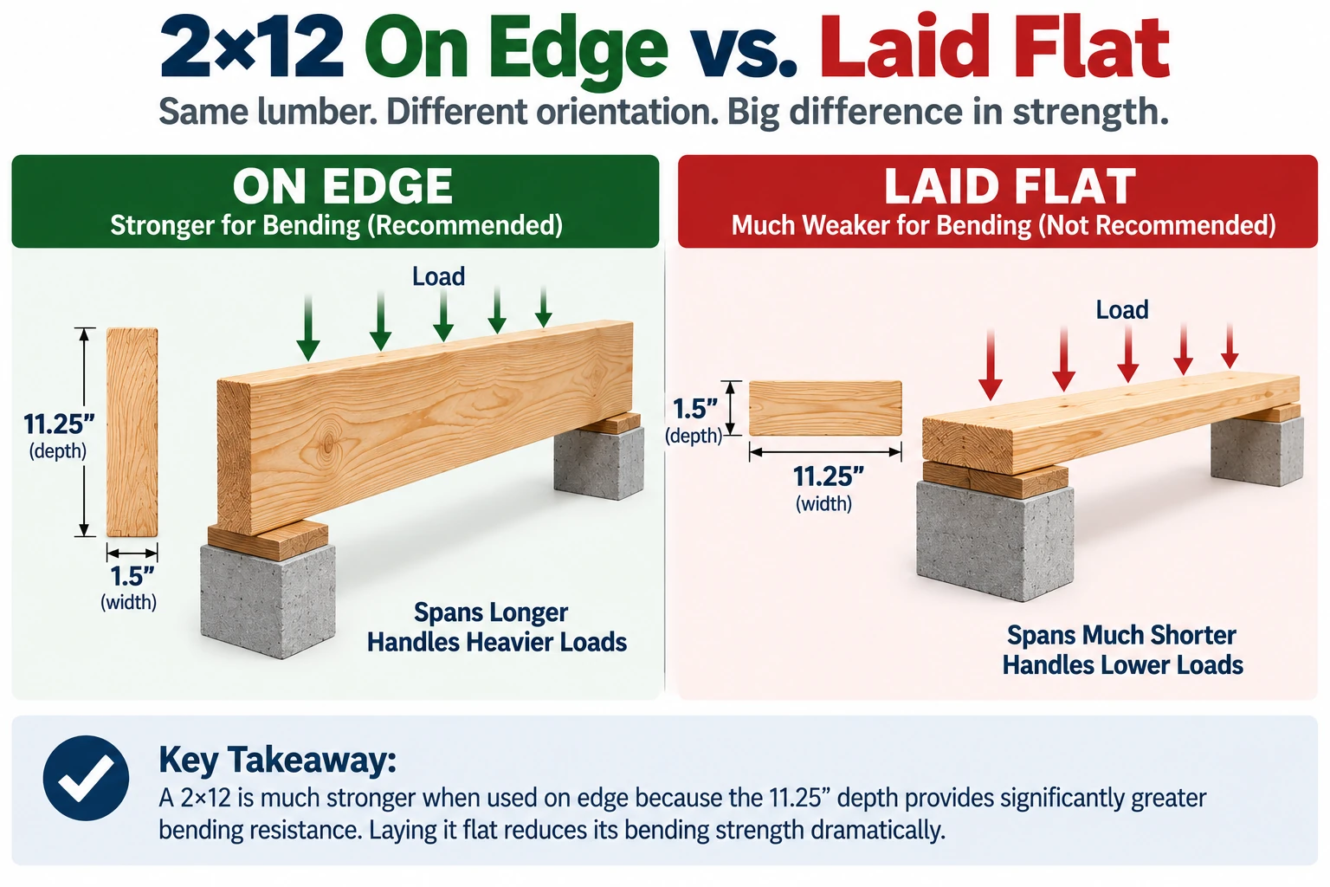
A 2×12 installed vertically on edge behaves very differently in bending from the same board laid flat.
2×12 On Edge vs. Laid Flat
Orientation has a major effect on bending performance.
When a standard 2×12 is installed on edge, approximately 11.25 inches of its cross section forms the vertical depth. When it is laid flat, only approximately 1.5 inches forms the vertical depth.
Because bending stiffness is highly dependent on member depth, a 2×12 generally performs much more efficiently as a spanning member when installed on edge.
This is one reason floor joists, rafters, and similar dimensional-lumber framing members are normally installed with their greater dimension vertical.
How to Choose 2×12 Lumber
Selecting a board should involve more than checking the nominal size.
For construction work, consider the following:
1. Verify Species and Grade
Check the grade stamp where structural performance matters. Do not assume two visually similar 2×12 boards have identical design values.
2. Inspect the Board
Look for excessive:
- Bow
- Crown
- Twist
- Cup
- Splits
- Damage
- Wane
- Large or problematic knots
Some natural characteristics are permitted within lumber grades, but severely distorted boards can create construction difficulties.
3. Choose the Correct Treatment
Use lumber suitable for the expected exposure. Exterior or ground-contact conditions may require an appropriate pressure-treatment category.
4. Confirm Required Length
Choose lengths that suit the framing layout while considering bearing and cutting requirements.
5. Check Structural Requirements
For joists, rafters, beams, and headers, confirm the required species, grade, spacing, span, loading, and member configuration before purchasing material.
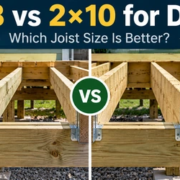
2×12 vs. 2×10 Lumber
Both sizes are common dimensional-lumber products, but a 2×12 has greater actual depth.
A typical comparison is:
| Nominal Size | Typical Actual Size |
|---|---|
| 2×10 | 1.5 × 9.25 in. |
| 2×12 | 1.5 × 11.25 in. |
The additional depth can significantly affect structural properties when the lumber is used on edge.
That does not mean a 2×12 is automatically the better choice. A 2×10 may be adequate and more economical for shorter spans or lighter design conditions.
The correct member is the one that satisfies the structural requirements of the project.
2×12 vs. Engineered Lumber
Traditional 2×12 dimensional lumber is not the only option for deeper structural framing.
Depending on the application, builders may also use:
- I-joists
- Laminated veneer lumber (LVL)
- Glulam
- Parallel strand lumber (PSL)
- Other engineered wood products
Engineered products can provide greater dimensional consistency and may be available for applications where conventional dimensional lumber is not suitable.
However, product selection should follow the manufacturer’s design information and project engineering requirements.
Building Code and Structural Considerations
The suitability of a 2×12 depends on more than its physical dimensions.
Prescriptive residential construction in the United States may be governed by locally adopted building-code provisions and associated span or sizing tables. Local jurisdictions can modify requirements, and project-specific conditions may fall outside prescriptive limits.
Before using a 2×12 as a structural member, verify relevant factors including:
- Design loads
- Species
- Grade
- Span
- Spacing
- Bearing
- Connections
- Notching and drilling
- Fire or durability requirements
- Local code amendments
For unusual loads, long spans, major openings, or nonstandard framing systems, consult a qualified structural professional.
Frequently Asked Questions
What are the actual dimensions of a 2×12?
A standard surfaced 2×12 commonly measures approximately 1.5 inches thick by 11.25 inches wide.
Why isn’t a 2×12 actually 2 inches by 12 inches?
The 2×12 designation is a nominal lumber size. Drying and surfacing reduce the board to its finished dimensions.
What is 2×12 lumber commonly used for?
Typical applications include floor joists, roof rafters, stair stringers, certain stair treads, headers, built-up beams, blocking, deck framing, and other framing work where a deeper dimensional-lumber member is required.
Can a 2×12 span 20 feet?
You cannot determine allowable span from nominal size alone. Species, grade, spacing, loads, deflection criteria, and the type of structural application all affect allowable span. Use the appropriate span tables or structural design.
Is 2×12 stronger than 2×10?
When other relevant factors are the same and the members are installed on edge, the greater depth of a 2×12 generally provides substantially greater bending stiffness and structural capability. Actual allowable capacity still depends on species, grade, span, loading, and design conditions.
Is 2×12 good for floor joists?
A 2×12 can be an appropriate floor-joist size for many framing conditions, but suitability must be verified using applicable span tables or engineering calculations.
Can you use pressure-treated 2×12 lumber outside?
Yes, provided the specific pressure-treated product is rated for the intended exposure and compatible fasteners and connectors are used.
Final Thoughts
2×12 lumber is a versatile dimensional-lumber size used throughout U.S. residential and light-frame construction. Its nominal size is 2 × 12 inches, while a typical surfaced board measures approximately 1.5 × 11.25 inches.
Its greater depth makes it useful for applications such as joists, rafters, stair stringers, headers, built-up beams, blocking, and exterior framing. However, size alone does not determine structural capacity.
For structural applications, always consider the lumber’s species, grade, span, spacing, loading, orientation, bearing, connections, and applicable building-code requirements.
Understanding these factors helps builders and homeowners choose 2×12 lumber based on the actual requirements of the project rather than relying on nominal size alone.